Tags
Besim Atalay, deyiş, Gölpınarlı, Pertev Naili Boratav, Sadettin Nüzhet Ergun, tanbura, Translation, Yunus Emre
 This deyiş appears in the all of the earliest collections of Pir Sultan Abdal lyrics, including Besim Atalay’s 1924 publication Bektaşilik ve Edebiyatı (originally in Ottoman Turkish but translated into modern Turkish by Vedat Atila and published by Ant Yayınları in Istanbul in 1991). It also appears in Sadettin Nüzhet Ergun’s 1929 work on Pir Sultan Abdal and in the 1943 publication by Gölpınarlı and Boratav. Comparing these editions is interesting since there are minor variants in the texts – the minor nature of the variants is of itself interesting and perhaps gives a glimpse of how a traditional lyric may be adopted into the Pir Sultan canon. The lyric is not overtly on the central themes associated with Pir Sultan such as the kızılbaş devotion to the Imam Ali (but see below) or subjects associated with his life story; rather it seems closer to Sufi themes and the lyrics of Yunus Emre. The text I have translated is based on that presented in Gölpınarlı and Boratav’s 1943 edition. This seems to be something of composite text, though Gölpınarlı’s method of presenting the texts, while stating sources does not make clear how variants are used. The authors cite the sources as Atalay, Ergun and an undefined number of cönk and mecmua in Gölpınarlı’s possession. The most interesting of the minor variations of text is found in the version presented by Atalay who gives the last line of each stanza as ‘Ali deyu inilerim’ (‘I moan crying Ali’) thus revealing somewhat more overtly the Alevi theme in the lyric. The one line that is different in the three versions cited is the third line of the second stanza which in Gölpınarlı reads ‘Oldum ayn-i cem bülbülü’, in Ergun reads ‘Olmuşam Şah’ın bülbülü’ and in Atalay reads ‘Oldum muhabbet bülbülü’. While the signficance of the line is hardly altered, the approaches ranging from the specific mention of the ritual ceremony (ayn-i cem), to the hoped for Shah and to the general idea of love and unity (muhabbet) is instructive.
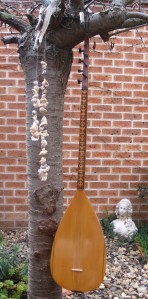
The tanbura mentioned is one of the names for the long necked lute played by the aşık-s. Other names commonly encountered in the Alevi deyiş are saz, kopuz and bağlama. Interestingly, in the version of this lyric published by Ergun the word tanbura is used except in the last stanza where it states ‘Bağlamadır benim adım’ (‘My name it is bağlama‘). In organological terms the tanbura (or tambura) is a larger member of the bağlama family with a narrow-ish body tapering into the long neck – a rather beautiful form. The reference to the yellow (sarı) lute may suggest the pale spruce soundboard or the belly, often made of chestnut (kestane) which is of a pale yellow hue.
Pir Sultan Abdal: Gel benim sarı tanburam
Translation: Paul Koerbin
Come my yellow lute
Why do you moan?
I am hollow within, my grief is great
This is the reason I moan
They attached string to my arm
They made me speak countless languages
I was the nightingale in the ceremony
This is the reason I moan
They attached fretting to my arm
They had me meet with countless sorrows
Who settles here and who departs
This is the reason I moan
They lay my chest upon the seat
They stroked me without stop
They opened up my breast as they struck
This is the reason I moan
Come my yellow lute
I shall lay you upon my knee
Again my heart is broken
This is the reason I moan
Yellow lute is my name
My cry rises to the heavens
I am Pir Sultan my master
This is the reason I moan
—————————————————————————————————————
Original text from Gölpınarlı and Boratav Pir Sultan Abdal (1943)
Gel benim sarı tanburam
Sen ne için inilersin
İçim oyuk derdim büyük
Ben anınçin inilerim
Koluma taktılar teli
Söyletirler bin bir dili
Oldum ayn-i cem bülbülü
Ben anınçin inilerim
Koluma taktılar perde
Uğrattılar bin bir derde
Kim konar kin göçer burda
Ben anınçin inilerim
Goğsüme tahta döşerler
Durmayıp beni okşarlar
Vurdukça bağrım deşerler
Ben anınçin inilerim
Gel benim sarı tanburam
Dizler üsünde yatıram
Yine kırıldı hâtıram
Ben anınçin inilerim
Sarı tanburadır adım
Göklere ağar feryadım
Pir Sultan’ımdır üstadım
Ben anınçin inilerim
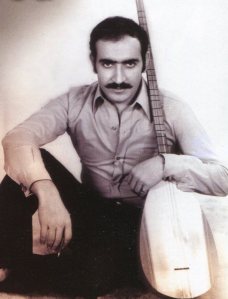 Muhlis Akarsu was prolific in his composition and recordings (in the pre-CD days) and fortunately many have been subsequently released on CD. The more I listen too these recordings, both solo and as part of the Muhabbet series, the more his brilliance is evident. This deyiş is from his last recording prepared shortly before he was killed in Sivas on 2 July 1993. The album was released after the Sivas events with the title Sivas Ellerinda Ömrüm Çalınır which includes the recording of that re-written version of the Pir Sultan Abdal deyiş performed by Arif Sağ (see
 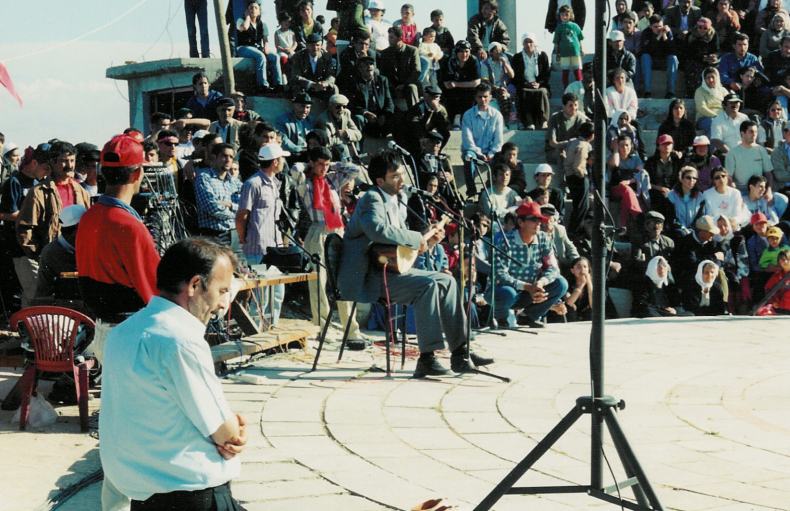 Have been analysing a performance by Tolga Sağ that I recorded at the 2002 Pir Sultan Abdal Festival in Banaz. The festival that year took place over the weekend of the 22nd and 23rd June. Sağ did two performances, the first on the Saturday was an hour long performance and the second on the Sunday was a half hour performance. I am studying the first, longer performance most specifically. The work so far has been trying to identify all the songs performed. The set consisted of the following deyiş and türkü.
 Aşık İbreti is someone I would like to have met. His no nonsense plain speaking is so engaging – and, one thinks, quite courageous. His language is simple and his is message clear. İbreti’s real name was Hıdır Gürel and he was born in 1920 in the Sarız region of Kayseri. In 1967 we was caught up in attacks against Alevis in Elbistan. A working man, maker and seller of musical instruments and miner, he died in 1976. Musa Eroğlu, the great singer and bağlama player from Mut – often called the modern Karacaoğlan – is something of a champion of İbreti’s lyrics. He recorded the genuinely magnificent İlme değer verdim (Gördümde geldim) on his recording Yolver Dağlar and recently contributed İbreti’s Aşkın kabesi (İnsanlığa hizmet ibadetimdir) to the remarkable recording initiative by Kalan Music called Kızılbaş. Dertli Divani has also recorded the work of İbreti including Hakikat denildi erkânımıza on his 2000 masterwork Serçeşme. İbreti’s poems were published in 1996 in the book titled İlmer Değer Verdim by Adil Ali Atalay (Vaktidolu) whose publishing house, Can Yayınları, has contributed so much to the dissemination of Alevi culture.
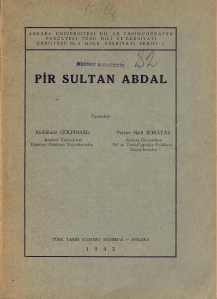 This book, simply titled Pir Sultan Abdal, was the second major work on Pir Sultan. It was published in 1943, 14 years after Ergun’s monograph, by the Türk Tarih Kurumu Basımevi in Ankara. The book was written and prepared by Abdülbâkî Gölpınarlı and Pertev Naili Boratav and is a major advance on Ergun’s book. Firstly it brings the literary historian (Gölpınarlı) and folklorist (Boratav) together. Most interesting is the work of Boratav who travelled in the Sivas region in 1939, including to Banaz, to undertake field work to collect songs and legends. Much that is in this book remains the foundation for our understanding of Pir Sultan. It includes around 136 song texts, but has a commentary of considerable substance. It also includes an index, glossary (lûgatçe) and some indication of the source of the text. A number of the texts come from Ergun, but there are also the texts collected by the great Sivas aşık Ali İzzet Özkan (1902-1981) mostly from the Şarkışla area from other aşık-s including Aşık Sabri and Aşık Veysel among others. The book is 198 pages in length and is bound in similar plain, soft cardboard to that of the earlier book by Ergun. As with the Ergun book, the printing is excellent. An expanded edition of the book was published nearly half a century later in 1991.
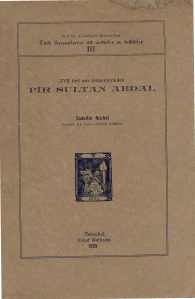 The earliest monograph on Pir Sultan Abdal was the book by Sadettin Nüzhet (Ergun). Ergun’s adopted surname (soyadı) does not appear on the original 1929 edition of the book. It is titled in full: XVIIinci asır Sazşairlerinden Pir Sultan Abdal (Pir Sultan Abdal of the 17th century era minstrels (literally saz poets)) and is published by the Istanbul Evkaf Matbaası in soft brown cardboard covers. It is the 3rd volume in a series edited by Mehmet Köprülü (Köprülüzade Mehmet Fuat) titled Türk Sazşairleri âit metinler ve tetkikler (texts and researches regarding the Turkish saz poets), the first two volumes being devoted to the poets Gevheri and Erzurumlu Emrah. The book is 77 pages and includes the texts of 105 poems along with 6 notated melodies. The introductory matter by Ergun constitutes only about 15 pages, albeit of considerable value. Original price was 60 kuruş.
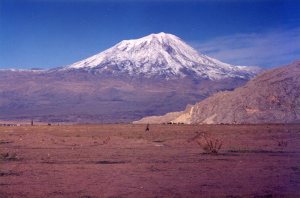 One of the most evocative of Pir Sultan’s lyrics; especially when sung to the beautiful melody with which it is associated.
