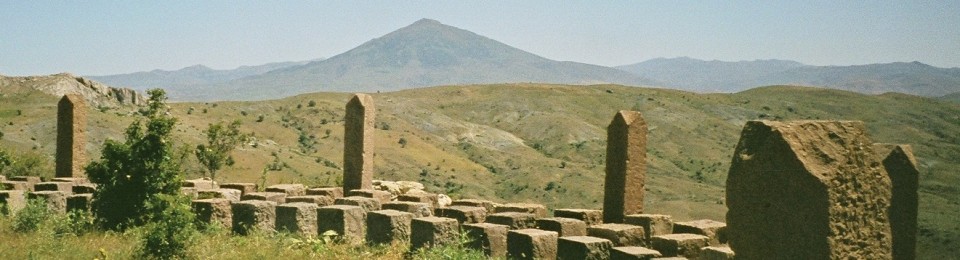
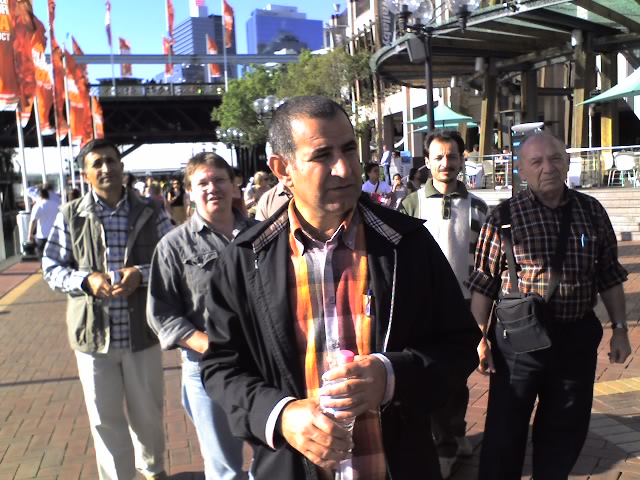
A. Aykut, P. Koerbin, Dertli Divani, M. Kılçık. V. Ulusoy (Postnişin), Sydney 2007
This is one of the most well known and performed deyiş of Dertli Divani (real name Veli Aykut, born 1962 in Kısas near Şanlıurfa). Divani is arguably the most important living Alevi aşık and a remarkable individual who straddles, with ease, the worlds of the Alevi source culture and that of the modern recording artist. He is also tireless in his efforts to explain and promote an understanding of the true nature and spirit of Alevi culture to as wide an audience as possible. Divani is from dede lineage (his father is the late Aşık Büryani) and leads cem services in Turkey (Kısas, Nurhak, Banaz) and throughout the world (Europe, North America and in Australia) and is the source and composer of many of the finest Alevi lyrics of the last quarter century. Though clearly he has the ambition to make Alevi culture widely understood his lyrics are still deeply mystical and present challenges for the translator, even more overtly social lyrics such as this one.
This deyiş is somewhat remarkable for the fact that it has a refrain (bağlantı) that introduces new text – many deyiş when sung introduce refrains though more commonly they are repetitions of the words of the verses. Adding to the interesting form is the fact that the verses are in 8 syllable metre while the refrain is in 11 syllable metre. While I generally aim to translate deyiş line by line, in this case it is necessary in some parts to treat two lines together for the purpose of coherence in the translation. Another difficulty was what to do with the “ne … ne” construction particularly in the first refrain. This construction normally means “neither … nor” though the conjuctions are usually placed before the words to which they refer, not after them as in this lyric. For this reason I have read “ne” in this instance as its other meaning of “what” which makes more sense in the theme of the lyric. In the last refrain I was tempted to use the word “wayfarer” for “yolcu” to pick up on the assonance of the Turkish, as in “the wayfarer who does not take the way” – but I did not completely convince myself of the desirability of this. I did, however, for good or ill, fall for the use of “hence”, in its archaic mean of “from here/this” for a translation of “bundan“.
Divani recorded the lyric on his album Serçeşme and in a repeat of the third line of the second verse he replaces “yârin” (beloved) with “pirin” (spiritual guide) as he does also in this live performance of the deyiş. The text given below is from Kısaslı Aşıklar by Halil Atılgan published in Şanlıurfa in 1992. The text printed in the CD/cassette booklet for Serçeşme is the same. Curiously in a later publication by Atılgan (with Mehmet Acet) titled Harran’da Bir Türkmen Köyü Kısas published by the T.C. Kültür Bakanlığı in 2001, the last line includes an odd reading (or editorial mistake) contracting “Şaha ne” to “şahane” (royal, regal, magnificent).
Update #1: Again my most dedicated reader, Olga, has made some very pertinent and helpful comments (see comments section). She has articulated the theme of the lyric, which I completely agree with. She also, most usefully, notes the misreading in regards to “sana ne bana ne“. As Olga notes this construction means “I/you don’t care” or as I would re-phrase it “what’s it to you, what’s it to me”. And of course this suggests an allusion to the aşık that Divani himself has said is one of his greatest influences, Aşık Daimi and his great lyric titled Bana Ne. Interestingly that lyric includes the mahlas form “Dertli Daimi” – the full line is “Dertli Daimi’yim yardır sevdiğim“. This form of the mahlas is very uncommon in Daimi’s lyrics. Is this a deliberate allusion by Dertli Divani? Also, as Olga notes, the last line of the lyric suggest the famous Pir Sultan Abdal cry “Gelin canlar bir olalım” though that line can also be attributed to another great and influential Alevi poet Aşık Sıdkı, a poet who is also a strong influence on Dertli Divani. In revising some lines upon Olga’s suggestion, and my reluctance to use her suggestion of “pilgrim” for yolcu, I have given in to my original inclination and used ‘wayfarer’. And I removed my “hence” – a shame about that.
Dertli Divani: Diktiğimiz fidanlar
Translation: Paul Koerbin
We could not eat the fruit
Of the shoots we planted
Whatever was their fault
(Hold on tyrant!) we cannot say
So saying, what’s it to you and what’s it to me?
Thus we’re fodder for lord and master
The doctor caused my wound to smart
Inflamed by my sweet soul
The love of the beloved sets me
To wandering through foreign lands
I have been hurt by the hand of the blind ignorant friend
I have grown tired and disgusted with reproaches
Divani speaks freely of conceit
This ignorance casting us down
Hand to hand, heart to heart
Let us give and be as one
The uncommitted wayfarer is at fault with the way
And so, what concern for the subject one to the Sultan or Shah?
——————————————————————————————–
Original text from Kısalı Aşıklar by Halil Atılgan, Şanlıurfa, 1992
Diktiğimiz fidanların
Meyvasını yiyemedik
Ne suçu vardı onların
Dur be zalim diyemedik
Sana ne bana ne hep diye diye
Böylece yem olduk ağaya beye
Tabip yaramı azdırdı
Tatlı canımdan bezdirdi
Beni bir yârin sevdası
Diyar be diyar gezdirdi
Yanmışam kör cahil dostun elinden
Bıkmış usanmışam acı dilinden
Der Divani senlik benlik
Bizi yıkan bu cahillik
El ele gönül gönüle
Verelim olalım birlik
Yolcu yola gitmez yola bahane
Bundan kula Sultana ne Şaha ne
 This deyiş appears in Ergun’s 1929 collection of Pir Sultan’s lyrics and again in Gölpınarlı and Boratav’s 1943 edition where the source is given as Ergun, although with a couple of slight changes. In the first line of the 4th verse Ergun has Mağripte (Mağrib = Magreb, the West) while Gölpınarlı/Boratav give Meydana; and in the 3rd verse Ergun has küçük gazili while Gölpınarlı/Boratav have köçek gazili. The version used for my translation is from Memet Fuat (1999 reprint edition) who follows Ergun in regards to Mağripte (well almost, since he has the ablative Mağriğtan rather than the locative) and Gölpınarlı/Boratav in regards to köçek (both versions give the sense of a novice entering the tarikat). This deyiş is a good example of a theme found in the lyrics of Pir Sultan – the hope and expectation of the coming of the Shah, in this case the temporal ruler. It is for such allegiances that the kızılbaş were pursued by the Ottoman authorities. The word Urum refers to the land of ‘Rum’, Anatolia, the Ottoman lands. Three generations of the Safavids are referred to in the lyric (as Fuat notes): Shah Tahmasp is the ‘beautiful leader’ who is expected; and he is the ‘Shah’s son’, that is the son of Shah Ismail, the first Safavid ruler, while ‘Old Haydar’ refers to Ismail’s father and Tahmasp’s grandfather. The mahlas verse reveals that this expectation may be but a wish of Pir Sultan’s.

 This deyiş appears in the all of the earliest collections of Pir Sultan Abdal lyrics, including Besim Atalay’s 1924 publication Bektaşilik ve Edebiyatı (originally in Ottoman Turkish but translated into modern Turkish by Vedat Atila and published by Ant Yayınları in Istanbul in 1991). It also appears in Sadettin Nüzhet Ergun’s 1929 work on Pir Sultan Abdal and in the 1943 publication by Gölpınarlı and Boratav. Comparing these editions is interesting since there are minor variants in the texts – the minor nature of the variants is of itself interesting and perhaps gives a glimpse of how a traditional lyric may be adopted into the Pir Sultan canon. The lyric is not overtly on the central themes associated with Pir Sultan such as the kızılbaş devotion to the Imam Ali (but see below) or subjects associated with his life story; rather it seems closer to Sufi themes and the lyrics of Yunus Emre. The text I have translated is based on that presented in Gölpınarlı and Boratav’s 1943 edition. This seems to be something of composite text, though Gölpınarlı’s method of presenting the texts, while stating sources does not make clear how variants are used. The authors cite the sources as Atalay, Ergun and an undefined number of cönk and mecmua in Gölpınarlı’s possession. The most interesting of the minor variations of text is found in the version presented by Atalay who gives the last line of each stanza as ‘Ali deyu inilerim’ (‘I moan crying Ali’) thus revealing somewhat more overtly the Alevi theme in the lyric. The one line that is different in the three versions cited is the third line of the second stanza which in Gölpınarlı reads ‘Oldum ayn-i cem bülbülü’, in Ergun reads ‘Olmuşam Şah’ın bülbülü’ and in Atalay reads ‘Oldum muhabbet bülbülü’. While the signficance of the line is hardly altered, the approaches ranging from the specific mention of the ritual ceremony (ayn-i cem), to the hoped for Shah and to the general idea of love and unity (muhabbet) is instructive.
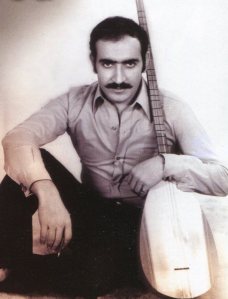 Muhlis Akarsu was prolific in his composition and recordings (in the pre-CD days) and fortunately many have been subsequently released on CD. The more I listen too these recordings, both solo and as part of the Muhabbet series, the more his brilliance is evident. This deyiş is from his last recording prepared shortly before he was killed in Sivas on 2 July 1993. The album was released after the Sivas events with the title Sivas Ellerinda Ömrüm Çalınır which includes the recording of that re-written version of the Pir Sultan Abdal deyiş performed by Arif Sağ (see
 Aşık İbreti is someone I would like to have met. His no nonsense plain speaking is so engaging – and, one thinks, quite courageous. His language is simple and his is message clear. İbreti’s real name was Hıdır Gürel and he was born in 1920 in the Sarız region of Kayseri. In 1967 we was caught up in attacks against Alevis in Elbistan. A working man, maker and seller of musical instruments and miner, he died in 1976. Musa Eroğlu, the great singer and bağlama player from Mut – often called the modern Karacaoğlan – is something of a champion of İbreti’s lyrics. He recorded the genuinely magnificent İlme değer verdim (Gördümde geldim) on his recording Yolver Dağlar and recently contributed İbreti’s Aşkın kabesi (İnsanlığa hizmet ibadetimdir) to the remarkable recording initiative by Kalan Music called Kızılbaş. Dertli Divani has also recorded the work of İbreti including Hakikat denildi erkânımıza on his 2000 masterwork Serçeşme. İbreti’s poems were published in 1996 in the book titled İlmer Değer Verdim by Adil Ali Atalay (Vaktidolu) whose publishing house, Can Yayınları, has contributed so much to the dissemination of Alevi culture.
 PİR SULTAN ABDAL and me