• About Pir Sultan Abdal
  • About the ‘me’ in this blog
  • Index of translations on this blog
  • More translations available in my PhD thesis
  • Regarding the translations on this blog

PİR SULTAN ABDAL and me

~ A personal reflection on the great Alevi poet's lyric works and influence – mostly through translation

PİR SULTAN ABDAL and me

Author Archives: koerbin

Pir Sultan Abdal ‘Bülbül olsam varsam gelsem’ (Allah Allah desem gelsem)

15 Wednesday Jul 2009

Posted by koerbin in Translations

≈ 2 Comments

Tags

Gölpınarlı, Kul Himmet, mahlas, Muhlis Akarsu, Nelly Furtado, Pertev Naili Boratav, Ruhi Su, Translation
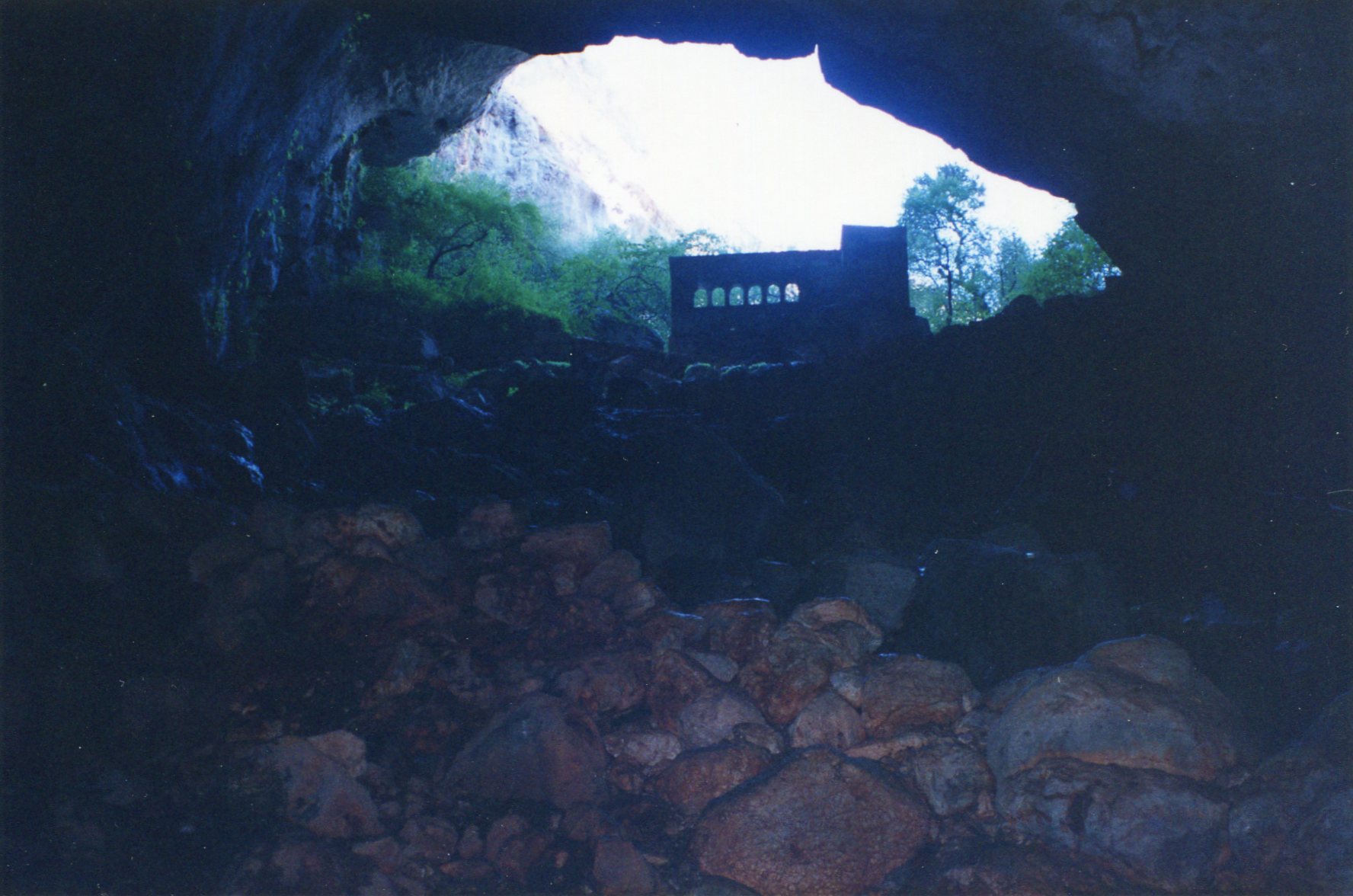
Cennet Mağarası near Narlıkuyu


This song is also known as Allah Allah desem gelsen. My translation is based on the text collected from Ali İzzet Özkan by Pertev Naili Boratav and included in Boratav and Gölpınarlı’s 1943 book on Pir Sultan Abdal. It rather stands out awkwardly as a Pir Sultan piece being in the form of a conversation (söyleşi) on the theme of transformations – folk theme common throughout European folkore (The Two Magicians being the most well known English version). However it does bring in some suggestions of mystical themes, which might be why Ali İzzet attributed it Pir Sultan. We know from İlhan Başgöz that Ali İzzet was readily prepared to attribute deyiş to Pir Sultan if he thought them appropriate. Halil Atılgan in his book Türkülerin İsyanı observes that it was also collected in the eastern Anatolian Iğdır region where the version is attributed to Kul Himmet Üstadım which is also surprising as Kul Himmet Üstadım is generally associated with the Sivas-Divriği region. The attributions at the very least suggest it is a lyric favoured among Alevis. Also, İbrahim Aslanoğlu in his book on Kul Himmet Üstadım (1976) does not include this text. As can be noted from Atılgan’s book, the TRT ‘official’ repertoire version does not include a şah beyit (mahlas) at all and manifests as a somewhat less interesting and simple türkü.

The recorded versions of this song by Muhlis Akarsu and Ruhi Su (who recorded the song in 1971 on his first LP Seferberlik Türküleri) change the opening line from Bülbül olsam varsam gelsen to Allah Allah desem gelsem, which does fit a little more logically with the following line Hakkın divânına dursam to present an opening reading “If I come and repeat Allah Allah/If I stand in the presence of God”. I have given the Turkish text and based my translation, however, on the version as presented in Boratav and Gölpınarlı although it retains is some confusing regionalisms, such as alma for elma, şahan for şahin, yanıl for yanal and çövmem for çöven. The final verses present the most problems however. The line Ben bir Azrail olsam (If I am the Angel of Death) seems corrupt, certainly for a Pir Sultan Abdal lyric! This song is an 8 syllable koşma yet this line only contains 7 syllables. This can be fudged, as Ruhi Su does, by inserting a spurious syllable – not uncommon practice – to make Azrail, Azırail. Muhlis Akarsu’s solution seems more satisfying. Akarsu sings Ben bir can alıcı olsam (If I am a receiver of souls). The second last line containing the mahlas is also problematic. The printed version has bulsa (if he/she finds) which doesn’t make a lot of sense in the context; and other sources, including the recorded versions have bulsan (if you find) which is more consistent and logical. It does put the mahlas into the position of an object rather than the subject, which does happen, but is somewhat uncommon. In this reading the accusative ending (-ı) is lacking, however that is a very common practice in folk lyrics. The use of the form üstadın (your master) in this line suggests this is not part of the mahlas and this form is certainly not associated with Pir Sultan; however it does suggest why the attribution mentioned above may have been made to Kul Himmet Üstadım.

Finally, I should mention the controversy over the use of Muhlis Akarsu’s recording by Nelly Furtado on her song Wait for You. On one level it would be nice to think the likes of Ms Furtado or the song’s producer DJ Timbaland have the curiosity, interest and good taste to investigate the work of master Alevi aşık-s and musicians like Akarsu. It is rather unfortunate however that it appears that such interest does not extend to the good grace and good intent of acknowledging such sources, traditions and artists. It would seem to be a position of arrogance to think that Muhlis Akarsu is just some ‘obscure’ musician and that no one would notice or care about such self-serving use. Besides the generally shabby approach of pop music muscle and identities, the real issue, if I understand correctly, would be the actual sample they used from Muhlis Akarsu’s recording Ya Dost Ya Dost, a selection of recordings issued by Kalan Müzik in 1994 (see the English language report from the Turkish online newspaper Today’s Zaman – only available now since the paper was shut down in July 2016 thanks to the Internet Archive). I believe the original recording of the song was on Akarsu’s album Kalk Gidelim Deli Gönül though I don’t know the date of its release, but judging by the sound I would say some time in the late 1980s, possibly 1987. Ruhi Su recorded the song earlier (1971) with much the same musical phrase; and the song is, or course, essentially traditional and in the public domain.

Pir Sultan Abdal: Bülbül olsam varsam gelsem

Translation: Paul Koerbin


If I am a nightingale if I approach and come

If I stand in the presence of God

If I am a rosy red apple

If I sprout on your branch, what do you say?

If you are a rosy red apple

If you come to sprout on my branch

If I am a silver clad crook staff

If I draw and strike a blow, what do you say?

If you are a sliver clad crook staff

If you come to draw and strike a blow

If I am a handful of maize

If I am scattered on the ground, what do you say?

If you are a handful of maize

If you come to be scattered on the ground

If I am a beautiful grey partridge

If I gather up bit after bit, what do you say?

If you are a beautiful grey partridge

If you come to gather up bit after bit

If I am a young falcon bird

If I seize and steal you off, what do you say?

If you are a young falcon bird

If you come to seize and steal me off

If I am a shower of sleet

If I break your wing, what do you say?

If you are a shower of sleet

If you come to break my wing

If I am a wild nor’easter wind

If I spurn and disperse, what do you say?

If you are a wild nor’easter wind

If you come to spurn and disperse

If I have a great sickness

If I lie down in your way, what do you say?

If you have a great sickness

If you come to lie down in my way

If I am the Angel of Death

If I take your soul, what do you say?

If you are the Angel of Death

If you come to take my soul

If I am a subject destined for heaven

If I enter into heaven, what do you say?

If you are a subject destined for heaven

If you come to enter into heaven

If you find your master Pir Sultan

If we enter in company together, what do you say?

———————————————————————————————————–

Original text from Pir Sultan Abdal by Gölpınarlı and Boratav (1943)

Bülbül olsam varsam gelsem

Hakkın divânına dursam

Ben bir yanıl alma olsam

Dalında bitsem ne dersin

Sen bir yanıl alma olsan

Dalımda bitmeye gelsen

Ben bir gümüş çövmen olsam

Çeksem indirsem ne dersin

Sen bir gümüş çövmen olsan

Çekip indirmeye gelsen

Ben bir avuç darı olsam

Yere saçılsam ne dersin

Sen bir avuç darı olsan

Yere saçılmaya gelsen

Ben bir güzel keklik olsam

Bir bir toplasam ne dersin

Sen bir güzel keklik olsan

Bir bir toplamaya gelsin

Ben bir yavru şahan olsam

Kapsam kaldırsam ne dersin

Sen bir yavru şahan olsan

Kapıp kaldırmaya gelsen

Ben bir sulu sepken olsam

Kanadın kırsam ne dersin

Sen bir sulu sepken olsan

Kanadım kırmaya gelsen

Ben bir deli poyraz olsam

Tepsem dağıtsam ne dersin

Sen bir deli poyraz olsan

Tepip dağıtmaya gelsen

Ben bir ulu hasta olsam

Yoluna yatsam ne dersin

Sen bir ulu hasta olsan

Yoluma yatmaya gelsen

Ben bir Azrâil olsam

Canını alsam ne dersin

Sen bir Azrâil olsan

Canımı almaya gelsen

Ben bir cennetlik kul olsam

Cennete girsem ne dersin

Sen bir cennetlik kul olsan

Cennete girmeye gelsen

Pir Sultan üstadın bulsa(n)

Bilece girsek ne dersin
Muhlis Akarsu ‘Demokrasi nerde ise ordayız’

07 Tuesday Jul 2009

Posted by koerbin in Translations

≈ 2 Comments

Tags

Arif Sağ, deyiş, Muhlis Akarsu, Translation

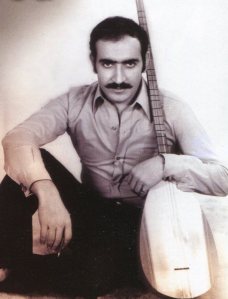
akarsuMuhlis Akarsu was prolific in his composition and recordings (in the pre-CD days) and fortunately many have been subsequently released on CD. The more I listen too these recordings, both solo and as part of the Muhabbet series, the more his brilliance is evident. This deyiş is from his last recording prepared shortly before he was killed in Sivas on 2 July 1993. The album was released after the Sivas events with the title Sivas Ellerinda Ömrüm Çalınır which includes the recording of that re-written version of the Pir Sultan Abdal deyiş performed by Arif Sağ (see my previous post). Akarsu’s voice is extraordinarily rich – singing in the deep baritone he favoured from the time of the Muhabbet recordings in the early 1980s –  and the songs very strong, mostly his own compositions, including the deyiş that became, after his death, so poignant Yine gönlüm hoş değil (Again my heart is not happy). Akarsu also performs the Turna semahı and Pir Sultan’s Bir güzelin aşığım. Interestingly, Arif Sağ begins his 1993 recording called Direniş (‘Resistance’, recorded only a few days before the Sivas massacre and still only ever released on cassette) with this deyiş although he credits the source as Davut Sulari while the music is credited to Akarsu on his recording.
The deyiş translated here however is an unabiguous statement, straightforward, direct. The main complexity in the translation is what to do with the word Hak. It means God, especially in the context used in the song and evokes the Alevi concept of enel-hak (I am God) often considered as an expression of the humanistic qualities of Alevi belief. However, while this translation must prevail, it does lose the other meaning of hak as ‘right’, ‘justice’ or ‘true’. Akarsu does help out however by making a slight change to the repeated last line on verses one and three. Here he uses hak in the sense of human rights, insan hakkı. I have taken the text from the book Muhlis Akarsu, hayatı, yaşamı, sanatı, şiirleri by Süleyman Zaman published by Can Yayınları in 2006. Besides the change to the repeated last line, the only other difference between the printed and sung version is in the 3rd line of verse two where Akarsu sings bilinmez (is not known) rather than görünmez (is not seen).

Demokrasi nerde ise ordayız  (Presently democracy will be with us)

Translation: Paul Koerbin


Friends, what we believe is clear

Presently democracy will be with us

We are not duped by the words of bigots

Presently democracy will be with us

(Presently human rights will be with us)

Our dead don’t come back to life again

Ignorant fatwas are not given against humans

Not among us do class divisions appear

Presently democracy will be with us

Our ways are not reconciled with division

No meddling with the beliefs of humans

No conceit, no competition with anyone

Presently democracy will be with us

(Presently human rights will be with us)

We know mankind is God and God is mankind

Our rose opens within our hearts

I am Akarsu, all of us are sister and brother

Presently democracy will be with us

———————————————————————————————————–

Dostlar bizim inancımız bellidir

Demokrasi nerde ise ordayız

Softaların sözlerine kanmayız

Demokrasi nerde ise ordayız

(İnsan hakkı nerde ise ordayız)

Bizim ölüler’mız geri dirilmez

İnsanlara boş fetvalar verilmez

Bizde sınıf bölücülük görülmez

Demokrasi nerde ise ordayız

Yollarımız ikilikle barışmaz

İnsanların inancına karışmaz

Benlik yoktur kimse ile yarışmaz

Demokrasi nerde ise ordayız

(İnsan hakkı nerde ise ordayız)

İnsan Hak’tır Hak insandır biliriz

Gönüllerde açar bizim gülümüz

Akarsu’yum bacı kardaş hepimiz

Demokrasi nerde ise ordayız

Thesis work: Tolga Sağ performance at the Pir Sultan Abdal Etkinlikleri (Festival), 2002

23 Tuesday Jun 2009

Posted by koerbin in Banaz

≈ 1 Comment

Tags

Thesıs, Tolga Sağ

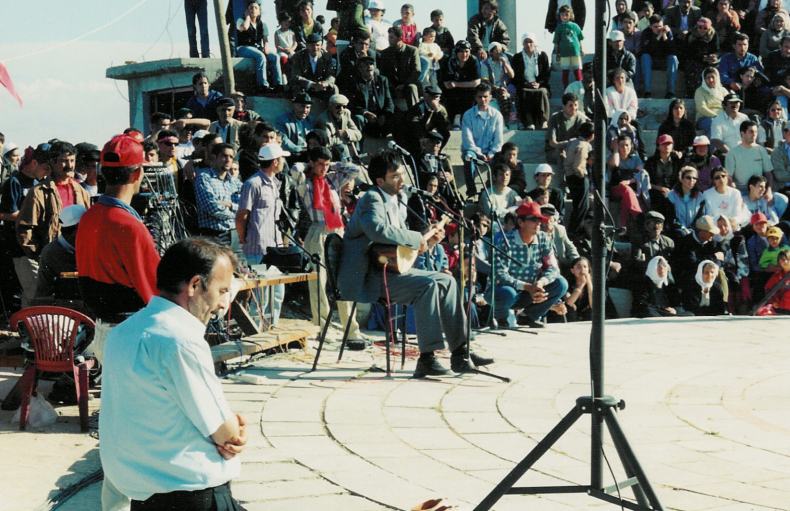
Tolga Sag Banaz 2002Have been analysing a performance by Tolga Sağ that I recorded at the 2002 Pir Sultan Abdal Festival in Banaz. The festival that year took place over the weekend of the 22nd and 23rd June.  Sağ did two performances, the first on the Saturday was an hour long performance and the second on the Sunday was a half hour performance. I am studying the first, longer performance most specifically. The work so far has been trying to identify all the songs performed. The set consisted of the following deyiş and türkü.
1. Dünya arsızındır fırsat pirsizin. This deyiş is from Davut Sulari whose daughter, Edibe was killed in the Madımak Hotel during the 1993 Pir Sultan Abdal Festival in Sivas.

2. Yarim için ölüyorum. A türkü associated with Nesimi Çimen who was also killed in Sivas in 1993.

3. Medet ya Muhammet medet ya Ali. A deyiş from Pir Sultan, with the mahlas form of Abdal Pir Sultan’ım. This song was included on the first Muhabbet recording (1984) sung by Tolga’s fatehr Arif Sağ.

4. Rehberim Ali’nin devri yürüye. Another Pir Sultan piece with the mahlas form Abdal Pir Sultan’ım. The words are somewhat altered from the published versions of this deyiş, which usually goes under the first line Hazreti Ali’nin devri yürüye. The wording changes emphasise the rebellious qualities of the deyiş.

5. Türbesin üstünü nakş eylediler. Another deyiş from Pir Sultan; sung on the 3rd Muhabbet recording by Arif Sağ.

6. Medet Allah medet (duaz-ı imam). Famous duaz of Aşık Muhammet and associated with Dertli Divani and the Urfa (Kısas) cem.

7. Short açış then Sağ sings the first verse of an uzun hava from Sivas beginning with the line Bu nasıl işidi bu nasıl hışım. Interestingly Sağ  performed this same piece at the same festival five years later in 2007. 09_bunasil_uh

8. Oğul (Gömdüm oğul seni toprağa gömdüm). Written by Mustafa Atıcı. Tolga Sağ sings this on the first Türküler Sevdamız recording.

9. Dilo (Yüce dağbaşında). Written by Mehmet Koç and the opening song on Sağ’s first solo recording Yol.

10. Semah based on Muhlis Akarsu’s Açığım yok kapalım yok dünyada. Muhlis Akarsu was another to die in the Madımak Hotel in Sivas in 1993.

11. Urfa semahı. Two semah from Dertli Divani, Başım açık yalın ayak yürüttün (Aşık Sıtkı baba) and Kerbela çölünden sakin mi geldi (Dedemoğlu).

12. Gurbeti ben mi yarattım. Deyiş from Muhlis Akarsu.

13. Mevlam gül diyerek iki göz vermiş. Deyiş from Aşık Mahzuni Şerif who had died only a month before the 2002 Pir Sultan Abdal Festival.

14. A deyiş from the Diyarbakırlı poet Aşık İhsani, renowned in the 1960s as a leftist poet and who appears as the zakir in the 1973 Remzi Jöntürk film staring Fikret Hakan, Pir Sultan Abdal. The song is Ben ölüyom sen ölmüyon. It appears on the second of Yavuz Top’s three Deyişler albums with the music credited to Top. Strangely, Sağ’s performance includes the mahlas Ruhsati rather than İhsani; not sure if this is deliberate or just a mistake. Ruhsati was the famous 19th aşık from Deliktaş near Kangal.  16_ruhsati

15. Eşeği saldım çayıra. Deyiş from Kazak Abdal, a 17th century aşık from the Balkans (Romania).

16. Bacacılar yüksek yapar also known as Karam. Sağ moves into halay mode now with song from the playing of the influential musician from Ürgüp, Refik Başaran (1907-1947) who made a number of recordings in the 1930s and 1940s.

17. Kostak yeri. Tolga Sağ’s ‘hit song’ from his album Yol. It is a türkü from Niğde – probably the most renowned folksong from that area. Sağ’s arrangement on his album introduces some brassy jazz inflections.

18. Mor koyun. Another türkü – and by this stage of  the performance people had moved from to dancing the halay rather than semah – which Sağ recorded on the first Türküler Sevdamız recording.

19. Sağ ends with a potpori of halaylar in 6/8 rhythm beginning with Göleli gelin from Kars-Ardahan (and included on his recording Yol) followed by the Ağrı halay Şu dağlar karlı dağlar.  21_Budaglara

Pir Sultan Abdal ‘Bir nefesçik söyliyelim’

22 Monday Jun 2009

Posted by koerbin in Translations

≈ Leave a comment

Tags

Cahit Öztelli, deyiş, Gölpınarlı, nefes, Translation, Vahid Dede (Salcı)


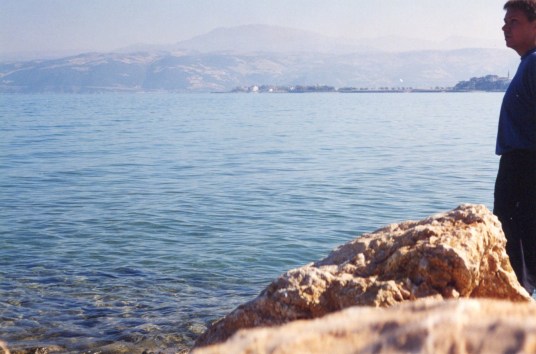
Lake Eğirdir, 1996

Lake Eğirdir, 1996

The opening line declares this lyric as a little nefes (hymn) – a song of praise or worship. We may still understand this as an Alevi deyiş in its synonymous sense or course – it is Pir Sultan – but it does fit will with the Bektashi sensibility and indeed there are at least two musical settings of this nefes in the Bektashi tradition. The first is in the gerdaniye makam and is published in the second edition of Gölpınarlı’s Alevi-Bektaşi Nefesler (the piece is sourced from Rauf Yekta’s publication of nefesler in the 1930’s for the Istanbul Konservatuvarı). The other setting is from Vahid (Salcı) Dede and was first published in Cahit Öztelli’s 1971 book on Pir Sultan Abdal and also in the final volume (vol. 5) of İsmail Özmen’s Alevi-Bektaşi Şiirleri Antolojisi. Both settings are in 8/8 time, interestingly, as the lyric itself is in semai form with an eight syllable count (the greater majority of Pir Sultan’s lyrics are in koşma form with an 11 syllable count. The language is simple though it uses some terms with specific meaning in Alevi-Bektaşi culture. In this case I have thought it preferable to attempt translations of these terms rather than leave them in their original form because of the overall simplicity of the language. In the first verse are terms suggesting a watery symbolism – derya (sea) and umman (ocean), but these also have meaning relating to the kamil insan (perfect person), a person of depth, integrity and knowledge. Ideas that the translator needs to try and convey. The Meydan can mean simply an open space, but here it refers to the specific place where the ritual ceremonies (ayin-i cem) are conducted. The Dar here refers to the central place of the Meydan where the main services are conducted and where a person confesses faith to the way.

Pir Sultan Abdal: Bir nefesçık söyliyelim

Translation: Paul Koerbin

Bir nefesçik söyliyelim

Dinlemezsen neyliyelim

Aşk deryasın boylıyalım

Ummana dalmağa geldim


Aşk harmanında savruldum

Hem elendim hem yuğruldum

Kazana girdim kavruldum

Meydana yenmeğe geldim


Ben Hakkın ednâ kuluyum

Kem damarlardan beriyim

Ayn-i Cem’in bülbülüyüm

Meydana ötmeğe geldim


Ben Hak ile oldum aş’na

Kalmadı gönlümde nesne

Pervaneyim ateşine

Şem’ine yanmağa geldim


Pir Sultan’ım yer yüzünde

Var mıdır noksan sözümde

Eksiğim kendi özümde

Dârına durmağa geldim

Let us sing a little hymn

If you don’t listen what should we do

Let us traverse the depths of love

I came to plunge into that vast ocean


I was winnowed in the harvest of love

I was both sifted and kneaded

I entered the pot and was roasted

I came to attain the Sacred Place


I was the lowest of God’s slaves

I was clear of malicious streaks

I was the nightingale in the Ceremony

I came to sing for the Sacred Place


I was well acquainted with God

Nothing else reamained in my heart

I am a moth unto your flame

I came to burn at your candle


I am Pir Sultan here in the world

Is there anything deficient in my word

Anything lacking in my very self

I came to stand right before you

Aşık İbreti ‘Değiliz’

14 Sunday Jun 2009

Posted by koerbin in Translations

≈ 8 Comments

Tags

Adil Ali Atalay Vadidolu, Aşık İbreti, Dertli Divani, Kızılbaş, Musa Eroğlu

img395Aşık İbreti is someone I would like to have met. His no nonsense plain speaking is so engaging – and, one thinks, quite courageous.  His language is simple and his is message clear. İbreti’s real name was Hıdır Gürel and he was born in 1920 in the Sarız region of Kayseri. In 1967 we was caught up in attacks against Alevis in Elbistan.  A working man, maker and seller of musical instruments and miner, he died in 1976. Musa Eroğlu, the great singer and bağlama player from Mut – often called the modern Karacaoğlan – is something of a champion of İbreti’s lyrics. He recorded the genuinely magnificent İlme değer verdim (Gördümde geldim) on his recording Yolver Dağlar and recently contributed İbreti’s Aşkın kabesi (İnsanlığa hizmet ibadetimdir) to the remarkable recording initiative by Kalan Music called Kızılbaş. Dertli Divani has also recorded the work of İbreti including Hakikat denildi erkânımıza on his 2000 masterwork Serçeşme. İbreti’s poems were published in 1996 in the book titled İlmer Değer Verdim by Adil Ali Atalay (Vaktidolu) whose publishing house, Can Yayınları, has contributed so much to the dissemination of Alevi culture.
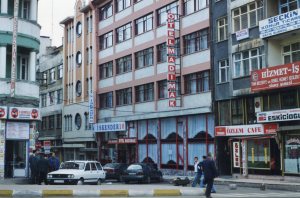
The translation is fairly straightforward and I have tried to keep the language as ‘natural’ as possible. In the second verse he refers to Hızır (not to be confused with the despised Hızır Paşa, Pir Sultan’s nemesis) who obtained immortality by drinking the water of life – this is the concept I have tried to achieve in the translation. The other problematic word is gılman, which is sort of the male equivalent of ‘houries’. I have tried to render this with some taste – though I think there is a touch of the invective in the original. I repeat, İbreti is someone I would love to have met.

The picture is a photo of the notorious Madımak Otel (Hotel) in Sivas, which I took in 1996, three years after the fanatics set fire to the building because of the secular expressions of the artists and writers staying there who were attending the Pir Sultan Abdal Festival, killing 35 inside.

Postscript: I have made a couple of changes to the last two verses after reader Sürmeli pointed out a couple of errors. Many thanks.

Aşık İbreti: Değiliz

Translation: Paul Koerbin


Don’t climb up the minaret and cry out to us

We know this stuff, we’re not deaf

Think about yourself, don’t worry about us

We have no mind to quarrel with you

We know God is present everywhere

We know the mature human is immortal

We know anything other than this is nothing

Your estimation is wrong, we are not blind

If  there is humanity then your resolve is true

Improve you own self if you have the strength

We have no necessity for your heaven

We are not slaves to your houries and pageboys

We feel no compulsion for Arabic prayers

Consider us Muslim or infidel as you wish

To belittle the human is your biggest blasphemy

We are not unbelievers, we believe in this

Ibreti, humankind grieves for this situation

These words will anger crude fanatics

The one who is unaware of his true self will take offence

We feel no compulsion to delude of amuse them

——————————————————————————————-

Original text from Aşık İbreti İlme Değer Verdim (Can Yayınları, 1996)


Minareye çıkıp bize bağırma

Haberimiz vardır, sağır değiliz

Sen kendini düşün bizi kayırma

Sizlere kavgaya uğur değiliz

Her yerde biz Hakk’ı hazır biliriz

Olgun insanları Hızır biliriz

Bundan başkasını sıfır biliriz

Tahmininiz yanlış, biz kör değiliz

Eğer insanlıksa doğru niyetin

Nefsini ıslah et varsa kudretin

Bize lazım değil senin cennetin

Huriye gılmana esir değiliz

Arapça duaya değiliz mecbur

İster müslüman bil, istersen gavur

İnsan hor görmek en büyük küfür

Buna inanmışız, münkir değiliz

İbreti, bu hâle insan acınır

Ham sofular bu sözlerden gücenir

Aslına ermeyen elbet gocunur

Onu avutmaya mecbur değiliz

Pir Sultan Abdal ‘Şu karşı yaylada göç katar katar’

11 Thursday Jun 2009

Posted by koerbin in Translations

≈ 6 Comments

Tags

Cahit Öztelli, deyiş, Muazzez Türüng, Translation, İbrahim Aslanoğlu


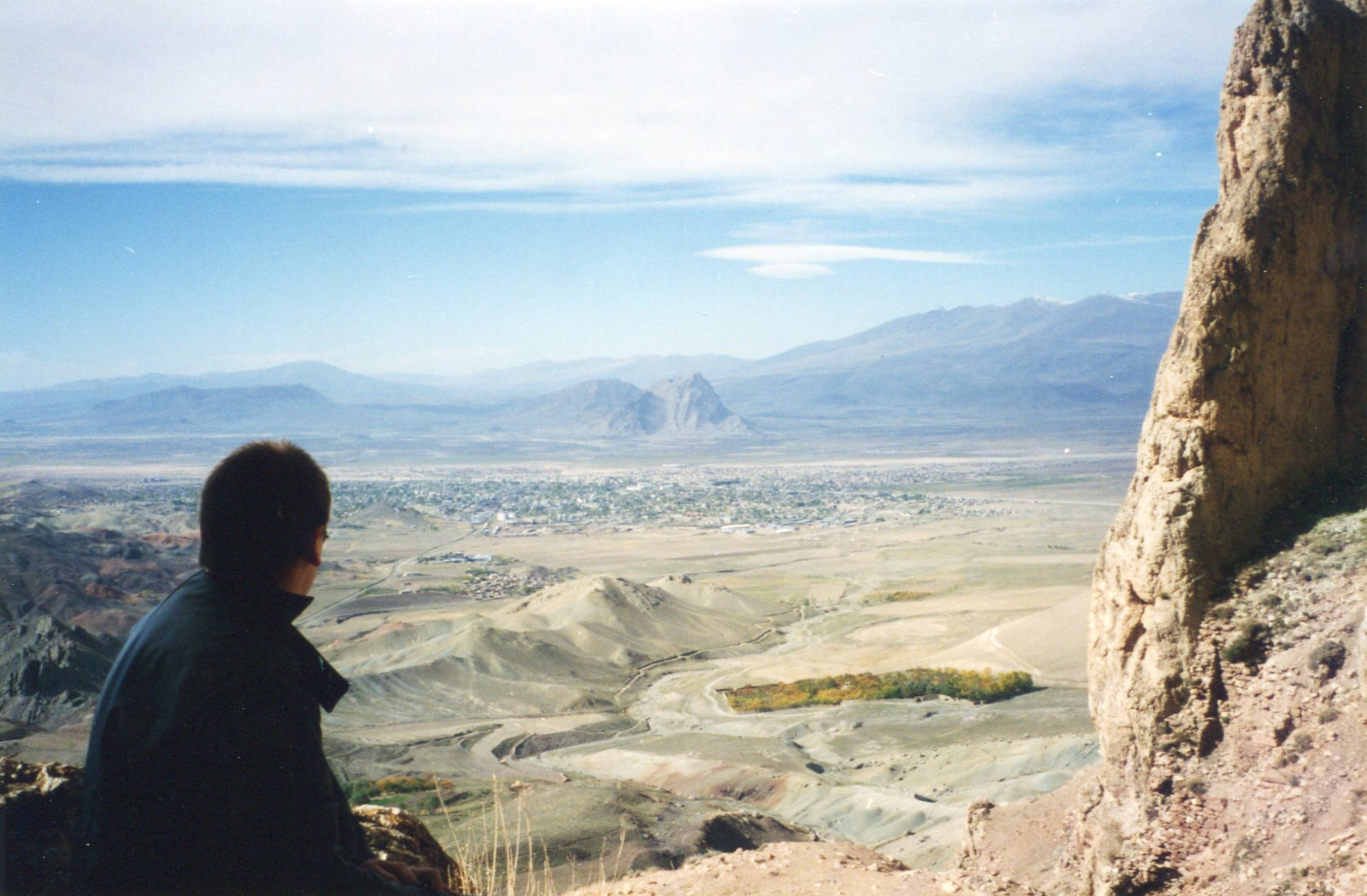
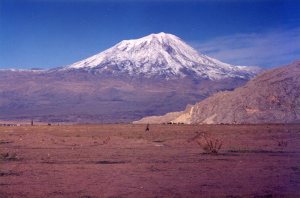
View of Doğubeyazıt

View over Doğubeyazıt from the ancient fortress

This deyiş does not appear in the anthologies of Pir Sultan Abdal poems until Cahit Öztelli’s 1971 publication of the ‘complete poems’ (bütün şiirleri). That collection was indeed a more complete collection than earlier anthologies with 297 songs included. However later editions such as the massive work by Ali Haydar Avcı, now run to around 400 texts. The text was collected by the great Sivas folkorist İbrahim Aslanoğlu and was subsequently published in his 1984 book Pir Sultan Abdallar. Interestingly the song was actually recorded by a popular singer, Muazzez Türüng, for Odeon records in 1962 (and recently made available again by Odeon on its album of archival recordings called Harman).

The poem has more of the folksong quality about it and the theme of love, rather than the batınî mystical esoteric qualities of many of the lyrics attributed to Pir Sultan – and is thus somewhat easier to get an English translation. It is one of the Pir Sultan lyrics that so wonderfully evokes the Anatolian landscape, with the image of the nomads migrating across the high plateau. One of the main problems for tranlation include finding the right feel in English for the word suna which is a type of pheasant bird (or as Mehmet Özbek in his new dictionary of folksong terms Türkülerin Dili says, göl ördeği, lake duck). The bird is addressed personally in the song and I believe it needs to be retained in the translation; but a translation like ‘my duck’ is not going to work in English. I have used ‘pheasant’ which is not much better but have added ‘little’ so as to emphasise the intimacy of the conversation and the estrangement of the singer. The second last line of the last verse is also a little problematic in regard to getting the nuances. The word nimet can mean ‘favour’ or ‘blessing’ but also ‘food’ or ‘bread’. The latter would work very well with the verb used (yemek meaning ‘to eat’) but I’m not convinced this is the sense intended; and yemek can also act as an auxillary verb without its literal meaning of ‘to eat’. The last word in this line, helallaşalım, translates well enough as ‘let us fogive all’ but it implies mutal forgiveness and even has the sense of ‘last rites’ as in someone dying. Though tempted I have chosen not to emphasise that finality in the translation. This song was a favourite of a good friend of mine and confessed it sometimes brought him to tears to hear it or play it.

Şu karşı yaylada göç katar katar

Translation: Paul Koerbin

On the high lands opposite they depart in lines

The love of a beauty fumes in my mind

This separation is worse than death to me

It has passed, the beloved caravan, don’t delay me

The one that I love sits at the head

This pain of that beauty destroys me

This separation brings a cruelty upon me

It has passed, the beloved caravan, don’t delay me

If I disappear, my little pheasant, don’t weep for me

Don’t burn my heart in love’s fire

Don’t take love from me to bind to some other

It has passed, the beloved caravan, don’t delay me

If I go let this land be your home

Let the wolf at the hypocrites among us

If I die let the pain be in that one’s heart

It has passed, the beloved caravan, don’t delay me

I am Pir Sultan Abdal let us pass over mountains

Let us pass and come to the loved one’s land

I have had much of your favour let us forgive all

It has passed, the beloved caravan, don’t delay me

————————————————————————————————–

Original text (from Cahit Öztelli Pir Sultan Abdal Bütün Şiirleri)


Şu karşı yaylada göç katar katar

Bir güzel sevdası serimde tüter

Bu ayrılık bana ölümden beter

Geçti dost kervanı eğleme beni

Şu bemin sevdiğim başta oturur

Bir güzelin derdi beni bitirir

Bu ayrılık bana zulüm getirir

Geçti dost kervanı eğleme beni

Ben gidersem sunam bana ağlama

Ciğerimi aşk oduna dağlama

Benden başkasına meyil bağlama

Geçti dost kervanı eğleme beni

Gider isem bu il sana yurt olsun

Munafıklar aramıza kurt olsun

Ben ölürsem yüreğine dert olsun

Geçti dost kervanı eğleme beni

Pir Sultan Abdal’ım dağlar aşalım

Aşalım da dost iline düşelim

Çok nimetin yedim helallaşalım

Geçti dost kervanı eğleme beni

Iconography of books about Pir Sultan Abdal #2: Gölpınarlı and Boratav, 1943

07 Sunday Jun 2009

Posted by koerbin in Book iconography

≈ Leave a comment

Tags

Gölpınarlı, Pertev Naili Boratav

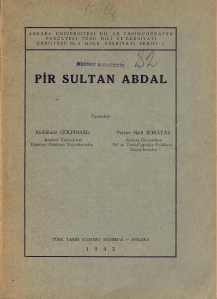
golpinarli_1943This book, simply titled Pir Sultan Abdal, was the second major work on Pir Sultan. It was published in 1943, 14 years after Ergun’s monograph, by the Türk Tarih Kurumu Basımevi in Ankara. The book was written and prepared by Abdülbâkî Gölpınarlı and Pertev Naili Boratav and is a major advance on Ergun’s book. Firstly it brings the literary historian (Gölpınarlı) and folklorist (Boratav) together. Most interesting is the work of Boratav who travelled in the Sivas region in 1939, including to Banaz, to undertake field work to collect songs and legends. Much that is in this book remains the foundation for our understanding of Pir Sultan. It includes around 136 song texts, but has a commentary of considerable substance. It also includes an index, glossary (lûgatçe) and some indication of the source of the text. A number of the texts come from Ergun, but there are also the texts collected by the great Sivas aşık Ali İzzet Özkan (1902-1981) mostly from the Şarkışla area from other aşık-s including Aşık Sabri and Aşık Veysel among others. The book is 198 pages in length and is bound in similar plain, soft cardboard to that of the earlier book by Ergun. As with the Ergun book, the printing is excellent. An expanded edition of the book was published nearly half a century later in 1991.
Iconography of books about Pir Sultan Abdal #1: Ergun, 1929

05 Friday Jun 2009

Posted by koerbin in Book iconography

≈ 1 Comment

Tags

Sadettin Nüzhet Ergun

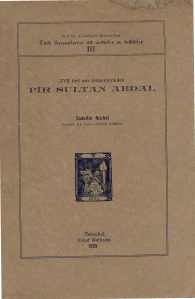
Of some interest to me is the iconography of the books about Pir Sultan and indeed Alevilik more broadly. I have been collecting as many editions of Pir Sultan texts et al. for some time and have copies of most, if not all, the seminal texts. So from time to time I will post some scans of the covers as a record of the iconography of these books.

ergun_1929The earliest monograph on Pir Sultan Abdal was the book by Sadettin Nüzhet (Ergun). Ergun’s adopted surname (soyadı) does not appear on the original 1929 edition of the book. It is titled in full: XVIIinci asır Sazşairlerinden Pir Sultan Abdal (Pir Sultan Abdal of the 17th century era minstrels (literally saz poets)) and is published by the Istanbul Evkaf Matbaası in soft brown cardboard covers. It is the 3rd volume in a series edited by Mehmet Köprülü (Köprülüzade Mehmet Fuat) titled Türk Sazşairleri âit metinler ve tetkikler (texts and researches regarding the Turkish saz poets), the first two volumes being devoted to the poets Gevheri and Erzurumlu Emrah. The book is 77 pages and includes the texts of 105 poems along with 6 notated melodies. The introductory matter by Ergun constitutes only about 15 pages, albeit of considerable value. Original price was 60 kuruş.
Pir Sultan Abdal ‘Bu yıl bu dağların karı erimez’

01 Monday Jun 2009

Posted by koerbin in Translations

≈ 1 Comment

Tags

deyiş, Memet Fuat, Metin Kunt, Translation

img453One of the most evocative of Pir Sultan’s lyrics; especially when sung to the beautiful melody with which it is associated. Tolga Sağ performs the most familar version; while Muharrem Ertaş performs a spine-tingling bozlak version that seems to suggest deeper roots. It illustrates very well the evocation of the Anatolian landscape, Pir Sultan’s world, and how this is reflected in the inner being. The language of this deyiş is somewhat simpler than the earlier ones I have posted, but not without challenges for the translator. While I generally prefer to retain the names of specific places I have translated Kızılırmak as Red River. Firstly, Kızılırmak in its English form “Kizilirmak” is likely to create something of a monstrosity in pronunciation. Secondly, I like the very slight hint to the frontier nature of ‘Red River’.  On the other hand I have left saz untranslated, preferring not to use ‘lute’ as that gives too much of a courtly ‘troubadour’ idea. I have not gone as far as Memet Fuat in his book on Pir Sultan Abdal in associating Zalim Paşa (‘tyrant Pasha) with Hızır Paşa the former follower of Pir Sultan who was later to become a Governor of Sivas and be responsible for Pir Sultan’s execution. Though of course such a connection makes sense and is supportable and indeed both versions of the song I linked to above refer to Hızır (Hıdır) Paşa. Fuat also offers Tanrı (God, lord) as a reading of Dost in the last verse. I have not accepted this and go with Companion as a stronger take on the literal meaning of  ‘friend’. The other word that is somewhat problematic to translate is kul. This literally means slave though as Metin Kunt notes in The Sultan’s Sevants: The Transformation of Ottoman Provincial Government, 1550-1650, the term is possessed of some abiguity meaning not only ‘slave’ but also more generally ‘servant’ as well as the specific meaning of a ‘slave’ reared for an official career in the Ottoman administration. Kul also has specific Alevi-Bektashi meaning: according to Esat Korkmaz in his Alevilik-Bektaşilik Terimleri Sözlüğü it expresses man’s relationship to God (‘Tanrı’ya göre insan‘) or the mürit‘s (disciple, follower) relation to the mürşid (spritual leader). Given the socio-political nature of this deyiş however I have gone with a rendering of kul as ‘mere subject’ that I think best suggests the idea of slave and servant. 
Bu yıl bu dağların karı erimez

Translation: Paul Koerbin

Bu yıl bu dağların karı erimez          

Eser bad-ı saba yel bozuk bozuk

Türkmen kalkıp yaylasına yürümez

Yıkılmiş aşiret il bozuk bozuk


Kızılırmak gibi çağladım aktım

El vurdum göğsümün bendini yıktım

Gül yüzlü ceranın bağına çıktım

Girdim bahçesine gül bozuk bozuk


Elim tutmaz güllerini dermeye

Dilim tutmaz hasta halin sormaya

Dört cevabın manasını vermeye

Sazım düzen tutmaz tel bozuk bozuk


Pir Sultan’ım yaratıldım kul diye

Zalim Paşa elinden mi öl diye

Dostum beni ısmarlamış gel diye

Gideceğim amma yol bozuk bozuk

The snow doesn’t melt on the mountains this year          

The morning breeze blows an ill wind of ruin

The Turkmen don’t start and make for the highlands

The nomads have cleared off and the land is in ruin


I purled and flowed like the Red River

I struck out and threw off the barrage within me

I entered the orchard of the rose faced gazelle

I entered its garden of roses all broken and in ruin


I cannot hold its roses for the gathering

I cannot speak of my sickness for the asking

Nor to give the meaning of the sacred books

My saz is un-tuned, the strings broken and in ruin


I am Pir Sultan I was created a mere subject

To die they say by the hand of the tyrant Pasha

My Companion commanded me, saying come

I will go but the way is broken and in ruin

Pir Sultan Abdal ‘Benim pîrim Şah-ı Merdân Ali’dir’

28 Thursday May 2009

Posted by koerbin in Translations

≈ Leave a comment

Tags

Bisâtî, deyiş, Menakıb, Translation

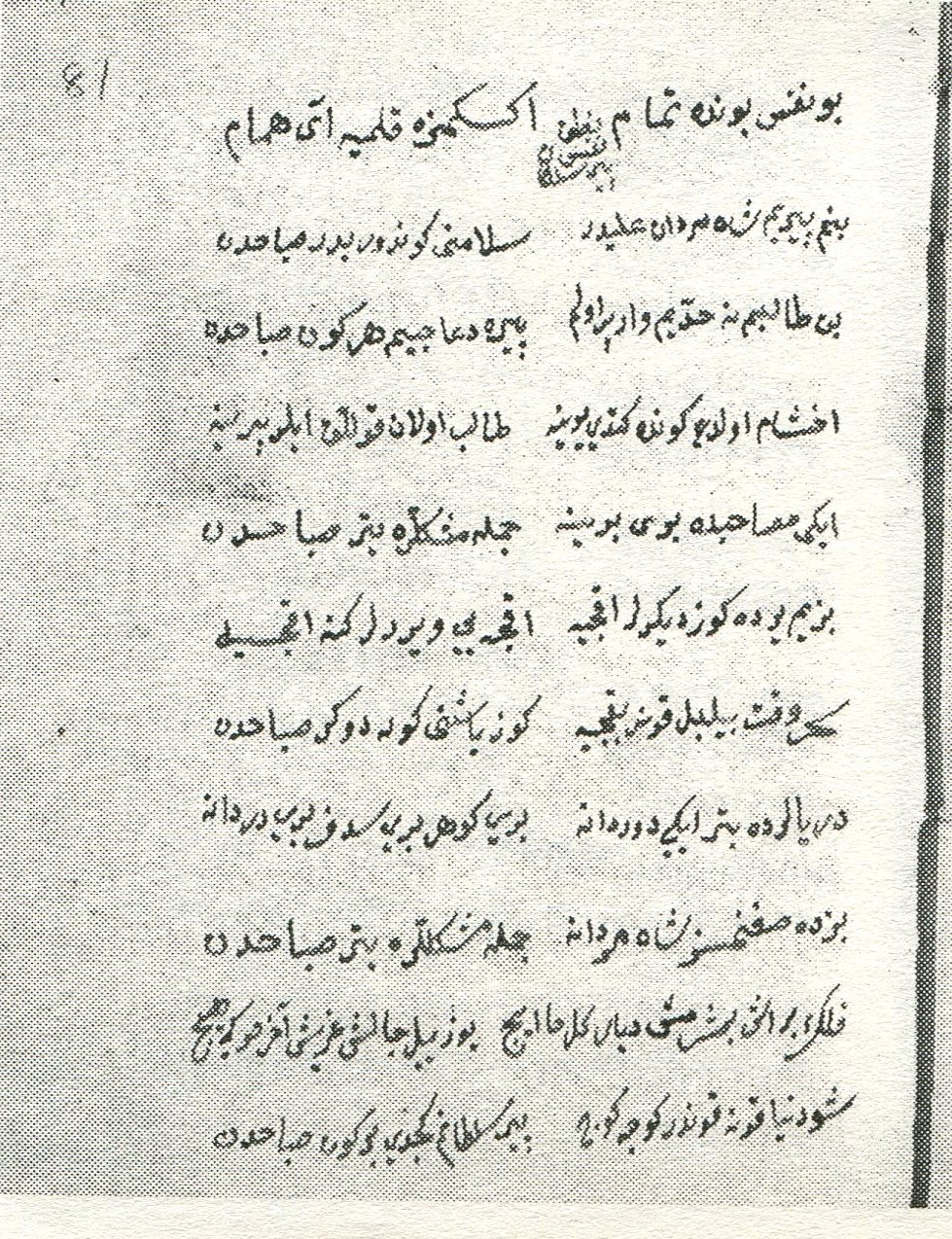
Benim Pirim facimileThis is a very challenging deyiş (nefes in the manuscript) to translate to English, so this must really be a work in progress. An interesting lyric because it comes from the the early 17th manuscript of the  Menâkıbu’l-Esrâr Behcetü’l-Ahrâr of Bisâtî (published in facsimile and modern transcription by Ahmet Taşğın in 2003). Interestingly, I have not found this text in any of the major collections of Pir Sultan Abdal poems. I have reproduced the transcription which does not adhere strictly to modern Turkish orthography. Given that this is one of the oldest recorded texts for a Pir Sultan lyric, we may reasonably look at it as carrying something of the original voice. The lyric, like much mystical poetry, shows a lot or paratactic elements (adding to the difficulty in achieving translation sense) and lacks some of the elements associated with lyrics that have been longer in the oral tradition, such as the repetition of lines (usually the last line in the quatrain). In this case we only get the repeated ‘cümle müşkillere yeter sabahdan’ in two verses. The translation tries to draw the essential character and meaning from the lyric, though may be uncertain in places. I found most difficulty in getting a satisfactory translation of the line ‘felek bir iş bişirmiş diyar gel ha ic‘ and I suspect the line ‘akceyi virirler gene akcesiye‘ may be proverbial, though I have not found a good English equivalent.  I have translated talib as ‘one who seeks’ rather than the simple noun ‘student’ as providing a better sense of the personal in the lyric (and perhaps to avoid other modernday confusions). The word ‘gün‘, the common word for day, also has meanings (particularly in older usage and poetry) of  ‘sun’ and ‘light’. Consequently I have used various aspects of this meaning in the translation. The image, taken from Taşğın’s book, is of the original text in the manuscript.

Benim pîrim Şah-ı Merdân Ali’dir

Translation: Paul Koerbin

My master saint is the Shah Ali

Send your greeting by the moon at dawn

I dare to strive to be as my saint

I pray to my saint with the morning light

Evening time and the sun recedes to the land

The one who is seeking worships his saint

Two in companionship one for each other

Enough for all hardships come the morning

Our eye to the ground  fixes on the coin

They give coin again for the coin itself

The nightingale settles in the garden before

dawn

With the morning the sun sheds it tears

Two pearls grow in the ocean depths

A pearl in part jewel in part shell

We take refuge with our Shah Ali

Enough for all hardships come the morning

A fateful work ripens the land, come and drink

Work a hundred years,  it is little in the end

That world of halting and moving on

I am Pir Sultan, he passed once with the morning

light

Original text from the Şeyh Sâfî Buyruğu (Menâkıbu’l-Esrâr Behcetü’l-Ahrâr) of Bisâtî edited by Ahmet Taşğın, Ankara 2003:

Benim pîrim Şah-ı Merdân Ali’dir

Selâmını göndür bedr-i sabahdan

Ben tâlibim ne haddim var pîr olam

Pîre duâcıyım her gün sabahdan

Ahşam oldı günde gitti yerine

Tâlib olan kulluk eyler pîrine

İki musâhibde biri birine

Cümle müşkillere yeter sabahdan

Bizim yerde göz dikerler akceye

Akceyi virirler gene akcesiye

Seher vakti bilbül konar bakceye

Göz yaşını gün döker sabahdan

Deryalarda biter iki dürdane

Biri gevher biri sedef biri dürdane

Biz de sığınmısız Şah-ı Merdâna

Cümle müşkillere yeter sabahdan

Felek bir iş bişirmiş diyar gel ha ic

Yüz yıl calış aziş ahir sonı hiç

Şu dünya kona kondur göce göc

Pîr Sultanım gecdi bir gün sabahdan

← Older posts
Newer posts →

Blog at WordPress.com.

  • Subscribe Subscribed
    • PİR SULTAN ABDAL and me
    • Already have a WordPress.com account? Log in now.
    • PİR SULTAN ABDAL and me
    • Subscribe Subscribed
    • Sign up
    • Log in
    • Report this content
    • View site in Reader
    • Manage subscriptions
    • Collapse this bar
 

Loading Comments...