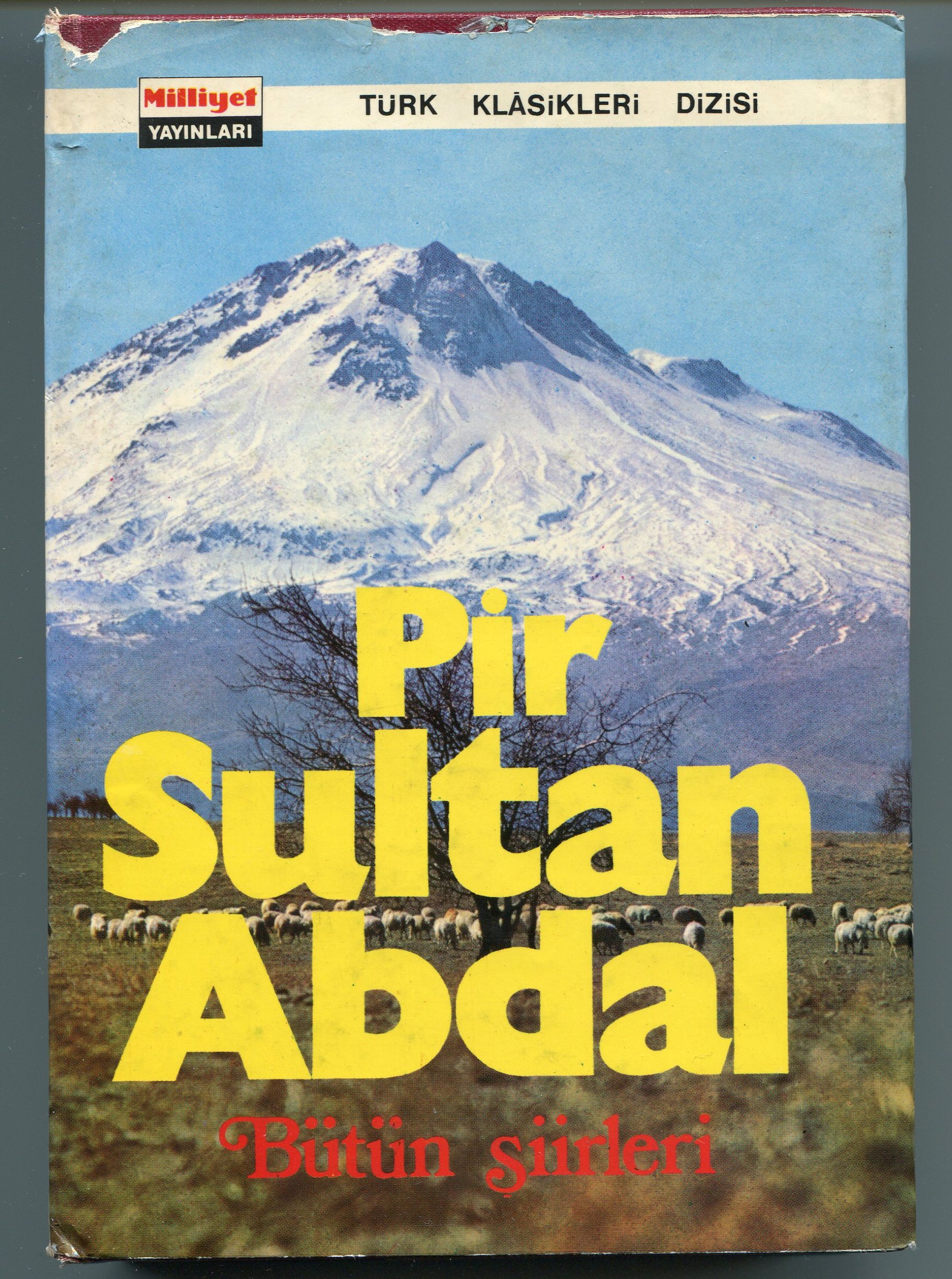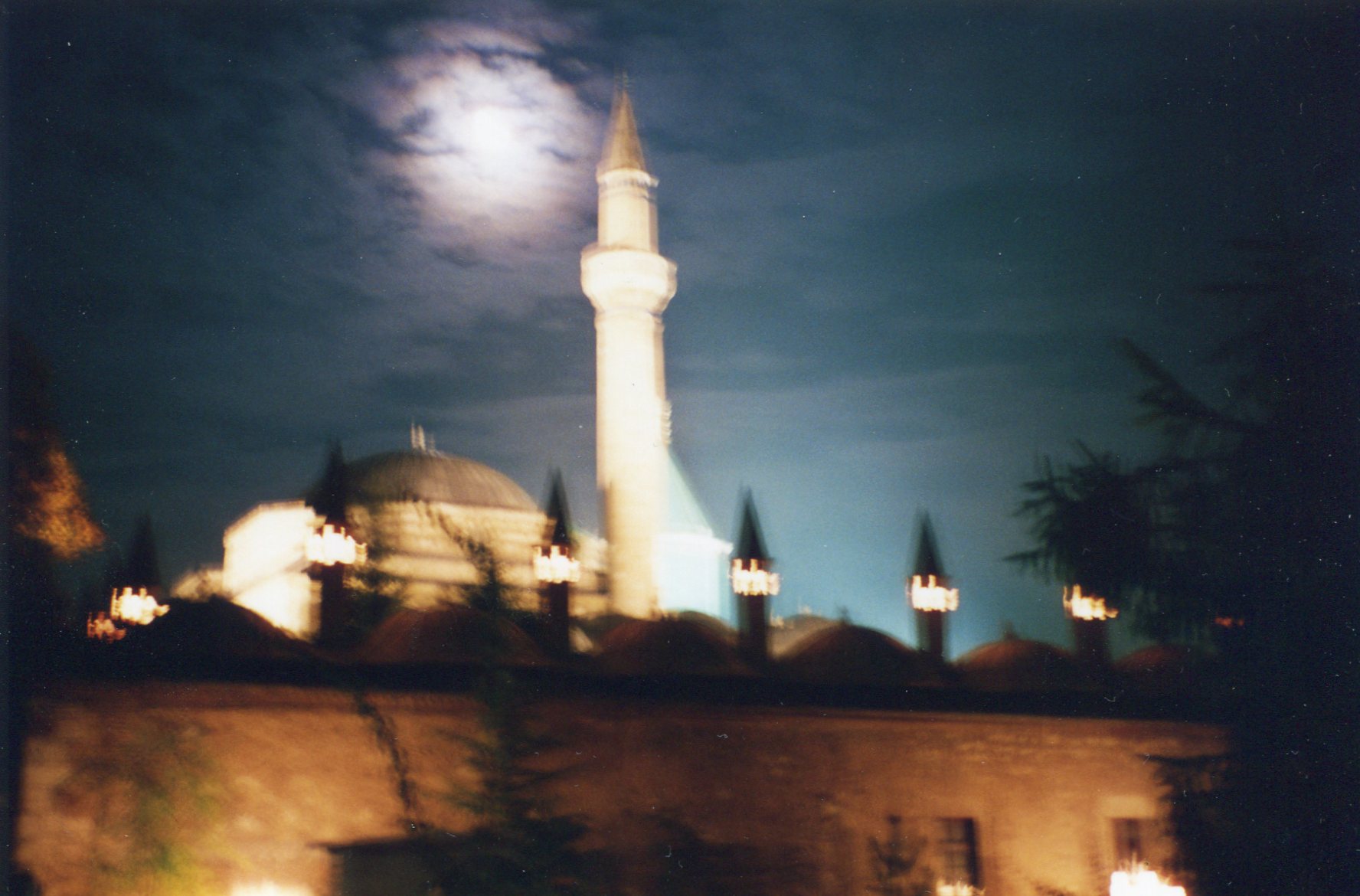
Pir Sultan Abdal ‘Seher vaktı kalkan kervan’

Tags

, , ,

This deyiş is a fine example of an ostensibly simple lyric that is as keenly wrought as a knife. It evokes the Anatolian highlands in austere and simple terms  as only lyrics attributed to Pir Sultan seem to do, in straigthforward even conventional language with common mystical images of rose gardens, departing caravans and distant beauties. Then within the space of four short verses (and  in the sparce eight syllable metre) the lyric darkens with the appearance of the rival or enemy (‘engel‘) and proceeds to a defiant even violent close – remarkable stuff.

The first publication of the lyric is in Gölpınarlı and Boratav (1943) from which I have taken the text for translation (though it includes a typographic error that is perpetuated in the 1991 reprint). Boratav gives the source as Hamdi Bayran son of Ahı from Öyük village in the Şarkışla region of Sivas. The song has, perhaps, a stronger Erzincan resonance however due to the unmatchable version performed by Davut Sulari on his 1974 recording Üç Telli Turnam. Sulari’s clear and energetic performance is perfectly suited to the lyric. His version is slightly different from the printed versions in Gölpınarlı and Boratav and later Aslanoğlu (1984), but curiously the version printed in Erzincan Türküleri by Fahri Taş and Salih Turhan (2004) in which Sulari is given as the source follows the text of the earlier printed versions rather than that of the recorded version by Sulari.

Pir Sultan Abdal ‘Seher vaktı kalkan kervani

Translation: Paul Koerbin

Day dawns and the caravan sets out

Moaning and lamenting

The heart falling for a beauty

Blossoms and is safely tended

In our garden roses bloom

On the branch nightingales sing

A rival comes and adds his piece

The one doing the deed remains behind

The nightingale comes to land on the branch

The nightingale has no reproach for the rose

The rival casts a stone at the lake

The duck swimming there is wounded

Pir Sultan Abdal let us pass over

Let us drink wine from the hand of the Pir

Let us flee from the one who refutes

One day the denier will be torn to pieces

———————————————————————————————————-

Original text from Gölpınarlı and Boratav (1943)

Seher vaktı kalkan kervan

İniler de zaralanır

Bir güzele düşen gönül

Çiçeklenir korulanır

Bahçenizde güller biter

Dalında dülbüller [sic, i.e. bülbüller] öter

Engel gelir bir kal katar

Olan işler gerilenir

Bülbül geldi kondu dala

Bülbülden hata yok güle

Engel bir taş atar göle

Yüzen ördek yaralanır

Pir Sultan Abdal göçelim

Pir elinden bad’ içelim

İnkâr olandan kaçalım

İnkâr bir gün paralanır

Pir Sultan Abdal ‘Ben dervişim diye göğsün açarsın’

Tags

, , , ,

The earliest appearance of this deyiş in print is in Bektaşilik ve edebiyatı by Besim Atalay (1882-1965) published in 1924. Gölpınarlı and Boratav (1943) also include the text indicating the sources as Atalay and cönk in the possession of Gölpınarlı. One of the dilemmas for this translation is whether or not to translate the terms mürşid and rehber. While these terms have quite specific connotation in Alevi ritual culture they are to some sufficient degree translatable. I have have therefore translated them, capitalising the terms ‘Teacher’ – not a fully adequate term; perhaps ‘Master’ may be better? – and ‘Guide’ to indicate that the terms have specific rather generic meaning. As Mehmet Fuat (Pir Sultan Abdal, 1999 ed.)  notes in respect to the third line of the second verse – which is somewhat awkward to translate – the reference is to smoking out bees from the hive in order to secure the honey. Fuat also gives guidance in respect to the last line of the lyric which refers to the practice of the novice dervish being brought before the Mürşid during the confirmation ceremony to enter the tarikat and the Mürşid takes the dervish’s right hand in his right hand while the dervish holds the skirt (etek) of the Mürşid with his left hand.

This deyiş has obvious connections to one of the oldest attributable lyrics to the person of Pir Sultan Serseri girme meydana in its theme and imagery.

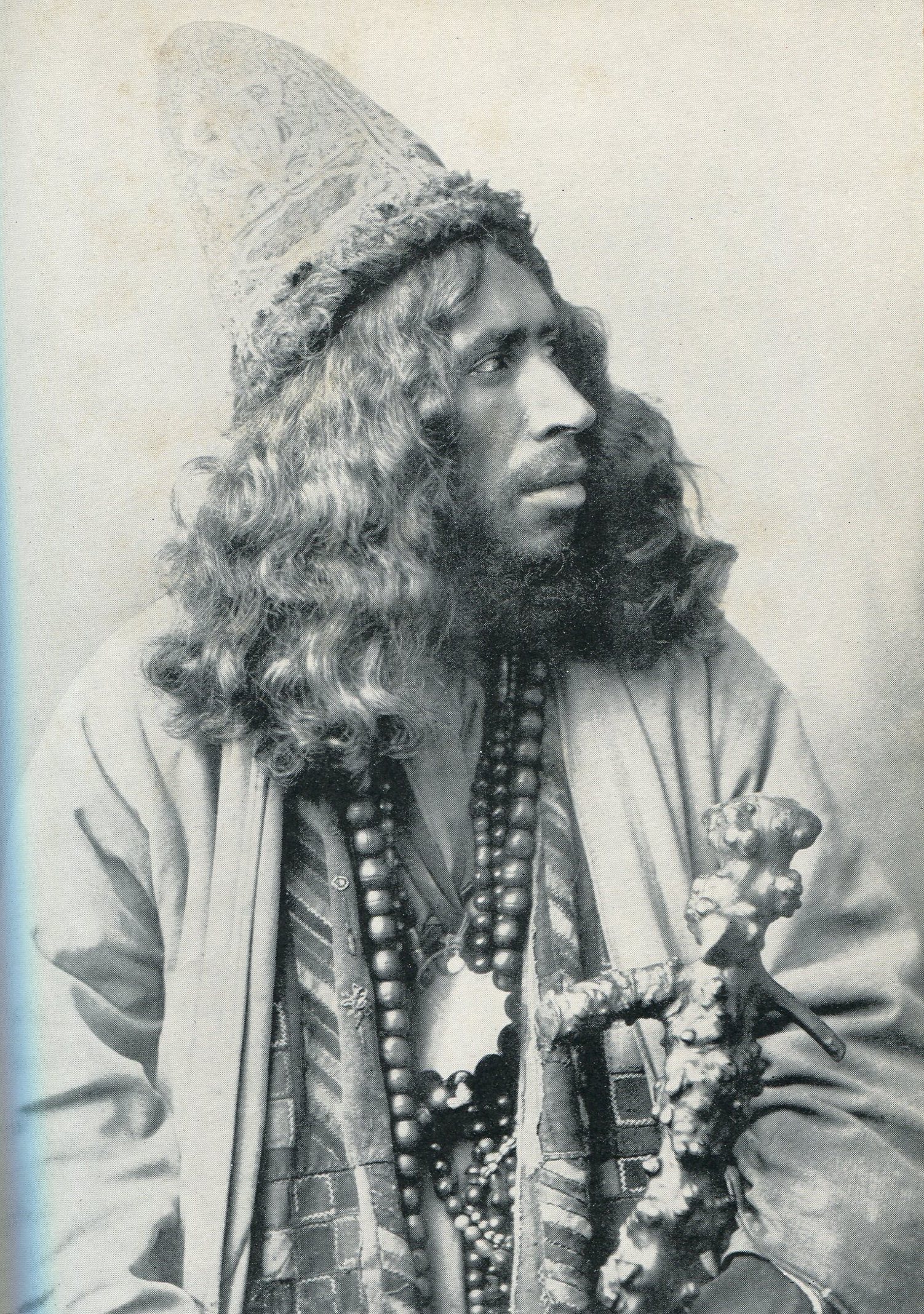
The curious photograph of the ‘dervish’ is from Alma Wittlin’s book Abdul Hamid: the shadow of God (English translation published by John Lane in 1940).

Pir Sultan Abdal ‘Ben dervişim diye göğsün açarsın’

Translation: Paul Koerbin

You stick out your chest saying ‘I am a dervish’

Do you have the tongue to invoke God?

Look to yourself, what do you want from strangers?

Do you have the strength to reach the state of ecstasy?

Like a fish one day they will ensnare you in a net

They will question you about your Teacher and Guide

Lighting incense, sending you scattering, they will seek

‘I am a bee’ you say – do you have honey?

Do those without affliction complain?

Does a shrewd dervish turn from his vow?

Do all creatures of the air light on a rose branch?

‘I am a nightingale’ you say – do you have a rose?

I am Pir Sultan, your affliction is not laid bare

Those without affliction don’t confront suffering

The ways are not passed over without the Teacher and Guide

Do you have your hand on the Teacher’s cloak?

———————————————————————————————–

Original text from Gölpınarlı and Boratav (1943)

Ben dervişim diye göğsün açarsın

Hakkı zikretmeğe dilin var mıdır

Sen kendi görsene ilde n’ararsın

Hâli hâl etmeğe hâlin var mıdır

Bir gün balık gibi ağa sararlar

Mürşidinden rehberinden sorarlar

Tütsü yakıp köşe köşe ararlar

Ben arıyım dersin balın var mıdır

Dertli olmıyanlar derde yanar mı

Tahkik derviş ikrarından döner mi

Her bir uçan gül dalına konar mı

Ben bülbülüm dersin gülün var mıdır

Pir Sultan’ım senin derdin deşilmez

Derdi olmıyanlar derde duş olmaz

Mürşitsiz rehbersiz yollar açılmaz

Mürşit eteğinde elin var mıdır

Türkü ‘Küstürdüm barışamam (dert bende)’

Tags

, , , ,


near_erzincan

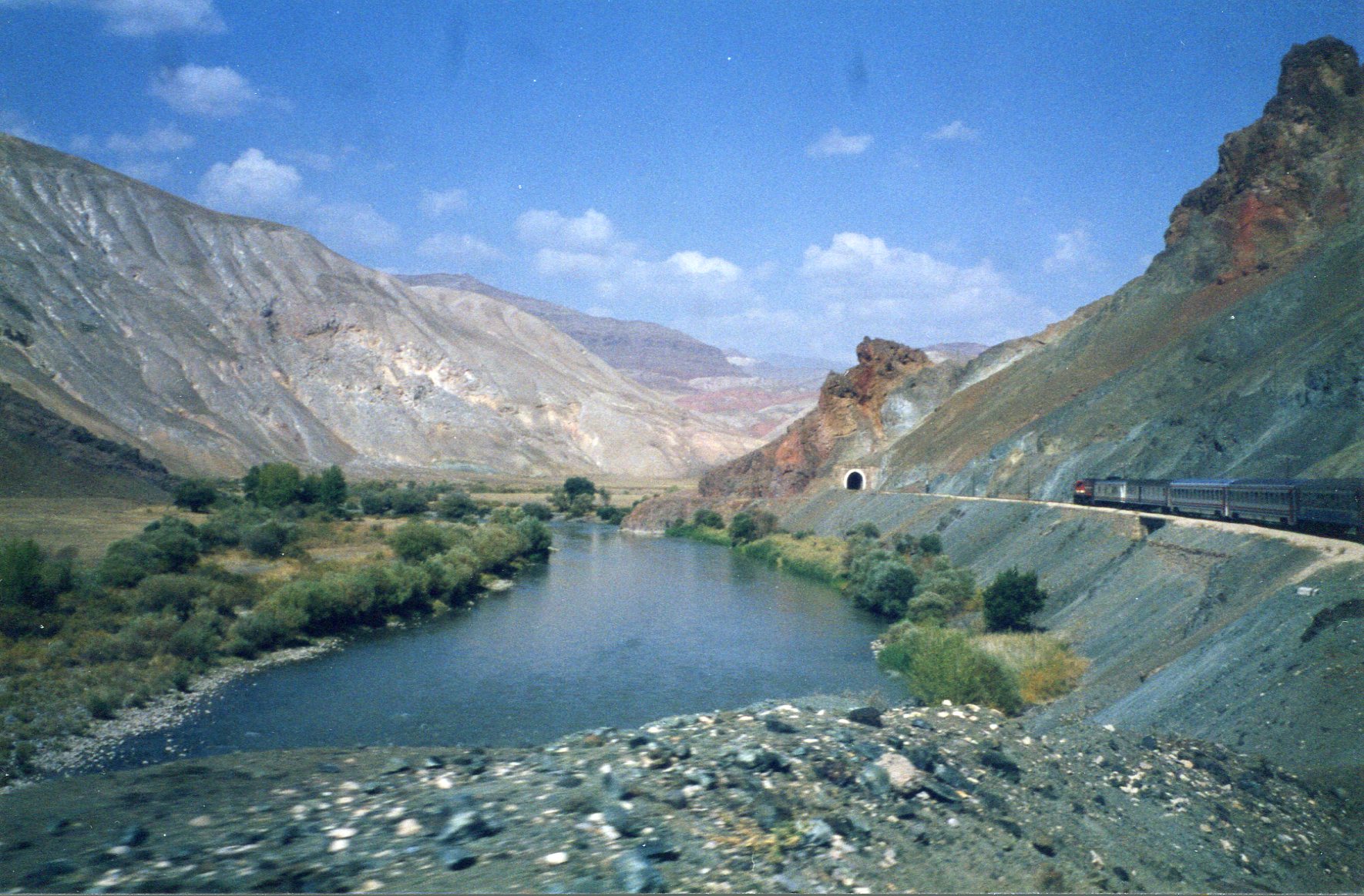
View south towards mountains on approach to Erzincan

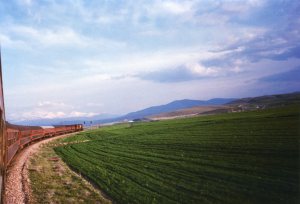
This song is a somewhat unusual inclusion here as my focus is Alevi deyiş while this is an anonymous türkü (folksong) from Erzincan. Not withstanding the fact that türkü is sometimes used as an all embracing term that includes deyiş, structurally they are different. This türkü has a metre of seven syllables while deyiş commonly have eleven or eight syllables. There is the refrain (bağlantı) which is more common in türkü and the absence of a mahlas. That said, the personal quality of this lyric suggests that a mahlas would not be out of place should an additional verse turn up. It is interesting that this is the opening song on the first of the renowned and influential Muhabbet series of recordings instigated in the mid-1980s by Arif Sağ, who also sings this song on that recording. On the evidence of his recordings Sağ has a particular fondness for songs from the Erzincan region, especially those from the Çayırlı (Erzincan) aşık Davut Sulari – and indeed he has said himself that even at the age of six he exerted himself to see Sulari (Değirmenin Bendine p. 40). This is perhaps not surprising given that Sağ is from Aşkale on the Erzincan side of Erzurum. By opening the Muhabbet series with this song Sağ declares his roots and the sound, mood and performance style of these recordings. This is one of the most bleak and beautiful Turkish folksongs, certainly as performed by Sağ. The source of the song, Erzincanlı Şerif (Tanındı) – although Bekir Karadeniz published a version with Sulari given as the source (Ela Gözlüm Türküler, p. 229) – performs it with a bit more swagger and with and instrumental colour (clarinet, violin, percussion etc). But it is in Sağ’s version that the stark and haunting qualities of the song are truly revealed.

This video shows Arif Sağ and Belkıs Akkale  performing the song (sort of) in 1983.

Küstürdüm barışamam (dert bende)

Translation: Paul Koerbin

I caused offence and cannot be reconciled

I have parted and cannot meet again

I opened my eye and I saw you

I cannot speak among strangers

I am suffering, I am unfortunate

I am suffering, I am unfortunate

Nothing can be done for the pain within

Like the birds without a nest

I’ve become scattered and confused

I pursued her to this mountain’s end

I awoke to the voice of my love

She is a partridge and I a hunter

And so I followed after her

I am suffering, I am unfortunate

I am suffering, I am unfortunate

Nothing can be done for the pain within

Like the birds without a nest

I became scattered and confused

I am estranged, my mate is estranged

My mate my fellow traveller is estranged

I do not grieve for my dying

My stone on the grave is abandoned

I am suffering, I am unfortunate

I am suffering, I am unfortunate

Nothing can be done for the pain within

Like the birds without a nest

I became scattered and confused

———————————————————————————-

Küstürdüm barışamam

Ayrıldım kavuşamam

Göz açtım seni gördüm

Yad ilen konuşamam

Dert bende kara bende

Dert bende kara bende

Eylenmez yare bende

Yuvasız kuşlar gibi

Olmuşum perâkende

Bu dağın ensesine

Uyandım yar sesine

Yar kekliktir ben avcı

Düşmüşüm ensesine

Dert bende kara bende

Dert bende kara bende

Eylenmez yare bende

Yuvasız kuşlar gibi

Olmuşum perâkende

Ben garip eşim garip

Eşim yoldaşım garip

Öldüğüme gam yemem

Mezarda taşım garip

Dert bende kara bende

Dert bende kara bende

Eylenmez yare bende

Yuvasız kuşlar gibi

Olmuşum perâkende

Aşık Sarıcakız ‘Düzen, yokluk açlık, zulüm‘

Tags

, , ,

On the Scent of Reform and Revolution

Browsing through the 2002 edition of the anthology of deyiş and türkü compiled by Aşık İhsani (originally published in the politically volatile 1970s, that is in 1974) with the title Ozan Dolu Anadolu my eye caught this lyric, with its invocation of Pir Sultan as the symbol of oppression and revolution,  from Aşık Saracıkız (b. 1948, real name İlkin Manya). I have already mentioned Aşık Sarıcakız in regard to the possible inspiration she provided to Nimri Dede in the composition of one of his finest deyiş Özde ben mevlana oldum da geldim. The lyric is quite simple and unambiguous in its content but not without the odd challenge for translation.  Most obviously the refrain line has some interest. The repeat of devrim, which most overtly means ‘revolution’, especially in the context of the political nature of the lyric suggests the repetition of ‘revolution’ in the translation. However the repetition also provides the translator with the opportunity to suggest the wider meaning of the original word, so instead of repeating ‘revolution’ I have tried a translation of ‘reform and revolution’. The word kokar (kokmak) means “to smell” or to “to have a smell”, but it can also mean that “something is at hand” or “a sign of something about to happen” which is, I think a relevant meaning here. However, as the context of the third verse makes clear we should not abandon the basic meaning: roses clearly have scent. I think the English phrase “have a scent” or “give a scent” carry enough of the meaning of “something is at hand” to work well in this context.

The line “Nâzımların yön verdiği” is an nice play on names and meaning that is not straightforward in translation. The word ‘nazım‘ (without circumflex over the ‘a’) means ‘verse(s)’. With the circumflex over the ‘a’ ‘nâzım‘ means one who sets things in order or composes (verse) – a versifier, a poet. But this, in the political context of the song, is clearly also an reference to great modern Turkish Communist poet Nâzım Hikmet. The plural form in the lyric here suggests the class of poets like Nâzım Hikmet. I felt the allusion strong enough to put this in the translation. Other subtleties are however lost, such as the use of the word ‘teller‘ in the last line which I have translated as ‘strings’ – which is clearly correct – following the reference to Sarıcakız’s lute (saz). Sadly the hint of an allusion to the bird’s feathers connecting it to the first line of the last verse is lost.

The most troubling line for me was the first line of the third verse “İnsanların her çağında”. The meaning is clear enough – something like ‘people (or human beings) in every age’ – but to get it to an acceptable English equivalent that will work with the verse is a challenge. I tried lines like “in all ages of humanity”, but clearly that was not going to last. My current translation “in people throughout time” does not follow the grammar correctly but I think does give an acceptable sense of the meaning of the line.

Aşık Sarıcakız:Düzen, yokluk açlık, zulüm

Translation: Paul Koerbin

The system, poverty and hunger, oppression

Conditions have the scent of reform and revolution

If talk of truths is silenced

Tongues get the scent of reform and revolution

As Pir Sultan gave his life

As Nâzım’s verses gave direction

As the books demonstrated

The ways have the scent of reform and revolution

In people throughout time

In the exalted and in the lowly

In the garden of democracy

Roses have the scent of reform and revolution

In the cry of the nightingale

In the entreaty of truths

On the saz of Sarıcakız

Strings have the scent of reform and revolution

———————————————————————————————–

Original version from Aşık İhsani Ozan Dolu Anadolu Antoloji,2002

Düzen, yokluk açlık, zulüm

Haller devrim devrim kokar

Gerçeklere sus denirse

Diller devrim devrim kokar

Pirsultan’ın can verdiği

Nâzımların yön verdiği

Kitapların gösterdiği

Yollar devrim devrim kokar

İnsanların her çağında

Yükseğinde alçağında

Demokrasinin bağında

Güller devrim devrim kokar

Bülbüllerin avazında

Gerçeklerin niyazında

Sarıcakız’ın sazında

Teller devrim devrim kokar

Dertli Divani ‘Diktiğimiz fidanlar (sana ne bana ne)’

Tags

, , , ,

A. Aykut, P. Koerbin, Dertli Divani, M. Kılçık. V. Ulusoy (Postnişin), Sydney 2007

This is one of the most well known and performed deyiş of Dertli Divani (real name Veli Aykut, born 1962 in Kısas near Şanlıurfa). Divani is arguably the most important living Alevi aşık and a remarkable individual who straddles, with ease, the worlds of the Alevi source culture and that of the modern recording artist. He is also tireless in his efforts to explain and promote an understanding of the true nature and spirit of Alevi culture to as wide an audience as possible. Divani is from dede lineage (his father is the late Aşık Büryani)  and leads cem services in Turkey (Kısas, Nurhak, Banaz) and throughout the world (Europe, North America and in Australia) and is the source and composer of many of the finest Alevi lyrics of the last quarter century. Though clearly he has the ambition to make Alevi culture widely understood his lyrics are still deeply mystical and present challenges for the translator, even more overtly social lyrics such as this one.

This deyiş is somewhat remarkable for the fact that it has a refrain (bağlantı) that introduces new text – many deyiş when sung introduce refrains though more commonly they are repetitions of the words of the verses. Adding to the interesting form is the fact that the verses are in 8 syllable metre while the refrain is in 11 syllable metre. While I generally aim to translate deyiş line by line, in this case it is necessary in some parts to treat two lines together for the purpose of coherence in the translation. Another difficulty was what to do with the “ne … ne” construction particularly in the first refrain. This construction normally means “neither … nor” though the conjuctions are usually placed before the words to which they refer, not after them as in this lyric. For this reason I have read “ne” in this instance as its other meaning of “what” which makes more sense in the theme of the lyric. In the last refrain I was tempted to use the word “wayfarer” for “yolcu” to pick up on the assonance of the Turkish, as in “the wayfarer who does not take the way” – but I did not completely convince myself of the desirability of this. I did, however, for good or ill, fall for the use of “hence”, in its archaic mean of “from here/this” for a translation of “bundan“.

Divani recorded the lyric on his album Serçeşme and in a repeat of the third line of the second verse he replaces “yârin” (beloved) with “pirin” (spiritual guide) as he does also in this live performance of the deyiş.  The text given below is from Kısaslı Aşıklar by Halil Atılgan published in Şanlıurfa in 1992. The text printed in the CD/cassette booklet for Serçeşme is the same. Curiously in a later publication by Atılgan (with Mehmet Acet) titled Harran’da Bir Türkmen Köyü Kısas published by the T.C. Kültür Bakanlığı in 2001, the last line includes an odd reading (or editorial mistake) contracting “Şaha ne” to “şahane” (royal, regal, magnificent).

Update #1: Again my most dedicated reader, Olga, has made some very pertinent and helpful comments (see comments section). She has articulated the theme of the lyric, which I completely agree with. She also, most usefully, notes the misreading in regards to “sana ne bana ne“. As Olga notes this construction means “I/you don’t care” or as I would re-phrase it “what’s it to you, what’s it to me”. And of course this suggests an allusion to the aşık that Divani himself has said is one of his greatest influences, Aşık Daimi and his great lyric titled Bana Ne. Interestingly that lyric includes the mahlas form “Dertli Daimi” – the full line is “Dertli Daimi’yim yardır sevdiğim“. This form of the mahlas is very uncommon in Daimi’s lyrics. Is this a deliberate allusion by Dertli Divani? Also, as Olga notes, the last line of the lyric suggest the famous Pir Sultan Abdal cry  “Gelin canlar bir olalım” though that line can also be attributed to another great and influential Alevi poet Aşık Sıdkı, a poet who is also a strong influence on Dertli Divani. In revising some lines upon Olga’s suggestion, and my reluctance to use her suggestion of “pilgrim” for yolcu, I have given in to my original inclination and used ‘wayfarer’. And I removed my “hence” – a shame about that.

Dertli Divani: Diktiğimiz fidanlar

Translation: Paul Koerbin

We could not eat the fruit

Of the shoots we planted

Whatever was their fault

(Hold on tyrant!) we cannot say

So saying, what’s it to you and what’s it to me?

Thus we’re fodder for lord and master

The doctor caused my wound to smart

Inflamed by my sweet soul

The love of the beloved sets me

To wandering through foreign lands

I have been hurt by the hand of the blind ignorant friend

I have grown tired and disgusted with reproaches

Divani speaks freely of conceit

This ignorance casting us down

Hand to hand, heart to heart

Let us give and be as one

The uncommitted wayfarer is at fault with the way

And so, what concern for the subject one to the Sultan or Shah?

——————————————————————————————–

Original text from Kısalı Aşıklar by Halil Atılgan, Şanlıurfa, 1992

Diktiğimiz fidanların

Meyvasını yiyemedik

Ne suçu vardı onların

Dur be zalim diyemedik

Sana ne bana ne hep diye diye

Böylece yem olduk ağaya beye

Tabip yaramı azdırdı

Tatlı canımdan bezdirdi

Beni bir yârin sevdası

Diyar be diyar gezdirdi

Yanmışam kör cahil dostun elinden

Bıkmış usanmışam acı dilinden

Der Divani senlik benlik

Bizi yıkan bu cahillik

El ele gönül gönüle

Verelim olalım birlik

Yolcu yola gitmez yola bahane

Bundan kula Sultana ne Şaha ne

Iconography of books about Pir Sultan Abdal #3: Cahit Öztelli, 1971

Tags

, ,

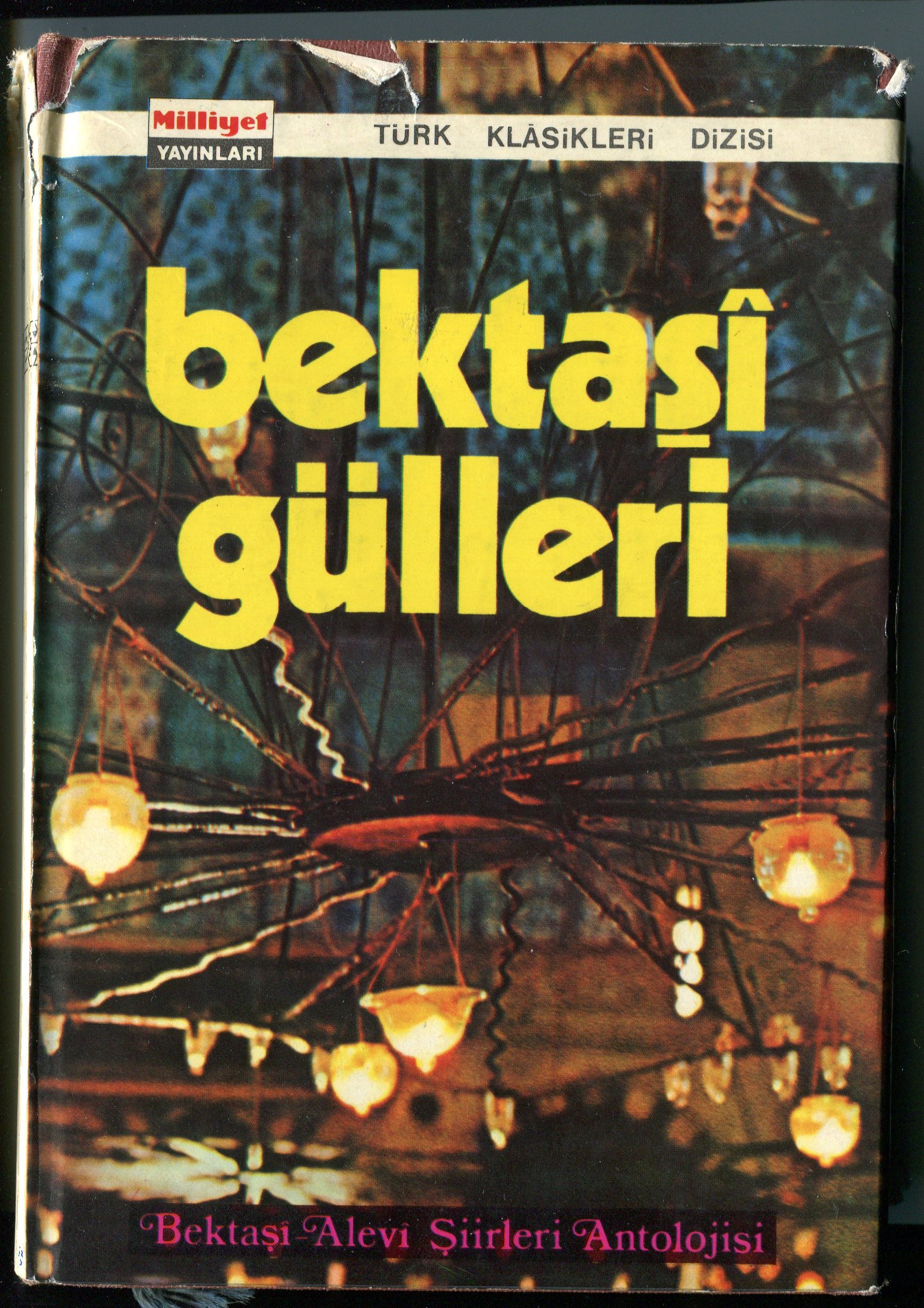
Cahit Öztelli’s 1971 publication Pir Sultan Abdal: yaşamı ve bütün şiirleri was the third major collection of Pir Sultan Abdal lyrics published following that of Ergun in 1929 and Gölpınarlı and Boratav in 1943. Öztelli’s book coming nearly thirty years after that of Gölpınarlı and Boratav shows a considerable advance in presentation. The book, published by the Milliyet Yayınları, is in hard covers (boards) with a full colour dust jacket. The dust jacket is interesting as it depicts a landmark Anatolian scene – the snow covered peaks of Mount Erciyes (near Kayseri) though not a landmark particularly associated with Pir Sultan Abdal, unless this image is intended to suggest Yıldız Dağı near Banaz. Milliyet published other similarly attractive editions by Öztelli, most notably the important collection of Alevi-Bektaşi lyrics called Bektaşi gülleri in 1973.

Öztelli’s preface to his book gives a brief history of publication of the major works on Pir Sultan and emphasises the fact that his collection includes 327 poems which amounts to 149 newly published lyrics making this, naturally, the most complete collection of Pir Sultan lyrics at that time. Of these newly published lyrics 124 were collected from Vahit Dede (Vahit Lütfü Salcı) and 25 from Sivas folklorist İbrahim Aslanoğlu (who would go on to publish the next important collection of Pir Sultan lyrics in 1984). Most of these, Öztelli notes, were taken from old cönk (manuscripts) sources.

Like Ergun’s 1929 collection, Öztelli includes a number of musical examples; in this case 25 ‘compositions’ (beste), 18 of which were taken from Vahit Dede’s collection – Vahit Dede being a trained musician and Alevi dede –  and the remaining seven from publications of the İstanbul Konservatuvarı. Again as Öztelli notes, these musical examples may be considered folk (halk) music characteristic of Alevi tekke (lodge) music; that is, anonymous compositions of an urban rather than rural Anaolian tradition. Indeed the tunes are presented under headings indicating their makam (Turkish classical music terminology for mode). The renowned musician, musicologist and former chief of the Ankara State Folk Music Choir, Mehmet Özbek, suggested in a conversation I had with him that these tunes are most definitely folk music (halk müziği) and can be and in the case of his choir are performed in a folk music style. The categorization under makam was simply a convention.

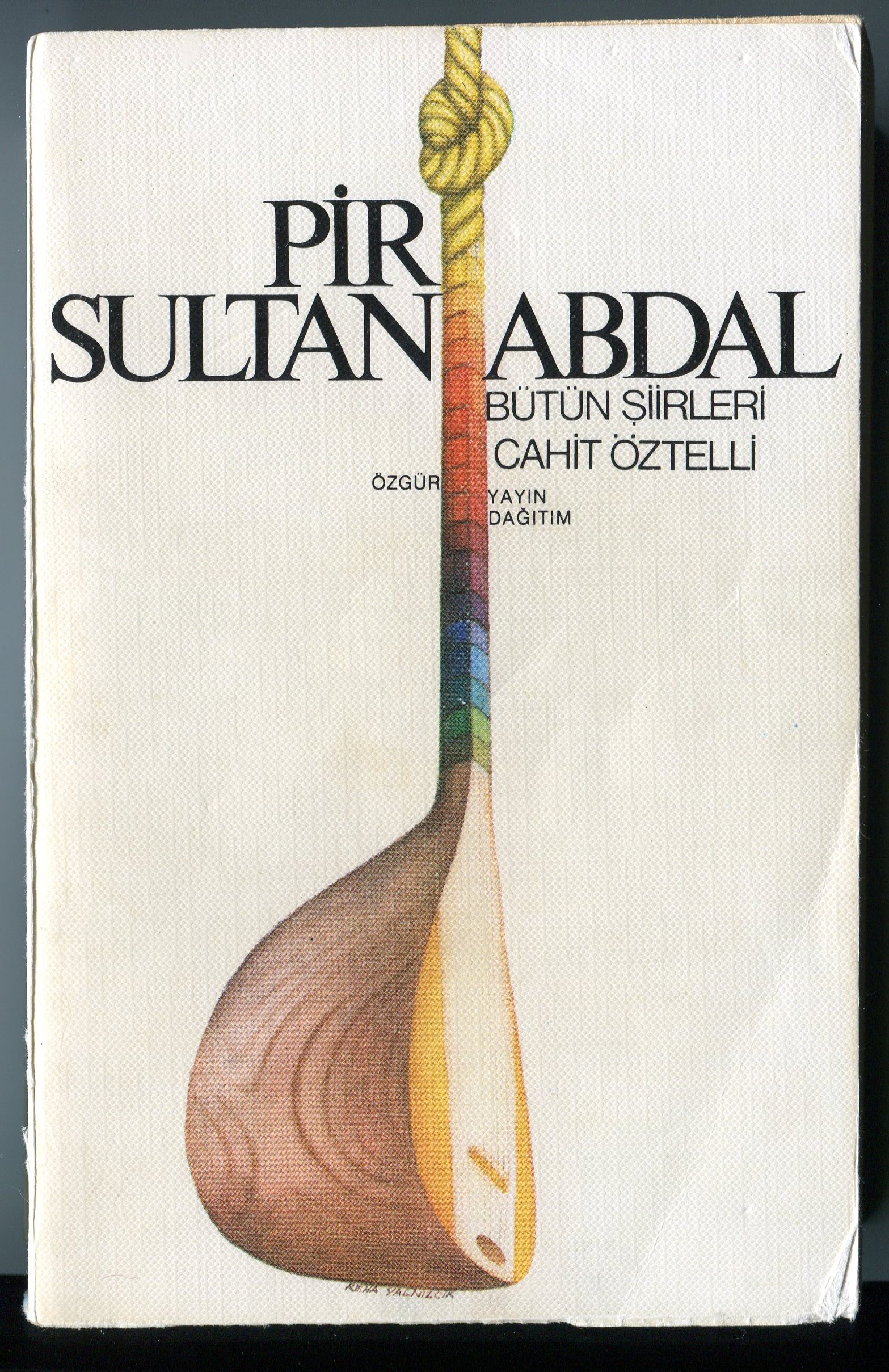
One later popular trade paperback edition of Öztelli’s book published by Özgür Yayın Dağıtım in 1985 – which was in fact the first edition of Pir Sultan Abdal lyrics I obtained – has a starkly different and culturally charged symbolism in the cover artwork – a bağlama with its neck twisted into a knotted rope suggesting at once the performative, musical basis of the poet and the poems, Pir Sultan’s death on the gallows and the defiance inherent in the symbol of the poet’s lute.

Pir Sultan Abdal ‘Yürüyüş eyledi Urum üstüne’

Tags

, , , , , , , ,

approaching KayseriThis deyiş appears in Ergun’s 1929 collection of Pir Sultan’s lyrics and again in Gölpınarlı and Boratav’s 1943 edition where the source is given as Ergun, although with a couple of slight changes. In the first line of the 4th verse Ergun has  Mağripte (Mağrib = Magreb, the West) while Gölpınarlı/Boratav give Meydana; and in the 3rd verse Ergun has küçük gazili while Gölpınarlı/Boratav have köçek gazili. The version used for my translation is from Memet Fuat (1999 reprint edition) who follows Ergun in regards to Mağripte (well almost, since he has the ablative Mağriğtan rather than the locative) and Gölpınarlı/Boratav in regards to köçek (both versions give the sense of a novice entering the tarikat). This deyiş is a good example of a theme found in the lyrics of Pir Sultan – the hope and expectation of the coming of the Shah, in this case the temporal ruler. It is for such allegiances that the kızılbaş were pursued by the Ottoman authorities. The word Urum refers to the land of ‘Rum’, Anatolia, the Ottoman lands.  Three generations of the Safavids are referred to in the lyric (as Fuat notes): Shah Tahmasp is the ‘beautiful leader’ who is expected; and he is the ‘Shah’s son’, that is the son of Shah Ismail, the first Safavid ruler, while ‘Old Haydar’ refers to Ismail’s father and Tahmasp’s grandfather. The mahlas verse reveals that this expectation may be but a wish of Pir Sultan’s.

Update:

An astute reader makes some good critical comments on this translation. Firstly in relation to my rendering, or non-rendering of the Persian izafet (nominal compound) construction Şah-ı cihan which is more correctly Shah of the World. I am inclined to agree with the reader that this would be a better translation to adopt. My original rendering and interpretation as “mortal Shah” was rather to emphasise the reference to the worldly rule of  Şeyh Haydar (Sheik Haydar) to who it refers. Nevertheless ‘Shah of the World’ conveys that meaning and does have are rather more poetic tone, perhaps, than a compromise rendering of ‘worldly Shah’ which I also considered. So I have changed this.

The reader suggests that perhaps imam should not be translated at all since the religious context is lost. This is perhaps true. In the construction of the On İki İmam in the final verse I do not translate imam because of its specific reference, whereas in the refrain line Ali nesli güzel imam geliyor I originally tranlated it as leader. This was deliberate in order to assert the temporal leadership that I think is certainly a strong aspect of the way these lyrics are looked upon today. I think the perspective of the age considering these lyrics is relevant for a work that emerges from folklore and certainly this is a consideration in my interest in these lyrics – the life and meaning they have now. However, I have decided to change this, for now, to ‘guide’ which perhaps retains a element of the religious or spiritual context. I am also inclined to persist with this line as a fully translated line – for the English reader for whom the translation is intended – since it is the refrain line.

The reader very reasonably questions the logic of rendering mağrib as West. Mağrib can mean Morocco or the Magreb, the place where the sun sets, that is the West. But this line did trouble me in my translation, for the geographic illogic. Still, these lyrics are of a nature that narrative logic is not always present, so I was prepared to render it as best I could and accept the meaning may remain obscure. However in looking at this again, I am coming to the view that the intended word here may not be mağrib but rather magib which means being absent or in concealment. It would be helpful to find variants of this lyric that pointed to such a reading, but I have not. Nevertheless I am prepared to go out on a limb and adopt this meaning, since the meaning of the ‘West’ may also incorporate a sense of  ‘absence’ or ‘concealment’. So I have changed the reading of this line to “Emerging from concealment he appears again” – which also obviously hints at the emergence of the twelfth imam.

The reader also suggest a reading of dolu with its meaning of ‘hail’ and in her view referring to the Shah’s martial spirit. I don’t concur with this reading. In Alevi and Turkish folk culture dolu specifically refers to a cup full of spirit or liquor. Özbek ( in Türkülerin Dili) gives the meaning as “içki, içkiyle dolu kadeh“; and Korkmaz (in Alevilik ve Bektaşilik Terimleri Sözlüğü) gives “içki doldurulmuş kadeh, içki“. In the Alevi cem ceremony the Saki scatters the holy liquor over the congregation. I have amended my translation to try this reading: “he dispersed the full cup of spirit at each step”. Not sure this is better, but these are works in progress.

In considering the readers comments I am reminded of Talat Halman’s – Halman is probably the best translator of this material – assertion that a single translator can hardly do a definitive version and that “a whole consort of virtuoso renditions … might be far more effective”.  As Halman further noted “many of the best poems were actually created as musical composition in their own right and require a miracle for successful transposition” (see Halman’s article Translating Turkish Literature and “Cultranslation” in Translation Review No. 68, 2004).

Pir Sultan Abdal: Yürüyüş eyledi Urum üstüne

Translation: Paul Koerbin

He made a march on Anatolia

The beautiful guide of Ali’s descent is coming

I came down and kissed his hand

The beautiful leader of Ali’s descent is coming

He dispersed the full cup of spirit at each step

Arab horses tied in his stable

If you ask of his origin he is the Shah’s son

The beautiful guide of Ali’s descent is coming

His fields are marked out step by step

From the hand of his rival his heart grieves

Dressed in green the young novice warrior

The beautiful guide of Ali’s descent is coming

Emerging from concealment he appears again

No-one knows the secret of the sainted one

Descendant of Old Haydar  Shah of the World

The beautiful guide of Ali’s descent is coming

I am Pir Sultan Abdal if I see those things

If I pay humble respect entreating

From the first the prince of the twelve imams

The beautiful guide of Ali’s descent is coming

————————————————————————————————————————–

Original text from Memet Fuat Pir Sultan Abdal (1999 ed.)

Yürüyüş eyledi Urum üstüne

Ali nesli güzel imam geliyor

İnip temennâ eyledim destine

Ali nesli güzel imam geliyor

Doluları adım adım dağıdır

Tavlasında küheylânlar bağlıdır

Aslını sorarsan Şah’ın oğludur

Ali nesli güzel imam geliyor

Tarlaları adım adım çizili

Rakîbin elinden ciğer sızılı

Al yeşil giyinmiş köçek gazili

Ali nesli güzel imam geliyor

Meydana çıkar görünü görünü

Kimse bilmez Evliyanın sırrını

Koca Haydar Şah-ı cihan torunu

Ali nesli güzel imam geliyor

Pir Sultan Abdal’ım görsem şunları

Yüzün sürsem boyun eğip yalvarı

Evvel baştan On İki İmam severi

Ali nesli güzel imam geliyor
Pir Sultan Abdal ‘Ey benim dîvane gönlüm’

Tags

, , , , ,

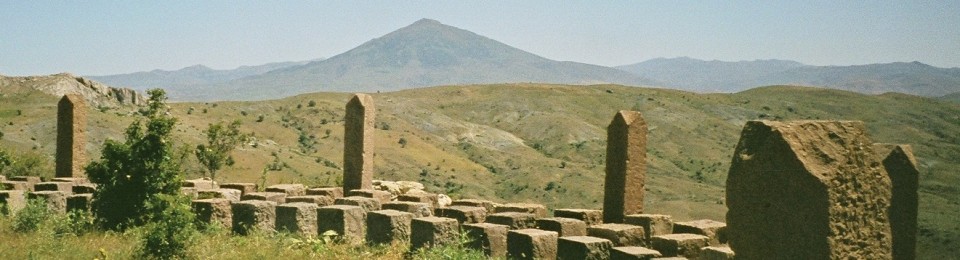
dogubeyazit2The text given here and used for this translation is from Ergun’s 1929 publication and I have retained the original orthography which includes some flexibility in the choice of vowel, e.g. gice for gece, aktur for aktır, dir for der. This text is another that seems to have some age to it with strong sufi elements. Erkan Oğur and İsmail H. Demircioğlu recorded a languid, contemplative arrangement (tune written by Demircioğlu) on their 1998 Kalan recording Gülün Kokusu Vardı, which brings out this characteristic. Their recording includes some variations in the text, notably in the last couplet of first verse which they sing as Bu cefayı kendi özüm / Pek mail gördüm yalınız (the accompanying booklet prints cezayı for cefayı but they sing the latter). This verse equates to the text as presented by Ali Haydar Avcı in his work Osmanlı gızlı tarihinde Pir Sultan Abdal ve bütün deyişleri, Noktakitab, 2006 (p. 775).  He also provides another version of these lines: Yüce dağların başında / Kaynadım çoştum yalınız. Both these readings avoid the reference to the three day new moon period of the lunar month mihâk. The singers also discard the 4th verse. The other notable variations to be found refer to the final verse where “the forty” (kırklar) is added to “the three” and “the seven”, replacing Erenler; and Ergun also notes a variant in second line of the third verse, found in mecmua number 40 in the Selim Ağa Kütüphanesi in Üsküdar, which reads: Varsam hayır himmet alsam.

Pir Sultan Abdal: Ey benim dîvane gönlüm

Translation: Paul Koerbin

Hey my foolish heart

I fell upon the mountains alone

This is the reason for this sigh of mine

I saw a time of the new moon alone

There are mountains higher than mountains

Can the soul endure this force

Of my pain for three days and nights

If I speak ceaseless, alone

If I were to reach the foot of the Shah

If I were to take the blessed prayer

If I were to plunge into the Red River

If I were to purl and flow alone

My Shah’s river flows clear

It’s taste more sweet than sugar

There is nothing greater than Allah

God I said and stood alone

I am Pir Sultan those who see tell

Those giving salutation to the saints

The Enlightened by threes and sevens

I came for blessing alone

————————————————————————–

Original text from Sadettin Ergun, Pir Sultan Abdal, 1929

Ey benim dîvane gönlüm

Dağlara düştüm yalınız

Bu benim âhım yüzünden

Bir mihâk gördüm yalınız

Dağlara var dağlardan yüce

Can mı dayanır bu güce

Hâlimi üç gün üç gice

Söylesem bitmez yalınız

Şâh’ın ayağına varsam

Hayırlı gülangin alsam

Kızıl ırmaklarına dalsam

Çaglasam aksam yalınız

Şâh’ımın ırmağı aktur

Lezzeti şekerden çoktur

Bir Allah’tan büyük yoktur

Hak didim durdum yalınız

Pir Sultan’ım dir görenler

Pirlere niyaz idenler

Üçler yediler erenler

Mürvete geldim yalınız

Nimri Dede ‘Özde ben Mevlana oldum da geldim’

Tags

, , , , , ,

I have already posted an English version of Nimri Dede’s İnsan Olmaya Geldim as recorded by Arif Sağ which includes some word changes from Nimri Dede’s original and omits two verses. Here then is a translation of the original complete version with the original refrain line ‘…de ben Mevlana oldum da geldim‘ rather than ‘…de ben bir insan olmaya geldim‘, some other relatively small word changes and the two missing verses. The fifth verse (one of the verses omitted by Sağ) does pose some translation challenges, partly because of parataxis and partly because of the deft way Nimri Dede has divided Aşık Sarıcakız’s mahlas over the third and fourth lines.  I am not yet convinced of my rendering of this verse. This verse, perhaps, also gives a clue to the inspiration for this deyiş – was it composed upon hearing Aşık Sarıcakız (real name İlkin Manya), a renowned female ozan/aşık? We are fortunate to finally have a published collection of Nimri Dede’s deyişler prepared by Professor Dr Ahmet Buran published in Elazığ in 2006 by Manas Yayıncılık. However the version of this song included in that book has a small error in the first line of the second verse where ‘meğer‘ should read ‘meğerse‘ in order to fill the syllable count requirement of the koşma form. In a typescript provided to me by Nimri Dede’s grandson, Sercihan Dehmen, the correct form is given (see image below).

Nimri Dede: Özde ben Mevlana oldum da geldim

Translation: Paul Koerbin


I cast out this filthy duality from within me,

In the true self I came to become Master

Since established in the heart of the mystics

In the word I have come to become Master

Whatever love is, it is the essence of the soul;

The direction to it lies between the eyes.

The work of truth is the tint of strength.

In the face I have come to become Master

What all the teachers have described;

The halting place that the true ones have reached;

Where the Prophets and Saints have gone;

In the footsteps I have come to become Master

Those seeking Truth found it in the heart

Truth overflowed the heart and filled the world

All faces became the mirror of me

In you I have come to become Master

I have a garden clean of every thorn

They entered and trampled until rent in half

Her eyes closed, in Aşık Sarıca

Kız  I have come to become Master

At times I have examined and been examined

How many years I have been attached to a noose;

In a manner I have set alight that love and been set alight;

In the ashes I have come to become Master

At last I have come, drinking the wine of love.

Every bit of whiteness I have selected from the darkness.

I pierced the mountains of existence and passed over;

On the level I have come to become Master

See then what Nimri Dede now has done:

Of the true love to every heart he has sung;

He has at last bid farewell to wine and whatever

On the lute I have come to become Master

————————————————————————————————————–

Original version from typscript provided by Sercihan Dehmen

nimri_dede

Pir Sultan Abdal ‘Gel benim sarı tanburam’

Tags

, , , , , , ,

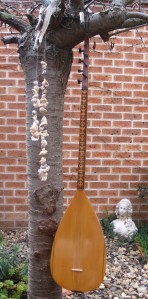
tanburaThis deyiş appears in the all of the earliest collections of Pir Sultan Abdal lyrics, including Besim Atalay’s 1924 publication Bektaşilik ve Edebiyatı (originally in Ottoman Turkish but translated into modern Turkish by Vedat Atila and published by Ant Yayınları in Istanbul in 1991). It also appears in Sadettin Nüzhet Ergun’s 1929 work on Pir Sultan Abdal and in the 1943 publication by Gölpınarlı and Boratav. Comparing these editions is interesting since there are minor variants in the texts – the minor nature of the variants is of itself interesting and perhaps gives a glimpse of how a traditional lyric may be adopted into the Pir Sultan canon. The lyric is not overtly on the central themes associated with Pir Sultan such as the kızılbaş devotion to the Imam Ali (but see below) or subjects associated with his life story; rather it seems closer to Sufi themes and the lyrics of Yunus Emre. The text I have translated is based on that presented in Gölpınarlı and Boratav’s 1943 edition. This seems to be something of composite text, though Gölpınarlı’s method of presenting the texts, while stating sources does not make clear how variants are used. The authors cite the sources as Atalay, Ergun and an undefined number of cönk and mecmua in Gölpınarlı’s possession. The most interesting of the minor variations of text is found in the version presented by Atalay who gives the last line of each stanza as ‘Ali deyu inilerim’ (‘I moan crying Ali’) thus revealing somewhat more overtly the Alevi theme in the lyric. The one line that is different in the three versions cited is the third line of the second stanza which in Gölpınarlı reads ‘Oldum ayn-i cem bülbülü’, in Ergun reads ‘Olmuşam Şah’ın bülbülü’ and in Atalay reads ‘Oldum muhabbet bülbülü’. While the signficance of the line is hardly altered, the approaches ranging from the specific mention of the ritual ceremony (ayn-i cem), to the hoped for Shah and to the general idea of love and unity (muhabbet) is instructive.

The tanbura mentioned is one of the names for the long necked lute played by the aşık-s. Other names commonly encountered in the Alevi deyiş are saz, kopuz and bağlama. Interestingly, in the version of this lyric published by Ergun the word tanbura is used except in the last stanza where it states ‘Bağlamadır benim adım’ (‘My name it is bağlama‘). In organological terms the tanbura (or tambura) is a larger member of the bağlama family with a narrow-ish body tapering into the long neck – a rather beautiful form. The reference to the yellow (sarı) lute may suggest the pale spruce soundboard or the belly, often made of chestnut (kestane) which is of a pale yellow hue.

Pir Sultan Abdal: Gel benim sarı tanburam

Translation: Paul Koerbin

Come my yellow lute

Why do you moan?

I am hollow within, my grief is great

This is the reason I moan

They attached string to my arm

They made me speak countless languages

I was the nightingale in the ceremony

This is the reason I moan

They attached fretting to my arm

They had me meet with countless sorrows

Who settles here and who departs

This is the reason I moan

They lay my chest upon the seat

They stroked me without stop

They opened up my breast as they struck

This is the reason I moan

Come my yellow lute

I shall lay you upon my knee

Again my heart is broken

This is the reason I moan

Yellow lute is my name

My cry rises to the heavens

I am Pir Sultan my master

This is the reason I moan

—————————————————————————————————————

Original text from Gölpınarlı and Boratav Pir Sultan Abdal (1943)

Gel benim sarı tanburam

Sen ne için inilersin

İçim oyuk derdim büyük

Ben anınçin inilerim

Koluma taktılar teli

Söyletirler bin bir dili

Oldum ayn-i cem bülbülü

Ben anınçin inilerim

Koluma taktılar perde

Uğrattılar bin bir derde

Kim konar kin göçer burda

Ben anınçin inilerim

Goğsüme tahta döşerler

Durmayıp beni okşarlar

Vurdukça bağrım deşerler

Ben anınçin inilerim

Gel benim sarı tanburam

Dizler üsünde yatıram

Yine kırıldı hâtıram

Ben anınçin inilerim

Sarı tanburadır adım

Göklere ağar feryadım

Pir Sultan’ımdır üstadım

Ben anınçin inilerim