On the Scent of Reform and Revolution
Browsing through the 2002 edition of the anthology of deyiş and türkü compiled by Aşık İhsani (originally published in the politically volatile 1970s, that is in 1974) with the title Ozan Dolu Anadolu my eye caught this lyric, with its invocation of Pir Sultan as the symbol of oppression and revolution, from Aşık Saracıkız (b. 1948, real name İlkin Manya). I have already mentioned Aşık Sarıcakız in regard to the possible inspiration she provided to Nimri Dede in the composition of one of his finest deyiş Özde ben mevlana oldum da geldim. The lyric is quite simple and unambiguous in its content but not without the odd challenge for translation. Most obviously the refrain line has some interest. The repeat of devrim, which most overtly means ‘revolution’, especially in the context of the political nature of the lyric suggests the repetition of ‘revolution’ in the translation. However the repetition also provides the translator with the opportunity to suggest the wider meaning of the original word, so instead of repeating ‘revolution’ I have tried a translation of ‘reform and revolution’. The word kokar (kokmak) means “to smell” or to “to have a smell”, but it can also mean that “something is at hand” or “a sign of something about to happen” which is, I think a relevant meaning here. However, as the context of the third verse makes clear we should not abandon the basic meaning: roses clearly have scent. I think the English phrase “have a scent” or “give a scent” carry enough of the meaning of “something is at hand” to work well in this context.
The line “Nâzımların yön verdiği” is an nice play on names and meaning that is not straightforward in translation. The word ‘nazım‘ (without circumflex over the ‘a’) means ‘verse(s)’. With the circumflex over the ‘a’ ‘nâzım‘ means one who sets things in order or composes (verse) – a versifier, a poet. But this, in the political context of the song, is clearly also an reference to great modern Turkish Communist poet Nâzım Hikmet. The plural form in the lyric here suggests the class of poets like Nâzım Hikmet. I felt the allusion strong enough to put this in the translation. Other subtleties are however lost, such as the use of the word ‘teller‘ in the last line which I have translated as ‘strings’ – which is clearly correct – following the reference to Sarıcakız’s lute (saz). Sadly the hint of an allusion to the bird’s feathers connecting it to the first line of the last verse is lost.
The most troubling line for me was the first line of the third verse “İnsanların her çağında”. The meaning is clear enough – something like ‘people (or human beings) in every age’ – but to get it to an acceptable English equivalent that will work with the verse is a challenge. I tried lines like “in all ages of humanity”, but clearly that was not going to last. My current translation “in people throughout time” does not follow the grammar correctly but I think does give an acceptable sense of the meaning of the line.
Aşık Sarıcakız:Düzen, yokluk açlık, zulüm
Translation: Paul Koerbin
The system, poverty and hunger, oppression
Conditions have the scent of reform and revolution
If talk of truths is silenced
Tongues get the scent of reform and revolution
As Pir Sultan gave his life
As Nâzım’s verses gave direction
As the books demonstrated
The ways have the scent of reform and revolution
In people throughout time
In the exalted and in the lowly
In the garden of democracy
Roses have the scent of reform and revolution
In the cry of the nightingale
In the entreaty of truths
On the saz of Sarıcakız
Strings have the scent of reform and revolution
———————————————————————————————–
Original version from Aşık İhsani Ozan Dolu Anadolu Antoloji,2002
Düzen, yokluk açlık, zulüm
Haller devrim devrim kokar
Gerçeklere sus denirse
Diller devrim devrim kokar
Pirsultan’ın can verdiği
Nâzımların yön verdiği
Kitapların gösterdiği
Yollar devrim devrim kokar
İnsanların her çağında
Yükseğinde alçağında
Demokrasinin bağında
Güller devrim devrim kokar
Bülbüllerin avazında
Gerçeklerin niyazında
Sarıcakız’ın sazında
Teller devrim devrim kokar
 This deyiş appears in Ergun’s 1929 collection of Pir Sultan’s lyrics and again in Gölpınarlı and Boratav’s 1943 edition where the source is given as Ergun, although with a couple of slight changes. In the first line of the 4th verse Ergun has Mağripte (Mağrib = Magreb, the West) while Gölpınarlı/Boratav give Meydana; and in the 3rd verse Ergun has küçük gazili while Gölpınarlı/Boratav have köçek gazili. The version used for my translation is from Memet Fuat (1999 reprint edition) who follows Ergun in regards to Mağripte (well almost, since he has the ablative Mağriğtan rather than the locative) and Gölpınarlı/Boratav in regards to köçek (both versions give the sense of a novice entering the tarikat). This deyiş is a good example of a theme found in the lyrics of Pir Sultan – the hope and expectation of the coming of the Shah, in this case the temporal ruler. It is for such allegiances that the kızılbaş were pursued by the Ottoman authorities. The word Urum refers to the land of ‘Rum’, Anatolia, the Ottoman lands. Three generations of the Safavids are referred to in the lyric (as Fuat notes): Shah Tahmasp is the ‘beautiful leader’ who is expected; and he is the ‘Shah’s son’, that is the son of Shah Ismail, the first Safavid ruler, while ‘Old Haydar’ refers to Ismail’s father and Tahmasp’s grandfather. The mahlas verse reveals that this expectation may be but a wish of Pir Sultan’s.

 This deyiş appears in the all of the earliest collections of Pir Sultan Abdal lyrics, including Besim Atalay’s 1924 publication Bektaşilik ve Edebiyatı (originally in Ottoman Turkish but translated into modern Turkish by Vedat Atila and published by Ant Yayınları in Istanbul in 1991). It also appears in Sadettin Nüzhet Ergun’s 1929 work on Pir Sultan Abdal and in the 1943 publication by Gölpınarlı and Boratav. Comparing these editions is interesting since there are minor variants in the texts – the minor nature of the variants is of itself interesting and perhaps gives a glimpse of how a traditional lyric may be adopted into the Pir Sultan canon. The lyric is not overtly on the central themes associated with Pir Sultan such as the kızılbaş devotion to the Imam Ali (but see below) or subjects associated with his life story; rather it seems closer to Sufi themes and the lyrics of Yunus Emre. The text I have translated is based on that presented in Gölpınarlı and Boratav’s 1943 edition. This seems to be something of composite text, though Gölpınarlı’s method of presenting the texts, while stating sources does not make clear how variants are used. The authors cite the sources as Atalay, Ergun and an undefined number of cönk and mecmua in Gölpınarlı’s possession. The most interesting of the minor variations of text is found in the version presented by Atalay who gives the last line of each stanza as ‘Ali deyu inilerim’ (‘I moan crying Ali’) thus revealing somewhat more overtly the Alevi theme in the lyric. The one line that is different in the three versions cited is the third line of the second stanza which in Gölpınarlı reads ‘Oldum ayn-i cem bülbülü’, in Ergun reads ‘Olmuşam Şah’ın bülbülü’ and in Atalay reads ‘Oldum muhabbet bülbülü’. While the signficance of the line is hardly altered, the approaches ranging from the specific mention of the ritual ceremony (ayn-i cem), to the hoped for Shah and to the general idea of love and unity (muhabbet) is instructive.
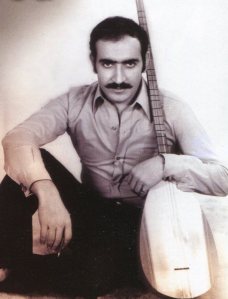 Muhlis Akarsu was prolific in his composition and recordings (in the pre-CD days) and fortunately many have been subsequently released on CD. The more I listen too these recordings, both solo and as part of the Muhabbet series, the more his brilliance is evident. This deyiş is from his last recording prepared shortly before he was killed in Sivas on 2 July 1993. The album was released after the Sivas events with the title Sivas Ellerinda Ömrüm Çalınır which includes the recording of that re-written version of the Pir Sultan Abdal deyiş performed by Arif Sağ (see
 Aşık İbreti is someone I would like to have met. His no nonsense plain speaking is so engaging – and, one thinks, quite courageous. His language is simple and his is message clear. İbreti’s real name was Hıdır Gürel and he was born in 1920 in the Sarız region of Kayseri. In 1967 we was caught up in attacks against Alevis in Elbistan. A working man, maker and seller of musical instruments and miner, he died in 1976. Musa Eroğlu, the great singer and bağlama player from Mut – often called the modern Karacaoğlan – is something of a champion of İbreti’s lyrics. He recorded the genuinely magnificent İlme değer verdim (Gördümde geldim) on his recording Yolver Dağlar and recently contributed İbreti’s Aşkın kabesi (İnsanlığa hizmet ibadetimdir) to the remarkable recording initiative by Kalan Music called Kızılbaş. Dertli Divani has also recorded the work of İbreti including Hakikat denildi erkânımıza on his 2000 masterwork Serçeşme. İbreti’s poems were published in 1996 in the book titled İlmer Değer Verdim by Adil Ali Atalay (Vaktidolu) whose publishing house, Can Yayınları, has contributed so much to the dissemination of Alevi culture.
