Latife Bacı ‘Mey içtim sarhoşum bugün’

Tags

, , , , , ,

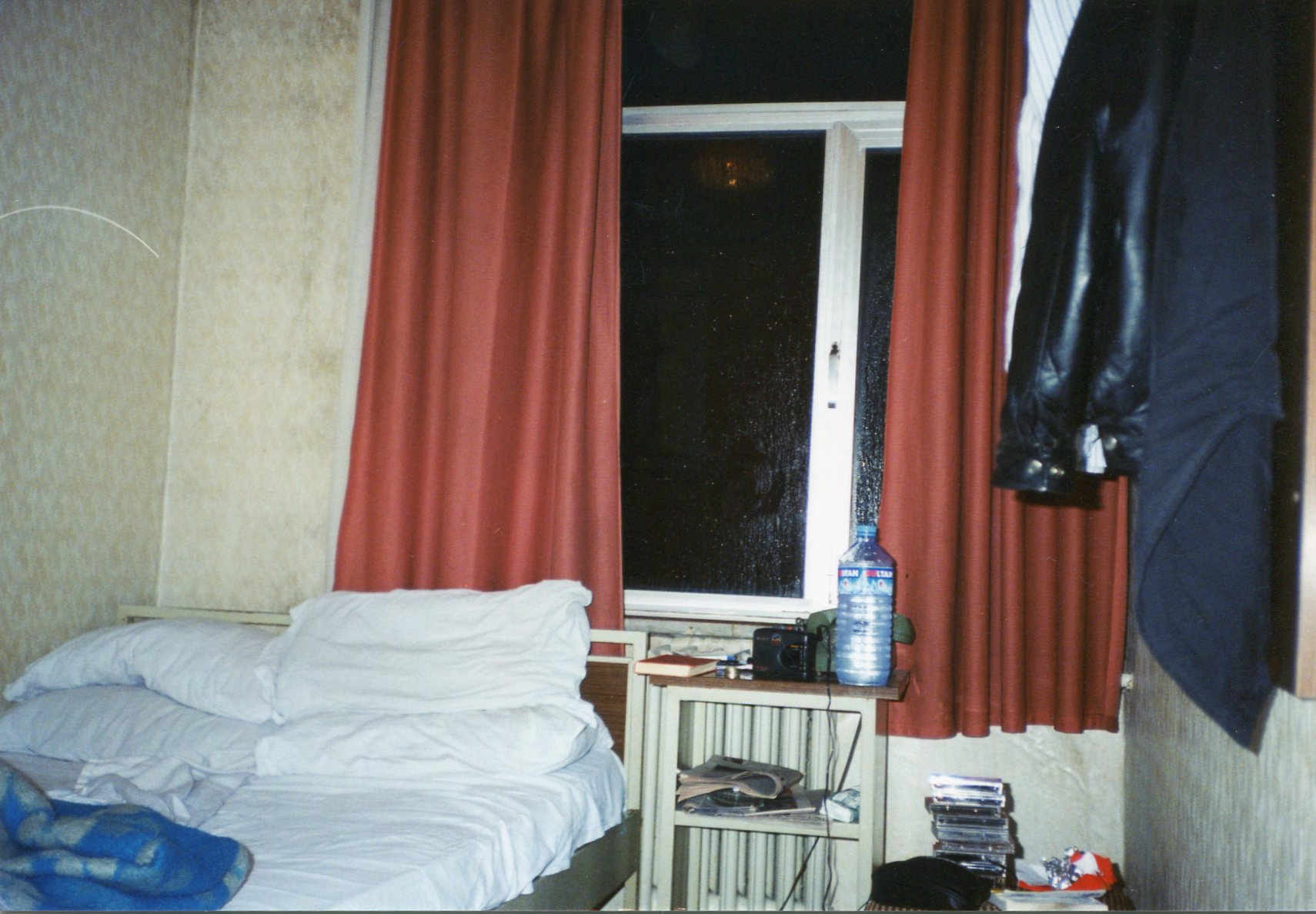
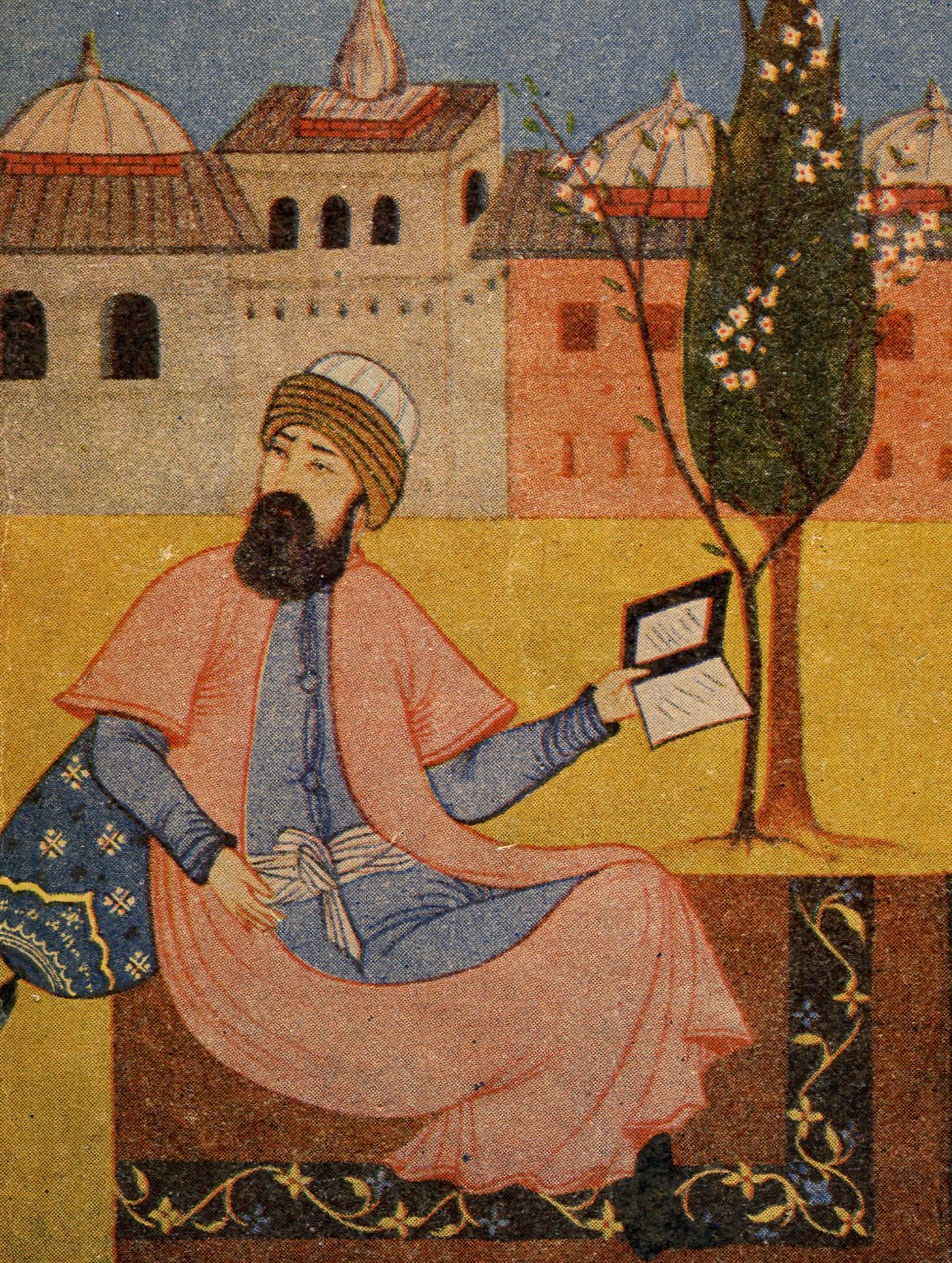
Otel Fahri İstanbul 1995Aşık Melûli is surely one of the master Alevi poets of the twentieth century. Indeed his life spans nine decades of the century. Born in 1892 his real name was Karaca and was educated both by an Arab hoca and for a decade in an Armenian school in Afşin. As well as his mother tongue Turkish he spoke Arabic, Armenian, Farsi and Ottoman Turkish. He died in 1989 aged 97. The poem here is from Melûli’s granddaughter Latife Özpolat and reflects the tradition of the Hakikatçi aşık-s of which Melûli was himself one of the greatest.

The poem is fairly straightforward in regards to translation, although difficult choices are necessarily made that colour the interpretation of the translation. One of the challenges is whether or not to translate ‘Pir’. I have a strong inclination to leave such terms untranslated since they carry so much culturally specific meaning. It has the sense of teacher, master, saint, guide and the head of a dervish order. In this version I have however committed a translation, opting for ‘Dervish’ which I expect to carry various connotations for the reader in English. The use of the word ‘Pir’ is just one expressive element that points to a mystical reading; yet one of the great characteristics of the song, particularly emphasised by the choice of mahlas, is the possible wordly interpretation. It is certainly this position that can be seen in Aynur Haşhaş’s recording while performed to the classic Alevi melody she replaces ‘Pir’ with the more ambiguous terms ‘canım’ and ‘yar’.

There is no doubt this lyric is provocative and forthright. Latife does not avoid the language of religion saying her Kabaa (Mecca) is the tavern (meyhane). She dismisses the intolerant as ‘barking guard dogs’ (kelb rakibin ürümesi). I have tried to render the implied intimidation of the latter line with the idea of ‘patrolling hounds’.

A word should be said about the form of the mahlas ‘Latife’m’ which perhaps should read ‘my Latife’. However, convention suggest that the mahlas is not understood as a possessive construct but an expression of person (be it first, second or third). So forms such as this are understood to be a contraction of the first person verb to be, that is ‘Latife’yim’.

I should also note that we are fortunate to have an excellent introduction in English to Melûli by Hans-Lukas Kieser in his book chapter titled: Alevilik as song and dialogue: the village sage Melûli Baba (1892-1989). Kieser reveals Melûli as a remarkable figure of provincial ‘enlightenment’ in the late Ottoman period. The principal source for Melûli’s life and work and from where my text comes from remains the book Melûli divanı ve Aleviliğin tasavvufun Bektaşiliğin tarihçesi by Latife Özpolat (herself) and Hamdullah Erbil.

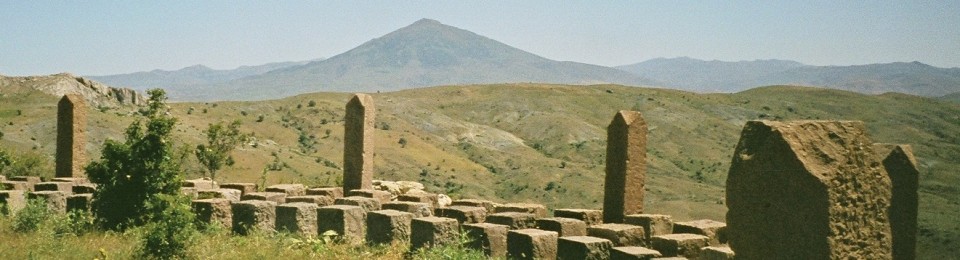
Postscript: a note and reminiscence on the picture. I generally try to use pictures from my travels in Turkey that have some tangential (and not always obvious) connection to the text. That may be true of this picture too, but it is also a small nostalgic reflection on fondly remembered friendly cheap workers’ hotels that could be found in Sirkeci in the 1980s and early 1990s. Now sadly replaced by poorly gilded (and much more expensive) tourist hotels. This was a room in one of my favourites, the original (and long departed) Otel Fahri on İbni Kemal Cad. when it was a quiet street (photo taken in early 1995). On one occasion, perhaps the time this photo was taken, there was a night time tavern restaurant around the corner squeezed in on Ebussuut Cad. near the corner of Ankara Cad. where gypsy musicians from Şişli would pass through – with much jolity, bonhomie and much drinking of rakı. When I visited the following year the tavern was gone, without trace (like something out of Robert Irwin’s Arabian Nightmare – but that is another story)  and Necmettin Erbakan was Prime Minister. I am not necessarily drawing a connection, but the belly dancer on the İbo Şov – Tatlıses is the great ‘Vicar of Bray’ of Turkish culture – also disappeared at this time, as I recall. The eagle-eyed will notice some travelling essentials in the picture – bottle of water (none other than ‘Sultan Su’), chocolate, cassette walkman – remember those! – leather jacket, tissues and book which, if  I must own up, was an old edition of John Buchan’s Greenmantle that, as is my practice, I donated to a hotel draw somewhere down the track in eastern Turkey).

Latife Bacı: Mey içtim sarhoşum bugün

Translation: Paul Koerbin

Today I drank wine and was drunk

I swear, I cannot hold my tongue

Today I was so pleased with my Dervish

I swear, I forgot all about death

The world appears completely empty

My Dervish brings me pleasure

He is exuberant whenever he loves

I swear, I love my Dervish

The morsel the Dervish proffers is permitted for me

The tavern is my pilgrim’s kabaa

The barking of the patrolling hounds

I swear, does not block my way

Let the Dervish come and be cross with me

Let my arm embrace his neck

Let the arms that are drawn away be broken

I swear, I cannot withdraw my arm

If I enter his embrace uncovered

If he sleeps and I love silently

If he awakes and he speaks rudely

I swear, I cannot withdraw my hand

I am Latife I am so shameless

I love greatly and I am so brazen

I know nothing of shame and honour

I swear, I will pluck my rose

———————————————————————————————–

Original Turkish text from Melûli divanı ve Aleviliğin tasavvufun Bektaşiliğin tarihçesi by Latife Özpolat and Hamdullah Erbil (2006)

Mey içtim sarhoşum bugün

Tutamam dilim vallahi

Pir’imle çok hoşuma bugün

Unuttum ölüm vallahi

Dünya tümden boş geliyor

Pir’im bana hoş geliyor

Her sevdikçe cüş geliyor

Severim Pir’im vallahi

Helal bana Pir lokması

Hacc-ı kâbem meyhanesi

Kelb rakibin ürümesi

Kesemez yolum vallahi

Varsın banan Pir darılsın

Kolum boynuna sarılsın

Çözülen kollar kırılsın

Çözemem kolum vallahi

Girsem koynuna gömleksiz

Uyusa ben sevsen sessiz

Uyansa dese edepsiz

Çekemem elim vallahi

Latife’m çok hayâsızım

Çok severim çok yüzsüzüm

Ar namus yok habersizim

Çalarım gülüm vallahi
Pir Sultan Abdal ‘Hak’tan inayet olursa’

Tags

, , , , , ,

This deyiş makes its first appearance in publication in Gölpınarlı and Boratav’s 1943 collection. It is one of the many deyiş collected by Aşık Ali İzzet Özkan, in this case from Hüseyin Efendi from Kale village in Divriği. This is one of the clearest most insistent of the kızılbaş ‘optative’ lyrics recounting the desires and hopes that the triumph of the Şah (Shah) and the coming of the Mehdi will bring. As is common in these lyrics, mention of the Shah evokes both the great Shah Ali (Şah-ı Merdan, although not with that epithet in this case) and the Safavid monarch, unnamed although the reference to Husrev with its connotation of the ‘great monarch’ Cyrus makes this clear. It is indeed a battle cry, mentioning holy war (gaza) and the sword of Ali, Zülfikar. The lyric has an  almost ecstatic quality in its repetition the dervish’s cry for victory. The mahlas is slightly odd being in the genitive case although the following line dramatically shifts the lyric to a personal declaration. I have left ‘Rum’ untranslated in this version although it could be translated simply as ‘Anatolia’.  Good stuff. This early draft translation leaves some terms untranslated that I will probably consider translations for later: bey (chief, noble), paşa (someone of high rank) and dede (devish leader, from the ehlibeyt line).

Pir Sultan Abdal: Hak’tan inayet olursa

Translation: Paul Koerbin

If by the grace of God

May the Shah come to Rum one day

In holy battle may he strike Zulfikar

Against the unbelievers one day

May all tribes come together

May they be slaves for the Shah

The destitute in the land of Rum

May they rejoice and smile one day

May they raise and bear the banner

May the Shah sit in Istanbul

May he return the captives from the Franks

May he release them to Horasan one day

May he gather together bey and pasha

May he sieze the four exremities

May the monarch march and enjoy

May Ali establish court one day

That the Shah’s rose was born

That abundant mercy rained down

That happy days were born

May such a world rejoice one day

My dede Mahdi must come

Ali must establish the court

He must break down injustice

May he wreak vengeance one day

Pir Sultan’s work is but a sigh

I am in expectation of the beautiful Shah

The administration that is sovereign

May he be its master one day

——————————————————————————————————————

Original Turkish text from Gölpınarlı and Boratav (1943)

Hak’tan inayet olursa

Şah Urum’a gele bir gün

Gazâda bu Zülfikarı

Kâfirlere çala bir gün

Hep devşire gele iller

Şah’a ola köle kullar

Urumda ağlıyan sefiller

Şâd ola da güle bir gün

Çeke sancağı götüre

Şah İstanbul’a otura

Firenkten yesir getire

Horasana sala bir gün

Devşire beyi paşayı

Zapteyleye dört köşeyi

Husrev ede temaşayı

Âli divan kura bir gün

Gülü Şah’ın doğdu deyü

Bol ırahmet yağdu deyü

Kutlu günler doğdu deyü

Şu âlem şâd ola bir gün

Mehdi Dedem gelse gerek

Âli divan kursa gerek

Haksızları kırsa gerek

İntikamın ala bir gün

Pir Sultan’ın işi ahtır

İntizarım güzel Şah’tır

Mülk iyesi padişahtır

Mülke sahib ola bir gün

Pir Sultan Abdal ‘Sultan Suyu gibi çağlayıp akma’

Tags

, , , , ,

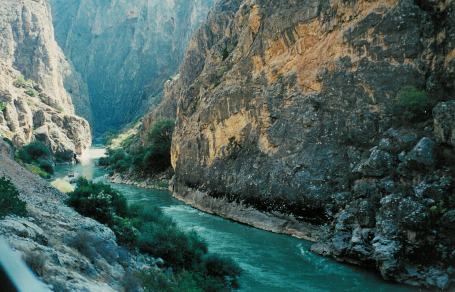
Çaltı Suyu near Divriği

This text first appears in Cahit Öztelli’s collection, Pir Sultan Abdal Bütün Şiirleri published in 1971.  Öztelli gives the source as being collected by Pertav Naili Boratav in the Çukurova region – a region wonderfully and magically evoked in the novels of Yaşar Kemal, but not particularly associated with Pir Sultan. This also makes the location of the Sultan Stream seem uncertain. The most identifiable Sultan Suyu is in the Malatya region, but a small stream of this name could be a local feature of any place. The mention of a wintery mountain peak does rather suggest central Anatolian location, though the location of the stream is hardly of great importance. Sadık Gürbüz included the song on his 1977 recording of Pir Sultan Abdal deyişler with the same melody as sung by Ruhi Su among the private recordings from the period 1970-72 later released on CD in 1990 as Sultan Suyu Pir Sultan Abdal’dan Deyişler (number 20 in the complete recordings of Ruhi Su). Gürbüz and Su both omit the third, and distinctly Alevi, verse in their recordings.

Pir Sultan Abdal: Sultan suyu gibi çağlayıp akma

Translation: Paul Koerbin


Don’t gush on burbling like the Sultan Stream

It will become calm, don’t worry foolish heart

Man’s mind is in mist as a wintery mountain peak

It will be reached, don’t worry foolish heart

A greeting from us to the one going to the friend

Damn the liar and damn the ignorant

How many enemies there are to ambush us

They will tire, don’t worry foolish heart

Worthy Ali is before us as leader

Do you think the work of God could collapse?

One’s short span in the world has ups and downs

Vigour will return, don’t worry foolish heart

I am Pir Sultan Abdal for the secret way

What has befallen us, let it remain here

That towards which we strive is hope

It will be reached, don’t worry foolish heart

————————————————————————————————————

Original text from Cahit Öztelli, Pir Sultan Abdal Bütün Şiirleri (1971)


Sultan Suyu gibi çağlayıp akma

Durulur, gam yeme divane gönül

Er başında duman, dağ başında kış

Erilir, gam yeme divane gönül


Bizden selâm söylen dosta gidene

Yuf yalancıya da, lânet nâdene

Bunca düşman ardımızdan yeltene

Yorulur, gam yeme divane gönül


Şah-ı Merdan önümüzde kılavuz

Yıkılır mı Hakk’ın yaptığı havuz

Üç günlük dünyada her yahşı, yavuz

Dirilir, gam yeme divane gönül


Pir Sultan Abdal’ım sırdan sırada

Bu iş böyle oldu, kalsın burada

Cümlemizim yeltendiği murada

Erilir, gam yeme divane gönül

Aşık Veysel ‘Beni hor görme kardaşım’

Tags

, , ,

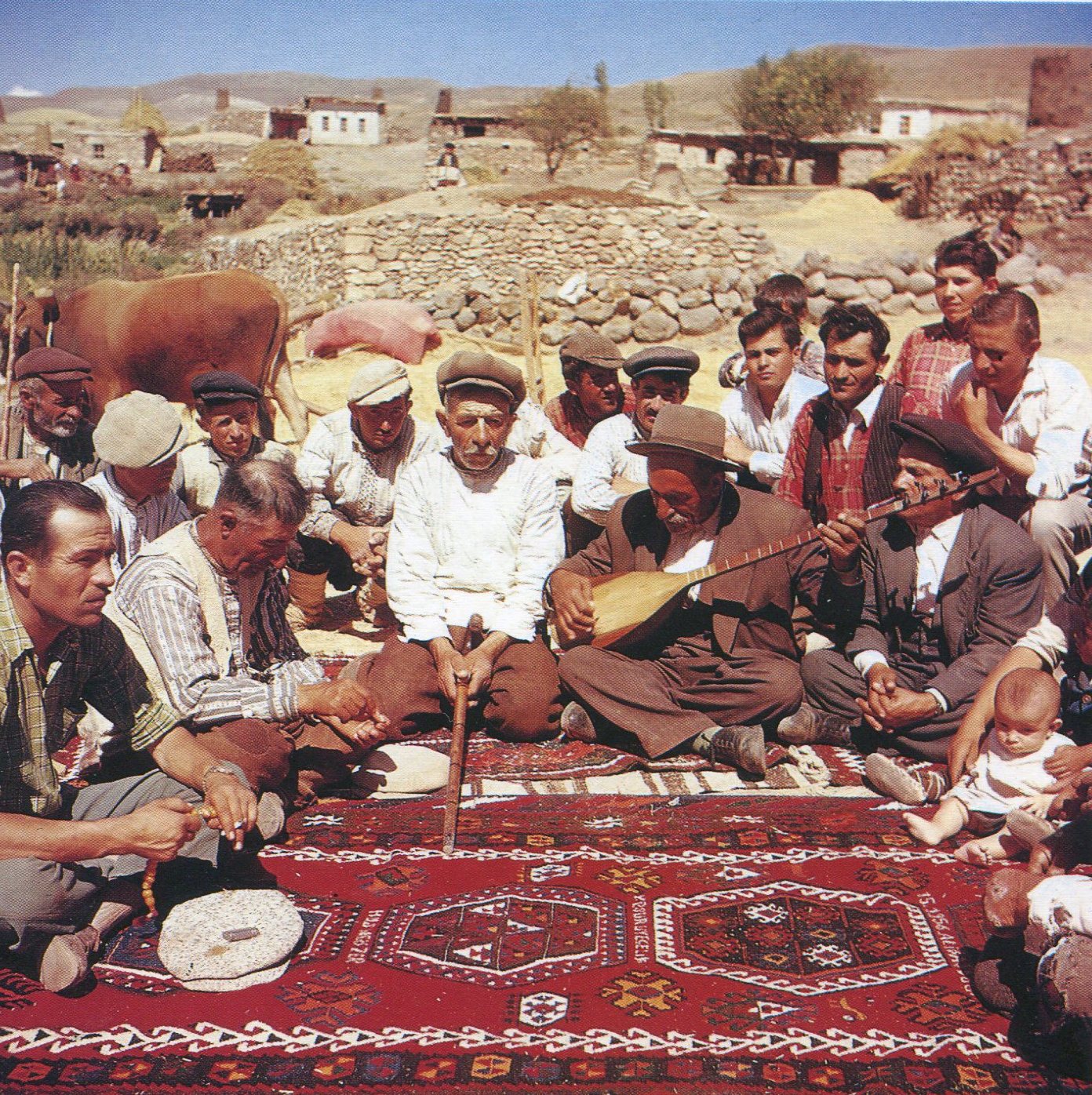
Aşık Veysel Şatıroğlu (1894-1973) was born in Sivrialan near Şarkışla in the Sivas region, was and is the most renowned and generally loved of all 20th century Turkish aşık-s. His identity is strongly associated with Republican Turkey and indeed there is a statue of him in pride of place near the entrance of Gülhane park in Istanbul. His songs have a strong philosophical and humanistic character and he tended to avoid a strong (and hence political) expression of his Alevi identity, although of course it is evident in his songs. The finest recordings available are the field recordings made by Alain Gheerbrant in 1957 in which Veysel played more naturally to his Alevi identity. Gheerbrant, out of consideration for Veysel did not publish the recordings until after the aşık’s death. They are available on the Radio France  Ocora double ablbum published in 1985 (558634/35) from which the photograph here is taken.


Muhlis Akarsu recorded Beni hor görme on his recording titled “… gönül” although, interestingly, with Veysel’s mahlas replaced by the word “insan” (human) and the order of verses changed with the mahlas verse sung as the second of three verses. Arif Sağ also recorded a similar version on his 1981 recording Gürbeti ben mi yarattım with the mahlas verse back in place but, like Akarsu, with “insan” replacing Veysel’s mahlas. Sağ over a decade later produced what remains Nuray Hafiftaş’s finest recording, Şimdi oldu, which also includes the song, but with the Veysel’s mahlas restored.


Translation challenges include getting a workable reading of the form of the refrain line with it’s half question and answer. It implies a conditional sentence although it does not use that construction. One writer, the wonderfully named Azeri scholar Sednik Paşeyevi Pirsultanlı, does in fact read the line in this way, e.g. “sen yolcuysan ben baç mıyım?”. I have tried a slightly different more direct approach. The second line in the penultimate verse also provides a challenge to convey in a line a satisfactory sense of the original. It refers to the concept of the true spirit or soul of person not being able to ascend to a higher level until the carnal and worldly desires and self (nefs) are done away with.


Aşık Veysel:  Beni hor görme

Translation: Paul Koerbin


Don’t look down on me, my brother

You are gold – so am I then bronze?

We are of the same existence

You are silver – so am I then thin metal?


Whatever exists is in you and in me

The same existence in every body

That tomorrow is headed for the grave

You are full – so am I then empty?


Some are mullahs, some dervish

God, it seems, gave to us whatever

Some might talk of the bee and the flower

You are honey – so am I than a heap of grain?


All of our bodies come from the earth

Kill off the carnal self before the dying

So the creator seems to have commanded

You are the pen – so am I then the nib?


Veysel is disposed to be a lover

We are brothers made out of the earth

We are the same as fellow travellers

You are the traveller – so am I then the toll?

—————————————————————————————

Original text from recording by Aşık Veysel on the CD Aşık Veysel Klasikleri


Ben hor görme kardeşim

Sen altınsın ben tunç muyum

Aynı vardan var olmuşuz

Sen gümüşsün ben saç mıyım

Ne var ise sende bende

Aynı varlık her bendende

Yarın mezara girende

Sen toksun da ben aç mıyım

Kimi molla kimi derviş

Allah bize neler vermiş

Kimi arı çiçek dermiş

Sen balsın da ben cec miyim

Topraktandır cümle beden

Nefsini öldür ölmeden

Böyle emretmiş yaradan

Sen kalemsin ben uç muyum

Tabiata Veysel âşık

Topraktan olduk kardaşık

Aynı yolcuyuz yoldaşık

Sen yolcusun ben bac mıyım


Pir Sultan Abdal ‘Gel seninle ahd ü peyman edelim’ (‘Ne sen beni unut ne de ben seni’)

Tags

, , , ,

The text here is from Cahit Öztelli’s 1971 collection which, to the best of my knowledge, is its first publication. Some of the language suggests its been around for some time so it is curious that it slipped through the efforts of Ergun, Atalay and Gölpınarlı and Boratav.  Part of its attraction is surely in the wonderful refrain. My translation of this line remains very clumsy compared with the Turkish – needs some inspiration.

Arif Sağ recorded a version of this deyiş collected from the great Sinemilli (Maraş) dede and deyiş source Tacim Dede (sometimes Tacım) on Sağ’s most eccentric recording Biz İnsanlar / Kerbela from 1990. The album includes odd programmed ‘casio’ like rhythms and synthesised instrument colours and sounds. It remains the Arif Sağ recording that I listen to most perhaps. The arrangement of this song in particular is peculiar in that the last verse changes melody, rhythm and tempo to that of the song that follows it, another Pir Sultan song İnsan olan nura çevrilir collected from İsmail Özden. While this is clearly one of the more striking arrangements on a strange album, Zafer Gündoğdu does a redux of the arrangement for his recording of the song on his 2002 recording Bahçe biziz gül bizdedi. The main differences in the Tacim Dede version are in verse 4 (very different) and verse 3 (somewhat different) with some other changes in the other verses that present a slightly simpler lyric but not a change in the substance of meaning. For example ‘iman’ instead of ‘peyman’ in the opening line and ‘İrfan meclisine vardığın zaman ‘ as the third line of the second verse. There are a number of other variations. As with many Pir Sultan deyiş from this region the mahlas form is Abdal Pir Sultan’ım which is just one of the pieces of evidence that raises questions about İbrahim Aslanoğlu’s conclusions in regards to the six putative Pir Sultan Abdallar.

Pir Sultan Abdal: Gel seninle ahd ü peyman edelim

Translation: Paul Koerbin

Come and let us make a pledge with you

Neither you forget me, nor I forget you

Let the two of us cherish a vow

Neither you forget me, nor I forget you

For mercy, how her eyebrows are finely wrought

We pursued pleasure, we did so without end

When I was among the cultured crowd

Neither you forget me, nor I forget you

I am inclined towards the saz and conversation

I am inclined towards you and prosperity

By your love I fell out  upon the foreign land

Neither you forget me, nor I forget you

My beloved’s beauty like the moon and sun

Does your lover not draw forth his moan?

Bring forth and let us imbibe the word of God

Neither you forget me, nor I forget you

They drew Abdal Pir Sultan to the gallows place

I fell down for your love and suffer for you

Behold there erenler that one going to the beloved

Neither you forget me, nor I forget you

——————————————————————————————–

Original text from: Cahit Öztelli Pir Sultan Abdal : Bütün Şiirleri, 1971

Gel seninle ahd-ü peyman edelim

Ne sen beni unut, ne de ben seni

İkimiz de bir ikrarı güdelim

Ne sen beni unut, ne de ben seni


Aman kaşı keman elinde aman

Sürdük safasını, etmedik tamam

Ehl-i irfan içre olduğum zaman

Ne sen beni unut, ne de ben seni


Hem saza mailem hem de sohbete

Hem sana mailem hem de devlete

Aşkın ile düştüm diyar gurbete

Ne sen beni unut, ne de ben seni


Yârimin cemâli güneşle mâhı

Sana âşık olan çekmez mi âhı

Getir and içelim Kelâmullahı

Ne sen beni unut, ne de ben seni


Abdal Pir Sultan’ı çektiler dâra

Düşmüşüm aşkına yanarım nâra

Bakın hey erenler şu giden yâra

Ne sen beni unut, ne de ben seni

Pir Sultan Abdal ‘Gelin canlar bir olalım’

Tags

, , , , ,

One of the most renowned Pir Sultan songs and one of the most political being something of an anthem for the political left from the 1970s.  Performances more commonly only include the first, second and last verses, leaving out the more overtly aggressive third and fourth verses. While all of the Pir Sultan lyrics can only be considered to be attributed to him this lyric is perhaps one of the more doubtful and some assert the lyric originates with Aşık Sıtkı. Muhsin Gül in his book on Sıtkı includes two lyrics that seem to be models for this song, one of which is very similar although it does not include the outright injuction to murder the Sultan (Padışah) and is in fact a more sophisticated lyric. But whether Sıtkı’s is a reworking of the Pir Sultan original or the other way around can hardly be established definitely. Hayrettin İvgin in his 1976 book on Aşık Sıtkı Pervane states that is is a Pir Sultan lyric, though this seems based on the inclusion of the lyric in Gölpınarlı and Boratav’s 1943 book on Pir Sultan and İvgin’s book predates the more substantial work by Gül. The source of the text given by Gölpınarlı and Boratav is again Aşık Ali İzzet Özkan who obtained it from a mecmua (manuscript collection) belonging to one Muharrem from the village of İğdiş in the Şarkışla region of Sivas.

In regards to translation issues, choice of language will determine the degree of political and religious interpretation. For example, how to translate ‘canlar’? Literally this means ‘souls’ but can be understood as ‘friends’ or ‘brothers’ or ‘companions’. Given the political nature of the lyric and its adoption as such in popular culture, I have preferred ‘comrades’.  ‘Münkir‘ also presents some problems. This means ‘deniers’ and may be understood in a religious context. Finding the term ‘deniers’ a bit cumbersome I have tried ‘false hearted’. References to the Umayyad caliphs Yezid and Mervan (Marwan) are fairly straightforward – although it is uncertain whether the reference to Mervan is to the short rule of Marwan I or the last Ummayad caliph Marwan II, though more probably is a reference to the despised Ummayad caliphs generally –  as these caliphs in their actions of opposition to Shi’a and in the murder of Hüseyin represent the essence of treachery and for the Alevi these names are metonyms for treachery and falsehood and are used as invectives.  To convey this adequately in the English remains a challenge, perhaps.

This song presents a good example of the complexities of expressions of identity in Turkey through the shared and yet specific heritage of Turkish Alevi culture. For example this song, besides its historical political associations, was one used to dramatic effect in at the Cologne Bin Yılın Türküsü event at the beginning of 21st century – an event asserting Alevi identity in a transnational context – see video here; while it is also performed on Turkish Radio and Television in the context of the standard national folk orchestra and choir in a concert expressing a particular musical mode  – see this video. Interestingly, the conductor in both instances is Zafer Gündoğdu and the musical arranger for the latter the Alevi virtuoso Erdal Erzincan. Both versions include only the first, second and final verse.

Pir Sultan Abdal: Gelin canlar bir olalım

Translation: Paul Koerbin

Come comrades and let us be as one

Let us strike swords against the false hearted

Let us avenge the blood of Hüseyin

I put my trust in God

Let us bind ourselves together

Let us murmur like the waters

Let us take up the march

I put my trust in God

Let us unfurl the banner of red

Let the time of  deceitful Yezids pass

In our hand is the dagger of passion

I put my trust in God

Let us strike at the race of Mervan

Let us ask for the blood of Hüseyin

Let us kill the Padishah

I put my trust in God

I am Pir Sultan, I’m at boiling point

The false hearted shall be driven mad

What is destined shall come to pass

I put my trust in God

——————————————————————————————–

Original Turkish text from Gölpınarlı and Boratav (1943)

Gelin canlar bir olalım

Münkire kılıç çalalım

Hüseynin kanın alalım

Tevekkeltü taâlâllah

Özü öze bağlıyalım

Sular gibi çağlıyalım

Bir yürüyüş eyliyelim

Tevekkeltü taâlâllah

Açalım kızıl sancağı

Geçsin Yezidlerin cağı

Elimizde aşk bıçağı

Tevekkeltü taâlâllah

Mervan soyunu vuralım

Hüseynin kanın soralım

Pâdışahın öldürelim

Tevekkeltü taâlâllah

Pir Sultan’ım geldi cûşa

Münkirlerin alkı şaşa

Takdir olan gelir başa

Tevekkeltü taâlâllah

Aşık İbreti ‘Gördümde geldim’ (İlme değer verdim)

Tags

, ,

Walking in Cennet

Cennet Mağarası (grotto of heaven in near Narlıkuyu in Mersin Province)

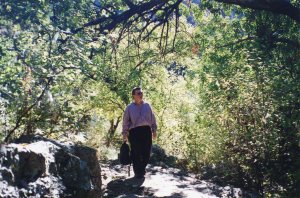
This is probably Aşık İbreti’s most famous deyiş and the one that gives the title to collection of İbreti’s works prepared by Adil Ali Atalay (Vaktidolu) and published under the title İlme Değer Verdim by Can Yayınları in 1996. This title reflects the influence of the performed rather than the published version of the deyiş since the phrase  “ilme değer verdim” does not actually appear in the published text. The title given the lyric is ‘Gördümde geldim’ and the opening line is “ilme hizmet edip uykudan kalktım”. The popular version as recorded by Musa Eroğlu on his 1994 recording Yolver Dağlar sharpens the focus of the words reducing the verses from five to three (a common performance practice) singing only the first and last two verses. A number of changes are made to the words in Eroğlu’s performance. Besides the small change from hizmet to değer in the opening line most notable changes are in the second last verse with the change of softa to yobaz which gives it a stronger invective and the substantially changed last two lines. The performed version has a somewhat more straightforward and clarifying sentiment replacing the original metonymical lines with  “cahil cühalaya edemem minnet / bütün zincirleri kırdımda geldim”.

Aşık İbreti whose real name was Hıdır Gürel (1920-1976) was one of the finest mid-twentieth century Alevi ozans and his lyrics are sharp, passionate and with a great feeling for the central place of the  human. Musa Eroğlu’s recording is worth a listening too and may surprise those looking for the exotic in Turkish music. The arrangement using bağlama, guitar and bass guitar is wonderfully engaging, appropriate and sympathetic to the lyric.

Note: I revised this translation in February 2018. Mostly some subtleties and refinements; not changes of substantive meaning.

Aşık İbreti: Gördümde geldim (İlme değer verdim)

Translation: Paul Koerbin

I gave myself to knowledge and awoke from sleep

I let go of the turban and the prayer mat

I was tired of the daily preaching of sermons

I came and tossed Ramadan to the torrent

As long as I was angry inside my grief increased

Listen, the matter of the Hajj was another worry

The rich were just about the only ones who went

I came and saw while they were stoning Satan

I placed the Four Books in a suspended bag

I ceased my interest in the heavenly Houris

I fell mute thinking – don’t believe the conjuring Hodja

I came to the point of giving them no attention

I don’t entertain the distractions of the next world

I have consideration for the concerns of humanity

For the illusion of heaven’s private garden

I came and banished the mob of bigots

Ibreti – my desire is service to humankind

My wife is my Houri, my home is my heaven

There remains no obligation to the Hajji and the Hodja

I came and broke the rosary and cruet

———————————————————————————————————————

Original text from Aşık İbreti İlme Değer Verdim prepared by Adil Ali Atalay Vaktidolu (Can Yayınları, 1996)

İlme hizmet edip uykudan kalktım

Sarık, seccadeyi elden bıraktım

Vaizın her günkü vazından bıktım

Ramazanı sele verdim de geldim

Karnım acıktıkça kederim arttı

Hele hac kaygısı ayrı bir dertti

Paralılar hemen hac’ oldu gitti

Şeytanı taşlarken gördüm de geldim

Dört kitabı koyup torbaya astım

Cennet hurisinden ilgimi kestim

Muskacı hocaya sanmayın sustum

Ağzının payını verdim de geldim

Aklım ermez ahret eğlencesine

Saygım var insanın düşüncesine

Hayal cennetinin has bahçesine

Softa sürüsünü sürdüm de geldim

İbreti, emelim insana hizmet

Eşim bana huri, evim de cennet

Hacıya, hocaya kalmadı minnet

Irbığı, tesbihi kırdım da geldim

Pir Sultan Abdal ‘Şu kanlı zalimin ettiği işler’

Tags

, , , , , , , , ,

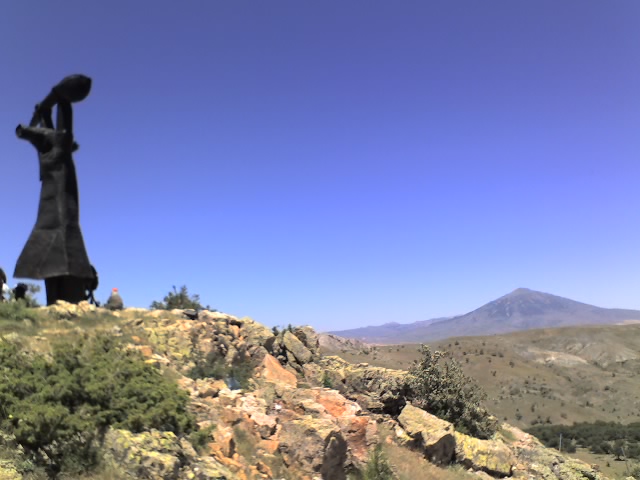
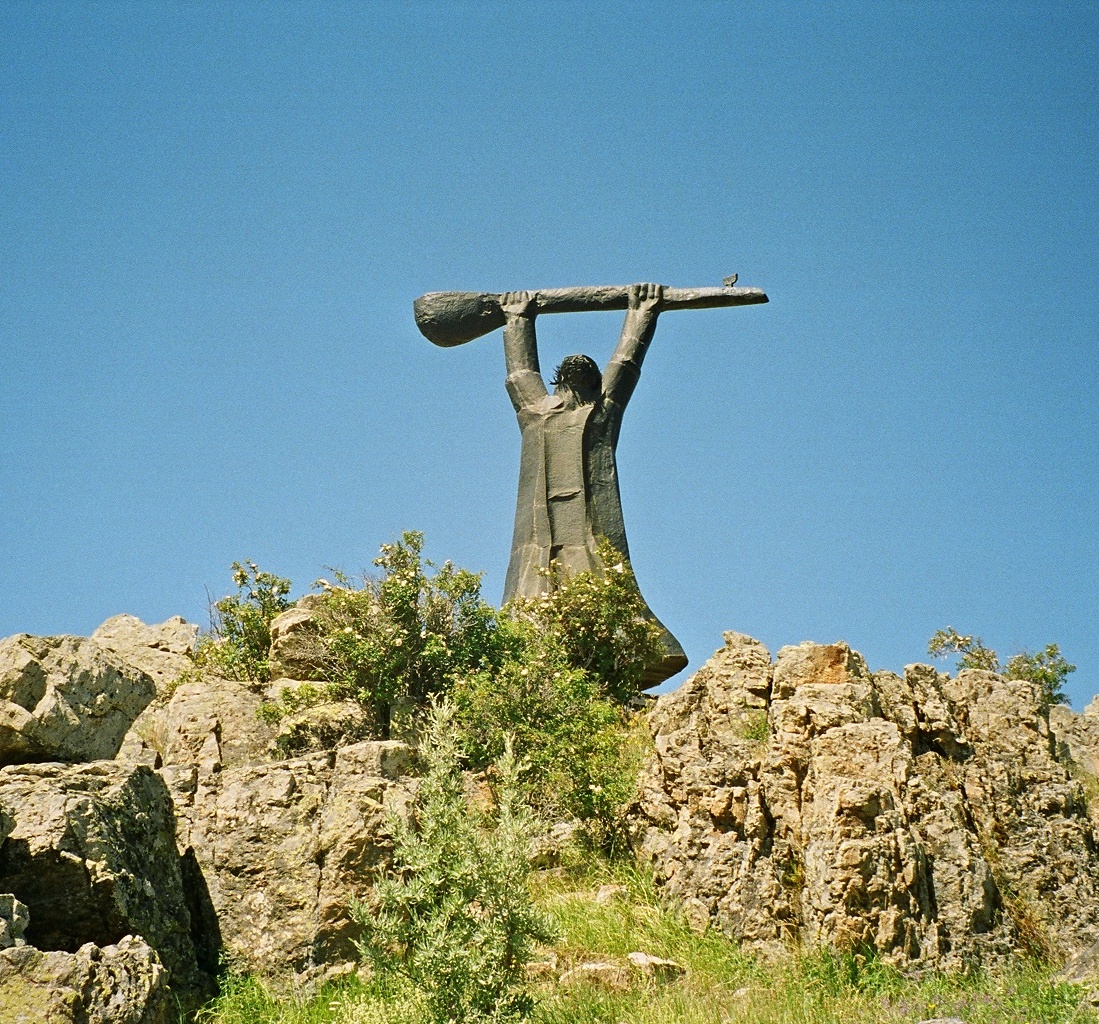
Pir Sultan statue at Çilehane hill at HacıbektaşA song dealing with the demise of Pir Sultan as he proceeds to his execution while Hızır Paşa – the bloody tyrant referreed to – orders the people to cast stones at him. Legend has it that Pir Sultan’s friend, Ali Baba, tossed a rose; a dissembling act that wounds Pir Sultan the deepest. This of course, as Gölpınarlı and Boratav (1943) the first to publish the text note, revisits the story associated with the martyrdom of Mansur al-Hallaj in 922 when his friend Shibli threw a rose when the people began to stone Hallaj. As Annemarie Schimmel describes it (Mystical Dimensions of Islam, 1975), when Shibli did this Hallaj sighed since those who threw stones did not know what they were doing, but Shibli did. And this has much the same theme in the Pir Sultan context – it is the betrayal that wounds.

Aslanoğlu  (1984) rejects this as a Pir Sultan text and claims it as a composite of verses from Aşık Hüseyin and Tarsuslu Sıkdı. I have not been able to locate the full text of Aşık Hüseyin although Avcı gives a mahlas verse from Aşık Hüseyin (probably 18th century) from a mecmua provided by Adil Ali Atalay that reads: ‘Hüseyin’im eyder can göğe ağmaz / Hakk’tan emr’olmazsa ırahmet yağmaz / Şu illerin sözü hiç bana değmez  / İlle dostun sözü yareler beni‘ (Ali Haydar Avcı Osmanlı gızlı tarihinden Pir Sultan Abdal, 2006 p. 342-343).  Tarsuslu Sıdkı Aslanoğlu refers to Aşık Sıdkı (Pervane) and a text is found in the major collection of Sıdkı’s lyrics compiled by his grandson Muhsin Gül (1984) that bears some similarity. Indeed a number of Sıdkı’s lyrics do bear the language of some of the most renowned lyrics attributed to Pir Sultan including Gelin canlar bir olalım and Kul olayım kalem tutan eller. The source of the text published in Gölpınarlı and Boratav is Aşık Ali İzzet who was forthcoming in his openness about attributing texts as he felt appropriate (see again Ali Haydar Avcı’s monumental work Osmanlı gızlı tarihinden Pir Sultan Abdal (2006 p. 236-351) for a consideration of Ali İzzet’s influence in respect to these lyrics). So Aslanoğlu’s assertion may have merit – but only so far, since it remains without question an important and fixed text of the Pir Sultan of tradition. It is sung to a fine tune, and perhaps the finest recording is that by Feyzullah Çınar made in Paris for Radio France in 1971 under the sponsorship of the late Irene Melikoff.

Pir Sultan Abdal: ‘Şu kanlı zalimin ettiği işler’

Translation: Paul Koerbin

Those blood tainted tyrant’s deeds

Make me moan like a lonely nightingale

Stones rain down like a torrent upon me

But it is the friend’s mere pinch that wounds me

Friend and foe are revealed in my dire straits

My troubles that once were ten are now fifty

The order for my death is fixed to my neck

So let them strike me down or let them hang me

I am Pir Sultan Abdal my soul does not flee

If not decreed by God mercy does not rain down

The stones of those strangers will never touch me

But it’s the rose of that friend that wounds me 

————————————————————————————————————-

Şu kanlı zalimin ettiği işler

Garip bülbül gibi zareler beni

Yağmur gibi yağar başıma taşlar

Dostun bir fiskesi yaralar beni

Dar günümde dost düşmanım bell’oldu

On derdim var ise şimdi ell’oldu

Ecel fermanı boynuma takıldı

Gerek asa gerek vuralar beni


Pir Sultan Abdal’ım can göğe ağmaz

Hak’tan emr olmazsa irahmet yağmaz

Şu illerin taşı hiç bana değmez

İlle dostun gülü yaralar beni 


Kul Himmet ‘Allah bir Muhammed Ali diyerek’ (Düaz-ı imam)

Tags

, , , , , , ,

Istanbul Maarif edition cover 1966While working on a chapter of my PhD devoted to identity issues concerning Kul Himmet and Kul Himmet Üstadım for the thesis it seemed a good time to introduce Kul Himmet to the blog. Kul Himmet ranks with Şah Hatayi and Pir Sultan as the third in the triumvirate of great lyric and didactic Alevi poets. Even less about Kul Himmet is known than of Pir Sultan and certainly Hatayi (Shah Ismail). We do generally understand from the internal evidence of the deyişler that Kul Himmet was the murid (disciple) of Pir Sultan and provides the connection to another great aşık of Alevi ritual culture, Kul Hüseyin; also that he was educated. I will leave the issue of Kul Himmet Üstadım for another day.

This düaz-ı imam is another favourite of Alevi expressive culture. In performance it is sung to a powerful and deeply mysterious melody, somewhat unusually for Alevi music using a garip tetrachord for the lower part of the melody; although this modulates to the hüseyni ayağı for the third, sixth and ninth verses. The tune can be heard in the opening of the unbearably tragic film Journey of Hope.

The main difficulties in translation arise from names and some specific Alevi concepts that are reluctantly translated. For example, what to do with ‘erenler‘? My instinct is to leave as Erens, but I try a translation of ‘enlightened‘. A good translation for ‘vird‘ continues to elude. I have succombed to ‘prayer’ but not happily. This düaz goes beyond the twelve imams and brings in other identities such as Kanber, Salman and Fatma and the especially interesting Bibi Shahrbanu (Şehriban). Will perhaps add some explanation later.

Interestingly the earliest printed version of this text in Besim Atalay’s Bektaşilik ve Edebiyat (1924; republished in modern Turkish translation by Vedat Atila in 1991) does not take the form of a düaz-ı imam and does not include reference to the twelve imams though it does retain the references to Fatma, Şehriban and İmam Hüseyin. The text translated here is from Cahit Öztelli’s Pir Sultan’ın Dostları (2nd ed 1996) with one change to the order of the verses. The verse beginning “İmam Zeynel paralandı, bölündü” appears in Öztelli as the second last verse. Following the recordings by Arif and Tolga Sağ I have moved this to the fifth verse where it makes more sense logically and chronologically in respect to the invocation of the imams.

Kul Himmet ‘Ali bir Muhammed Ali diyerek’ (Düaz-ı imam)

Translation: Paul Koerbin

Every morning the birds sound together

Saying Allah is one, Muhammad, Ali

The nightingale begins a lament for the rose

Saying Allah is one, Muhammad, Ali

Our fate shall turn upon the direction we face

Veysel Karani went to the land of Yemen

We are bees and we fly off for almighty manna

Saying Allah is one, Muhammad, Ali

Let us endure mourning for the Imams

Hear the true voice of the enlightened

Imam Hasan drank the poisoned challice

Saying Allah is one, Muhammad, Ali

The one who seeks is sifted through a fine mesh

The one who believes turns to the True way

Shah Hüseyin was soaked in scarlet blood

Saying Allah is one, Muhammad, Ali

Imam Zeynel was torn to pieces and portioned

Humble respect was given to the Imam Bakir

The essence of direction was given to Cafer-i Sadık

Saying Allah is one, Muhammad, Ali

The heart is a bird’s ramshackle nest

The Shah’s desire become our prayers

The prayer of Kâzım, Musa, Ali Rıza

Saying Allah is one, Muhammad, Ali

Shah Taki and Naki went on as light

Hasan-ül Askerî went on as the brave

The Mehdi went on mysterious in the cave

Saying Allah is one, Muhammad, Ali

Kanber, Salman, Fatma stood for the prayer

Shahrbanu was stripped and mounted on the camel

Jesus was distressed and passed unto the air

Saying Allah is one, Muhammad, Ali

Four books were written and passed to four faiths

The Kuran became Muhammed’s prayers

Kul Himmet passed to the sorrow of his saint

Saying Allah is one, Muhammad, Ali

—————————————————————————-

Original text from Cahit Öztelli Pir Sultan’ın Dostları (2nd ed. 1996)

Her sabah her sabah ötüşür kuşlar

Allah bir Muhammed Ali diyerek

Bülbül de gül içün figana başlar

Allah bir Muhammed Ali diyerek

Kıblemizden kısmetimiz verile

Veysel’kara gitdi Yemen iline

Arıyız uçarız kudret balına

Allah bir Muhammed Ali diyerek

Biz çekelim İmamların yasını

İşit gerçek erenlerin sesini

İmam Hasan içdi ağu tasını

Allah bir Muhammed Ali diyerek

Tâlib olan ince elekden elendi

Mümin olan Hak yoluna dolandı

Şah Hüseyin al kanlara boyandı

Allah bir Muhammed Ali diyerek

İmam Zeynel paralandı, bölündü

Ol İmam Bâkır’a yüzler sürüldü

Cafer-i Sadık’a erkân verildi

Allah bir Muhammed Ali diyerek

Gönül kuşun Kalb evinde yuvası

Virdimize düşdü Şah’ın havası

Kâzım, Musa, Ali Rıza duası

Allah bir Muhammed Ali diyerek

Şah Takî’yle Nakî nur oldu gitdi

Hasan-ül Askerî er oldu gitdi

Mehdî mağarada sır oldu gitdi

Allah bir Muhammed Ali diyerek

Kenber, Selman, Fatma durdu duaya

Şehriban soyundu, bindi deveye

İsâ kahreyledi, çıkdı havaya

Allah bir Muhammed Ali diyerek

Dört kitap yazıldı, dört dine düşdü

Kur’an Muhammed’in virdine düşdü

Kul Himmet pîrinin derdine düşdü

Allah bir Muhammed Ali diyerek

Sefil Selimi ‘İnsana muhabbet duyalı (bana yer kalmaz)’

Tags

, , , , ,

This deyiş is one of my favourites since first hearing it on Arif Sağ’s 1983 masterwork, İnsan Olmaya Geldim, where he performs it with an accompaniment of restrained intimacy and intricacy on the bağlama. It was only recently that I learned that the musical arrangement is in fact by Feyzullah Çınar and heard his recording on the album Aşkın Çilesi. Hearing the way Sağ develops Çınar’s arrangement, particularly in the instrumental bridges between verses,  into an intricate bağlama ornamentation only heightens my admiration for Sağ’s interpretive mastery. It is interesting to note the different emphasis given the lyric by the titles the performers give the song: Sağ (and Sabahat Akkiraz who also recorded the song in 1984) title it ‘İnsana muhabbet duyalı’ (Since feeling love for humanity) while Çınar titles it on his recording ‘Bana yer kalmaz‘ (There is no place for me).

Sefil Selimi, whose real name was Ahmet Günbulut (1932-2003), was born in Şarkışla a place renowned for great aşıks, both Aşık Veysel and Aşık Ali İzzet both coming from this area. Selimi was not from an Alevi family but many of his lyrics show a great interest and empathy with Alevi culture and belief and his work has received reciprocal respect from Alevis. Mahmut Erdal in his book Yine Dertli Dertli İniliyorsun mentions being given a manuscript of Selimi’s by İhsan Öztürk in which, some time later when he looked at the poems, he recognised the remarkable talent and picks out this lyric as an example.

The text given here for my translation of all five verses is taken from Uğur Kaya’s book Şiirleri ve türküleriyle Aşık Sefil Selimî (Sivas, 2001). The recorded versions use only the 1st, 2nd and 5th verses although in this wonderful live recording of Sağ and Akkiraz performing the song together (which looks to be around the mid-1980s) Sağ includes the 4th verse. There are some variations in the versions which are mostly minor and don’t affect the meaning. The main differences affect the 2nd line of the 3rd verse which also occurs as ‘Ne bir hatır sorar, göz yaşım siler in the versin‘ in Erdal (and also in Bekir Karadeniz’s book Elâ Gözlüm); and the 2nd line of the 4th verse which Karadeniz gives as: Kapıya bacaya konmaz dediler.

Sefil Selimi ‘İnsana muhabbet duyalı’

Translation: Paul Koerbin

I have no friends nor any to help me

Since I dressed in the cloak of bravery

Were the world entirely empty there is no place for me

Since I felt love for humankind

My belief is monarch, my conceit is captive

I loved the Sacred Lineage, they said I’m at fault

Some speak cowardly, some bravely

Since I pastured the sheep with the wolf

Those striking my back smile at my face

They scarcely share the butchered morsels

Everyone whets their knife on my neck

Since I presented myself to the open

‘These are Kızılbaş, unwashed’, they say

‘Their sacrifice is forbidden, inedible’, they say

‘They don’t halt at a mosque, great or small’, they say

Since I set out to follow the Shah Imam Hüseyin

Often some seek written proof in me

Not knowing the condition, ask of my forbears

Friends, some decide on my death

Since I called myself Sefil Selimi

——————————————————————————————————–

Original text from Uğur Kaya Şiirleri ve türküleriyle Aşık Sefil Selimî (Sivas, 2001)

Kimse bana yaren olmaz, yar olmaz

Mertlik hırkasını giydim giyeli

Dünya bomboş olsa, bana yer kalmaz

İnsana muhabbet duydum duyalı

İmanım hükümdar, benliğim esir

Ehl-i Beyt’i sevdim, dediler kusur

Kimisi korkak der, kimisi cesur

Kurt ile koyunu yaydım yayalı

Ardımdan vuranlar, yüzüme güler

Kestiği az gibi parçalar böler

Herkes kılıcını boynumda biler

Başımı meydana koydum koyalı

‘Bu Kızılbaş olmuş, yunmaz’ diyorlar

‘Kestiği haramdır, yenmez’ diyorlar

‘Camiye mescide konmaz’ diyorlar

İmam Şah Hüseyn’e uydum uyalı

Çoğu, bende kağıt hüccet arıyor

Hâl bilmeyen, dip dedemi soruyor

Dostlar, ölümüme karar veriyor

‘Sefil Selimî’yem’ dedim diyeli