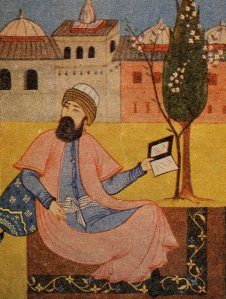
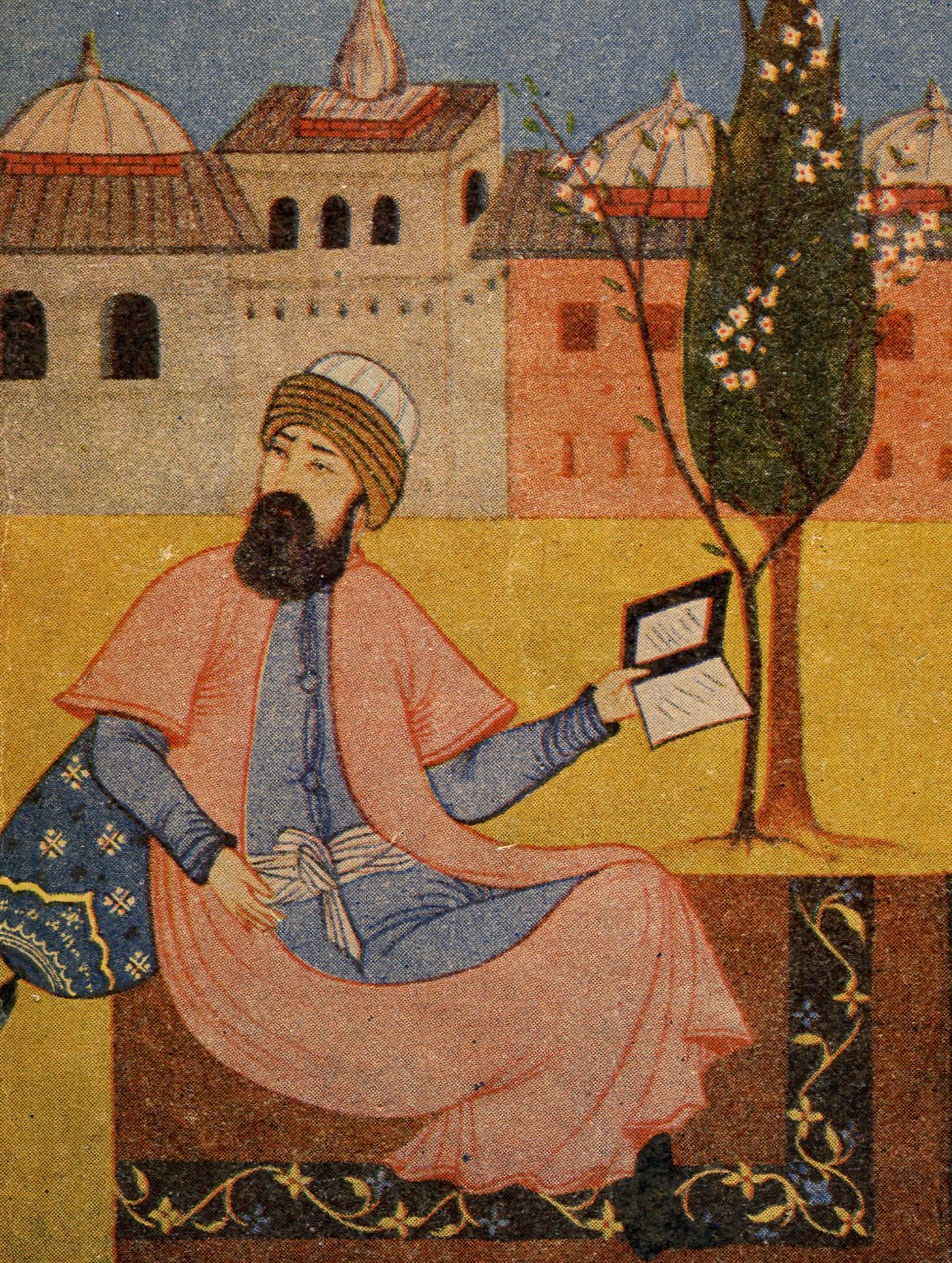
 While working on a chapter of my PhD devoted to identity issues concerning Kul Himmet and Kul Himmet Üstadım for the thesis it seemed a good time to introduce Kul Himmet to the blog. Kul Himmet ranks with Şah Hatayi and Pir Sultan as the third in the triumvirate of great lyric and didactic Alevi poets. Even less about Kul Himmet is known than of Pir Sultan and certainly Hatayi (Shah Ismail). We do generally understand from the internal evidence of the deyişler that Kul Himmet was the murid (disciple) of Pir Sultan and provides the connection to another great aşık of Alevi ritual culture, Kul Hüseyin; also that he was educated. I will leave the issue of Kul Himmet Üstadım for another day.
This düaz-ı imam is another favourite of Alevi expressive culture. In performance it is sung to a powerful and deeply mysterious melody, somewhat unusually for Alevi music using a garip tetrachord for the lower part of the melody; although this modulates to the hüseyni ayağı for the third, sixth and ninth verses. The tune can be heard in the opening of the unbearably tragic film Journey of Hope.
The main difficulties in translation arise from names and some specific Alevi concepts that are reluctantly translated. For example, what to do with ‘erenler‘? My instinct is to leave as Erens, but I try a translation of ‘enlightened‘. A good translation for ‘vird‘ continues to elude. I have succombed to ‘prayer’ but not happily. This düaz goes beyond the twelve imams and brings in other identities such as Kanber, Salman and Fatma and the especially interesting Bibi Shahrbanu (Şehriban). Will perhaps add some explanation later.
Interestingly the earliest printed version of this text in Besim Atalay’s Bektaşilik ve Edebiyat (1924; republished in modern Turkish translation by Vedat Atila in 1991) does not take the form of a düaz-ı imam and does not include reference to the twelve imams though it does retain the references to Fatma, Şehriban and İmam Hüseyin. The text translated here is from Cahit Öztelli’s Pir Sultan’ın Dostları (2nd ed 1996) with one change to the order of the verses. The verse beginning “İmam Zeynel paralandı, bölündü” appears in Öztelli as the second last verse. Following the recordings by Arif and Tolga Sağ I have moved this to the fifth verse where it makes more sense logically and chronologically in respect to the invocation of the imams.
Kul Himmet ‘Ali bir Muhammed Ali diyerek’ (Düaz-ı imam)
Translation: Paul Koerbin
Every morning the birds sound together
Saying Allah is one, Muhammad, Ali
The nightingale begins a lament for the rose
Saying Allah is one, Muhammad, Ali
Our fate shall turn upon the direction we face
Veysel Karani went to the land of Yemen
We are bees and we fly off for almighty manna
Saying Allah is one, Muhammad, Ali
Let us endure mourning for the Imams
Hear the true voice of the enlightened
Imam Hasan drank the poisoned challice
Saying Allah is one, Muhammad, Ali
The one who seeks is sifted through a fine mesh
The one who believes turns to the True way
Shah Hüseyin was soaked in scarlet blood
Saying Allah is one, Muhammad, Ali
Imam Zeynel was torn to pieces and portioned
Humble respect was given to the Imam Bakir
The essence of direction was given to Cafer-i Sadık
Saying Allah is one, Muhammad, Ali
The heart is a bird’s ramshackle nest
The Shah’s desire become our prayers
The prayer of Kâzım, Musa, Ali Rıza
Saying Allah is one, Muhammad, Ali
Shah Taki and Naki went on as light
Hasan-ül Askerî went on as the brave
The Mehdi went on mysterious in the cave
Saying Allah is one, Muhammad, Ali
Kanber, Salman, Fatma stood for the prayer
Shahrbanu was stripped and mounted on the camel
Jesus was distressed and passed unto the air
Saying Allah is one, Muhammad, Ali
Four books were written and passed to four faiths
The Kuran became Muhammed’s prayers
Kul Himmet passed to the sorrow of his saint
Saying Allah is one, Muhammad, Ali
—————————————————————————-
Original text from Cahit Öztelli Pir Sultan’ın Dostları (2nd ed. 1996)
Her sabah her sabah ötüşür kuşlar
Allah bir Muhammed Ali diyerek
Bülbül de gül içün figana başlar
Allah bir Muhammed Ali diyerek
Kıblemizden kısmetimiz verile
Veysel’kara gitdi Yemen iline
Arıyız uçarız kudret balına
Allah bir Muhammed Ali diyerek
Biz çekelim İmamların yasını
İşit gerçek erenlerin sesini
İmam Hasan içdi ağu tasını
Allah bir Muhammed Ali diyerek
Tâlib olan ince elekden elendi
Mümin olan Hak yoluna dolandı
Şah Hüseyin al kanlara boyandı
Allah bir Muhammed Ali diyerek
İmam Zeynel paralandı, bölündü
Ol İmam Bâkır’a yüzler sürüldü
Cafer-i Sadık’a erkân verildi
Allah bir Muhammed Ali diyerek
Gönül kuşun Kalb evinde yuvası
Virdimize düşdü Şah’ın havası
Kâzım, Musa, Ali Rıza duası
Allah bir Muhammed Ali diyerek
Şah Takî’yle Nakî nur oldu gitdi
Hasan-ül Askerî er oldu gitdi
Mehdî mağarada sır oldu gitdi
Allah bir Muhammed Ali diyerek
Kenber, Selman, Fatma durdu duaya
Şehriban soyundu, bindi deveye
İsâ kahreyledi, çıkdı havaya
Allah bir Muhammed Ali diyerek
Dört kitap yazıldı, dört dine düşdü
Kur’an Muhammed’in virdine düşdü
Kul Himmet pîrinin derdine düşdü
Allah bir Muhammed Ali diyerek
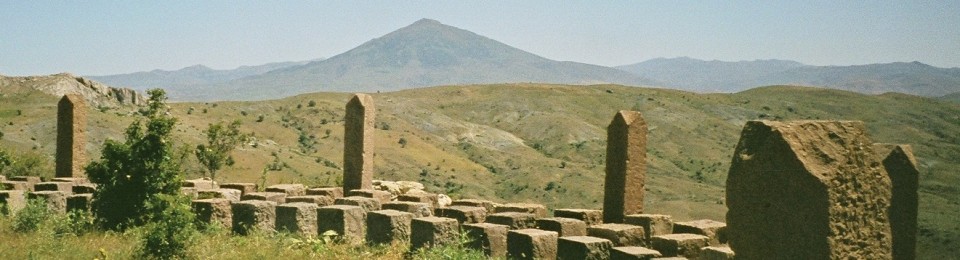
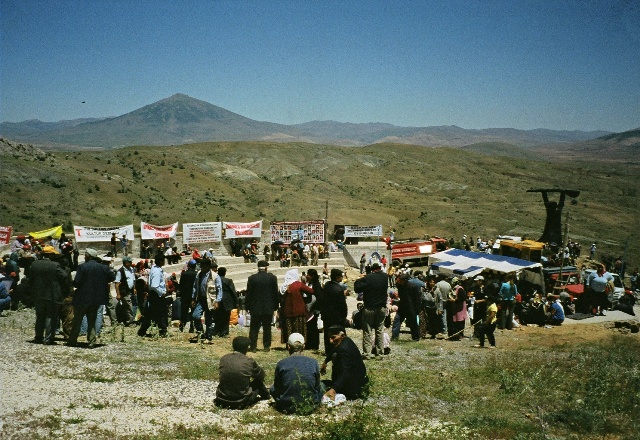
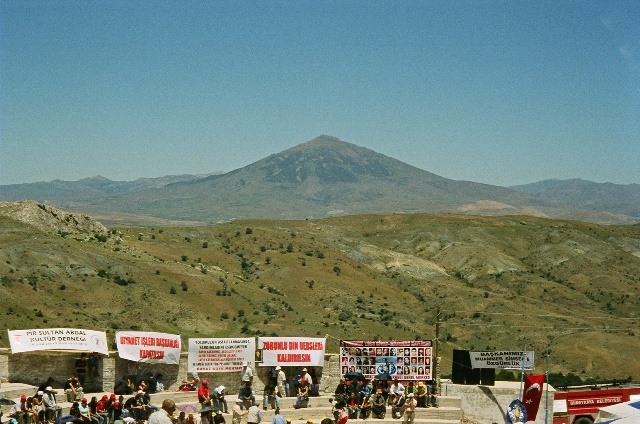
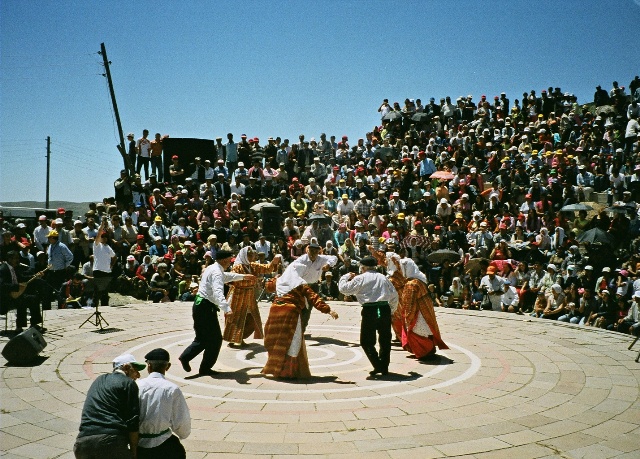

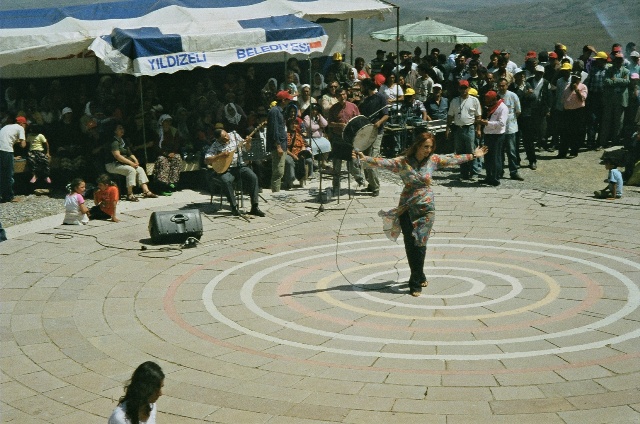
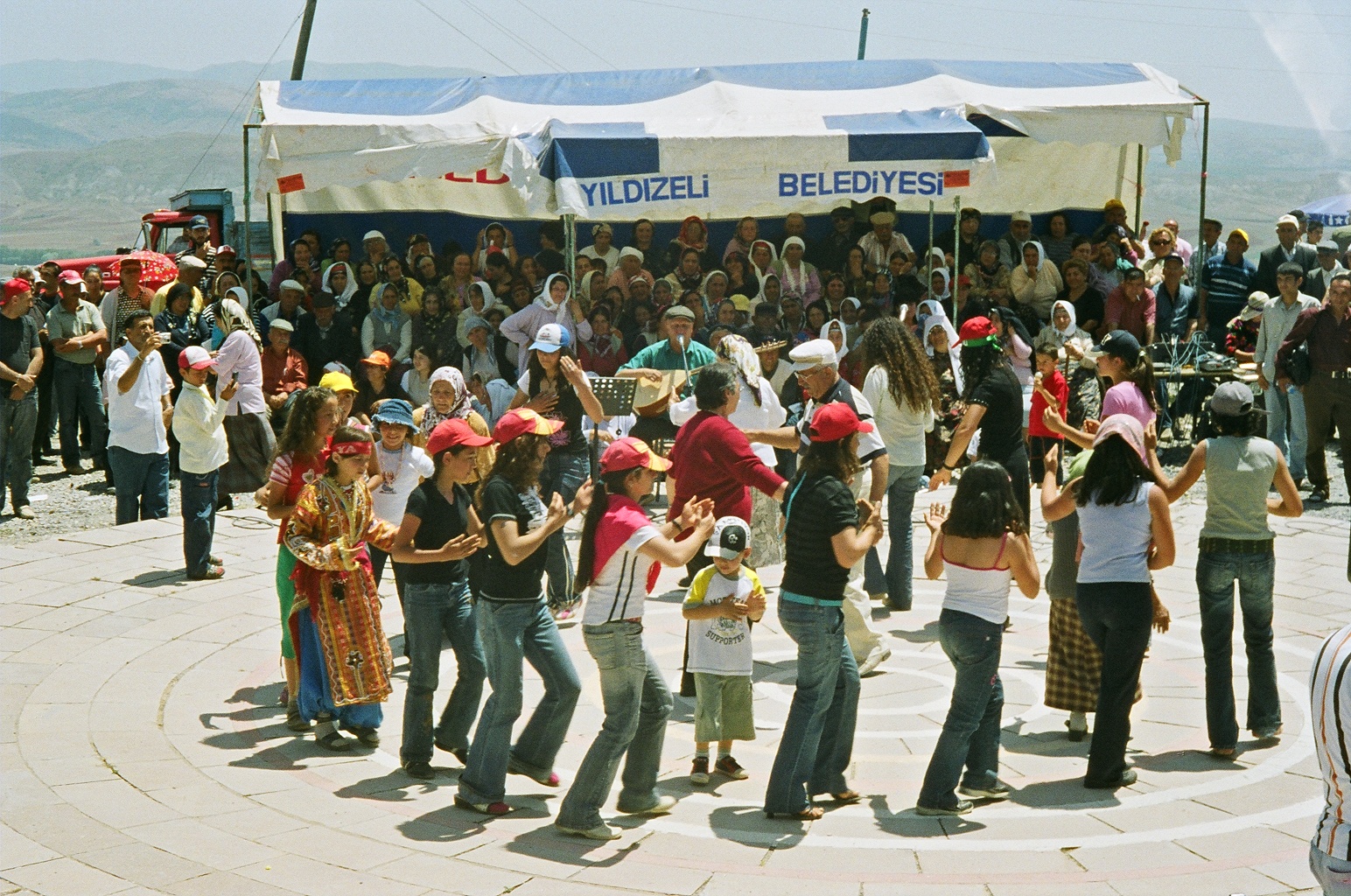
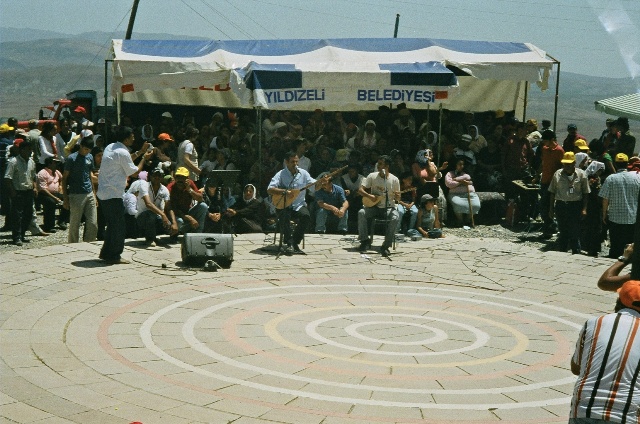
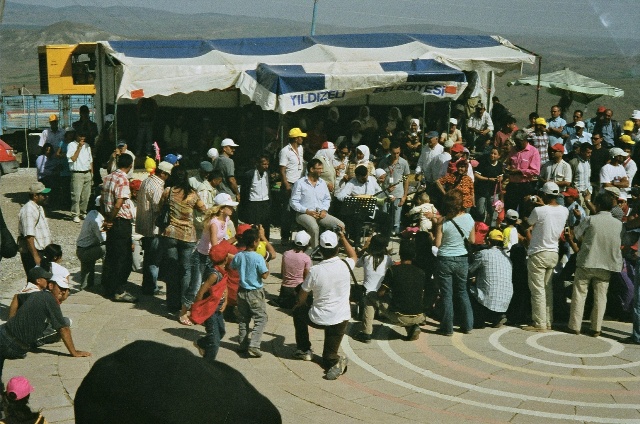
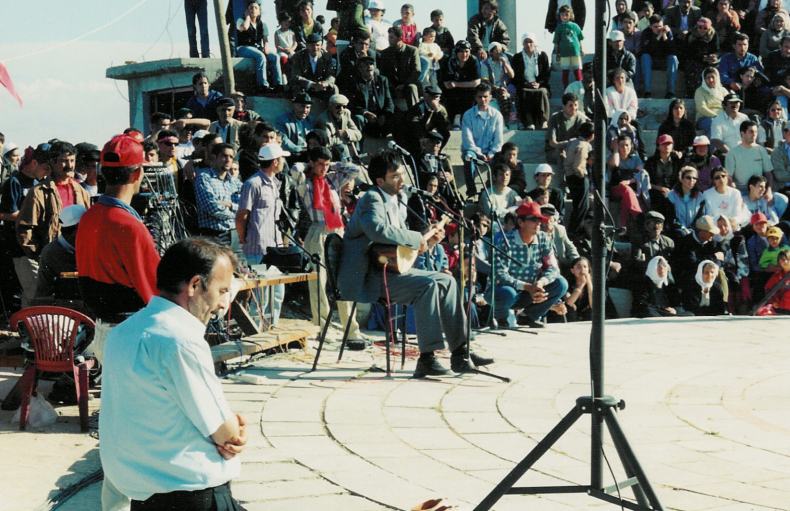 Have been analysing a performance by Tolga Sağ that I recorded at the 2002 Pir Sultan Abdal Festival in Banaz. The festival that year took place over the weekend of the 22nd and 23rd June. Sağ did two performances, the first on the Saturday was an hour long performance and the second on the Sunday was a half hour performance. I am studying the first, longer performance most specifically. The work so far has been trying to identify all the songs performed. The set consisted of the following deyiş and türkü.
 PİR SULTAN ABDAL and me