
• About Pir Sultan Abdal
  • About the ‘me’ in this blog
  • Index of translations on this blog
  • More translations available in my PhD thesis
  • Regarding the translations on this blog

PİR SULTAN ABDAL and me

~ A personal reflection on the great Alevi poet's lyric works and influence – mostly through translation

PİR SULTAN ABDAL and me

Tag Archives: Ruhi Su

Pir Sultan Abdal ‘Gam elinden benim zülfü siyahım’

12 Thursday Dec 2024

Posted by koerbin in Translations

≈ Leave a comment

Tags

Ahmet İhvani, Aşık Daimi, Feyzullah Çınar, Gölpınarlı, Gevheri, Pertev Naili Boratav, Ruhi Su

Exif_JPEG_420

Gök Medrese from Sivas Kalesi (October 2024)

This text first appears in the Sadettin Nüzhet [Ergun] 1929 publication of Pir Sultan Abdal texts. This is the main text I have followed for the translation although I have also referred to the 1943 publication by Gölpınarlı and Boratav which reprints Ergun’s text with some minor, mostly orthographical, changes. In fact, this text persists with very few variants. Most notable is the use of ‘teşevvüştür‘ for ‘neşterlidir‘ in the 4th verse. I have also seen a version of this verse that replaces ‘gün gelir geçer …’ in the second line with ‘gürler gelir geçer …’. The idea of gürlemek, to thunder or make a loud noise, together with the original sense of passing days has influenced my translation towards the idea of ‘croaking’ – for better or worse. The word ‘can’, simple, manifold and profound, always presents a challenge and frustration as it is impossible to convey the full depth of meaning – while also, for the same reasons, it gives the translator considerable interpretive scope. The song is a great cris de coeur emphasised by the repetition of the vocative gel – come! – at the end of each verse. As Gölpınarlı and Boratav note, this rhyme recalls a similar use by Gevheri (died early 18th century), for example in the lyric (originally published by Köprülü in 1929) beginning: ‘Ne nihan edersin benden yüzünü / Hasretinle hâlim yaman oldu gel / Hak aşkına olsun göster yüzünü / Görmedim cemâlın zaman oldu gel‘ (see M. Fuad Köprulü, Saz Şairleri I-IV. Akçağ, 2004. p192-193). 

The song has been recorded by some of the great Alevi musicians including Feyzullah Çınar and Aşık Daimi as well as ‘urban’ interpreters such as Ruhi Su and Rahmi Saltuk. Recorded versions of the song closely follow the original text although usually with the omission of the 4th verse (as in the case of Feyzullah Çınar and Ruhi Su) or both the 3rd and 4th verses (as in the case of Aşık Daimi and Ahmet İhvani). Interestingly (for me at least) Aşık Daimi reverses the form of the mahlas from “Pir Sultan Abdal’ım” to “Abdal Pir Sultan’ım”. The form of the mahlas is something I have written about at length elsewhere. A notable version available on YouTube is that by the Canadian based Alevi musician Ahmet İhvani in a masterful performance incorporating the ‘Deli Derviş’ bağlama instrumental work as a prelude to the song. 

Pir Sultan Abdal: Gam elinden zülfü siyahım

Translation: Paul Koerbin


Grief from your hand, my divine beauty,

Struck like an arrowhead wounding my heart – Come!

Don’t make me weep for your great wound

Today love was split from the soul – Come!

My native home became a fortress of sorrow

My cry unheard my prayer unheeded

My woe not one, not five, nor ten

But come upon as knots upon knots – Come!

Shall I thus be bound to longing?

Did Leyla endure for Mecnun?

The world is transitory – come, don’t begrudge me

My burden of chattels let for pay – Come!

Whatever my pained heart suffers it bears no scar

Then one croaks and life is never fulfilled

Old wounds are opened and are never healed

The verdant place has turned to black – Come!

I am Pir Sultan Abdal – in a week in a month

Days come and go and nothing is gained

The heart longs for God – my soul in futile pursuit

My black earth cast in heaps upon me – Come!

————————————————————————————————————

Original text from Sadettin Nüzhet [Ergun], XVII inci asır Sazşairlerinden Pir Sultan Abdal Bütün Şiirleri (1929)


Gam elinden benim zülfü siyahım

Peykan değdi sînem yaralandı gel

Suna başın içün ağlatma bizi

Bu gün sevdâ candan aralandı gel

Gamdan hisar oldu mekânım yurdum

İşitmez âvazım dinlemez virdim

Bir değil beş değil on değil derdim

Düğümler baş urdu sıralandı gel

Hasretine vâsıl olam mı böyle

Mecnun’a da bâkî kalır mı Leylâ

Ölümlü Dünya’dır gel helâl eyle

Yüklendi barhanem kiralandı gel

Ne çekerse dertli sinem dağolmaz

Günler gelir geçer ömür çokolmaz

Neşterlidir yaralarım onulmaz

Kökerdi çevresi karalandı gel

Pir Sultan Abdal’ım haftada ayda

Günler gelir geçer bulunmaz fayda

Gönül Hak arzular canım hayhayda

Toprağım üstüme karalandı gel

Pir Sultan Abdal ‘Sultan Suyu gibi çağlayıp akma’

03 Monday Jan 2011

Posted by koerbin in Translations

≈ Leave a comment

Tags

Çukurova, Cahit Öztelli, Pertev Naili Boratav, Ruhi Su, Sadık Gürbüz, Yaşar Kemal

Çaltı Suyu near Divriği

This text first appears in Cahit Öztelli’s collection, Pir Sultan Abdal Bütün Şiirleri published in 1971.  Öztelli gives the source as being collected by Pertav Naili Boratav in the Çukurova region – a region wonderfully and magically evoked in the novels of Yaşar Kemal, but not particularly associated with Pir Sultan. This also makes the location of the Sultan Stream seem uncertain. The most identifiable Sultan Suyu is in the Malatya region, but a small stream of this name could be a local feature of any place. The mention of a wintery mountain peak does rather suggest central Anatolian location, though the location of the stream is hardly of great importance. Sadık Gürbüz included the song on his 1977 recording of Pir Sultan Abdal deyişler with the same melody as sung by Ruhi Su among the private recordings from the period 1970-72 later released on CD in 1990 as Sultan Suyu Pir Sultan Abdal’dan Deyişler (number 20 in the complete recordings of Ruhi Su). Gürbüz and Su both omit the third, and distinctly Alevi, verse in their recordings.

Pir Sultan Abdal: Sultan suyu gibi çağlayıp akma

Translation: Paul Koerbin


Don’t gush on burbling like the Sultan Stream

It will become calm, don’t worry foolish heart

Man’s mind is in mist as a wintery mountain peak

It will be reached, don’t worry foolish heart

A greeting from us to the one going to the friend

Damn the liar and damn the ignorant

How many enemies there are to ambush us

They will tire, don’t worry foolish heart

Worthy Ali is before us as leader

Do you think the work of God could collapse?

One’s short span in the world has ups and downs

Vigour will return, don’t worry foolish heart

I am Pir Sultan Abdal for the secret way

What has befallen us, let it remain here

That towards which we strive is hope

It will be reached, don’t worry foolish heart

————————————————————————————————————

Original text from Cahit Öztelli, Pir Sultan Abdal Bütün Şiirleri (1971)


Sultan Suyu gibi çağlayıp akma

Durulur, gam yeme divane gönül

Er başında duman, dağ başında kış

Erilir, gam yeme divane gönül


Bizden selâm söylen dosta gidene

Yuf yalancıya da, lânet nâdene

Bunca düşman ardımızdan yeltene

Yorulur, gam yeme divane gönül


Şah-ı Merdan önümüzde kılavuz

Yıkılır mı Hakk’ın yaptığı havuz

Üç günlük dünyada her yahşı, yavuz

Dirilir, gam yeme divane gönül


Pir Sultan Abdal’ım sırdan sırada

Bu iş böyle oldu, kalsın burada

Cümlemizim yeltendiği murada

Erilir, gam yeme divane gönül

Pir Sultan Abdal ‘Bülbül olsam varsam gelsem’ (Allah Allah desem gelsem)

15 Wednesday Jul 2009

Posted by koerbin in Translations

≈ 2 Comments

Tags

Gölpınarlı, Kul Himmet, mahlas, Muhlis Akarsu, Nelly Furtado, Pertev Naili Boratav, Ruhi Su, Translation

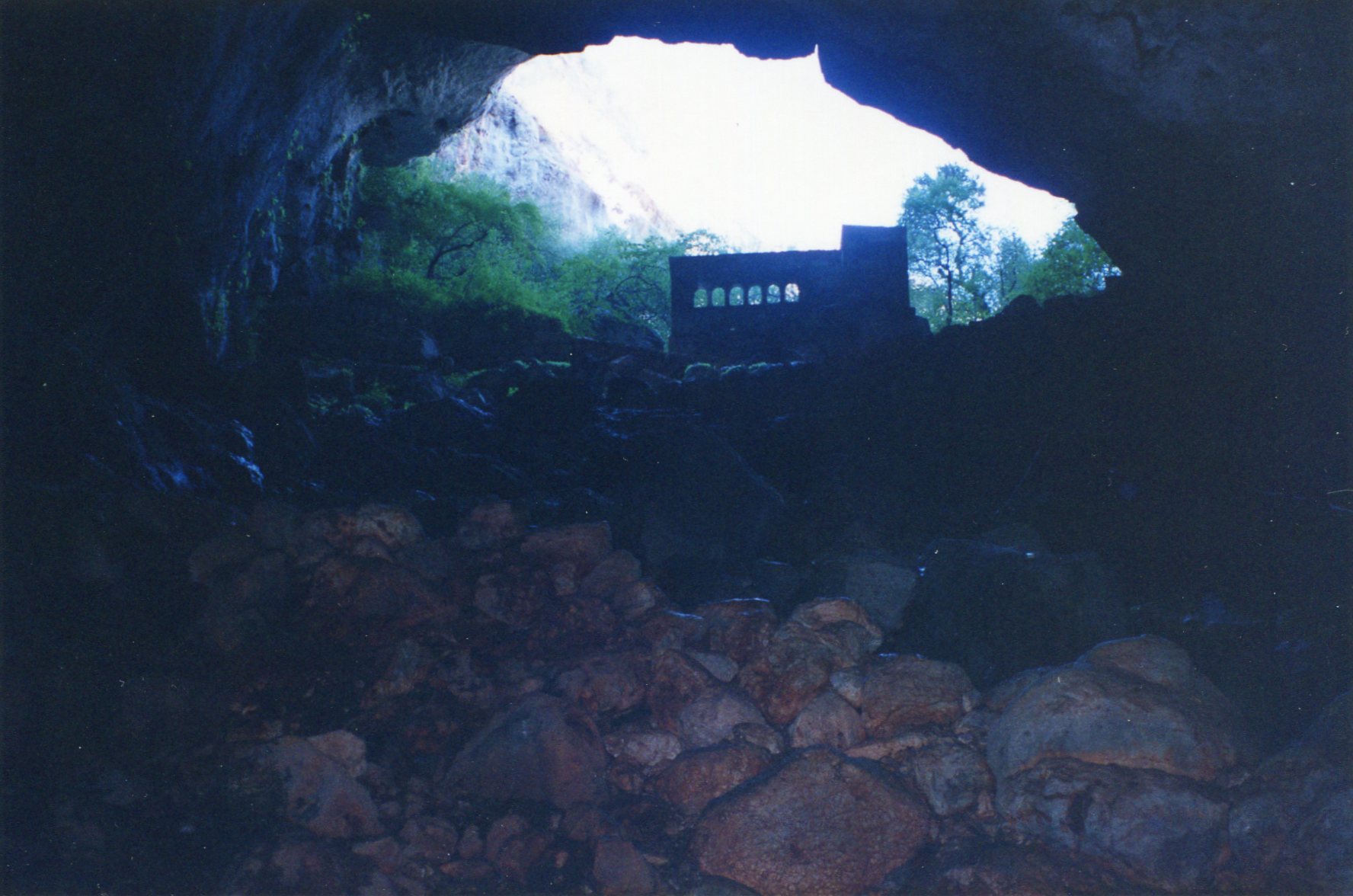
Cennet Mağarası near Narlıkuyu


This song is also known as Allah Allah desem gelsen. My translation is based on the text collected from Ali İzzet Özkan by Pertev Naili Boratav and included in Boratav and Gölpınarlı’s 1943 book on Pir Sultan Abdal. It rather stands out awkwardly as a Pir Sultan piece being in the form of a conversation (söyleşi) on the theme of transformations – folk theme common throughout European folkore (The Two Magicians being the most well known English version). However it does bring in some suggestions of mystical themes, which might be why Ali İzzet attributed it Pir Sultan. We know from İlhan Başgöz that Ali İzzet was readily prepared to attribute deyiş to Pir Sultan if he thought them appropriate. Halil Atılgan in his book Türkülerin İsyanı observes that it was also collected in the eastern Anatolian Iğdır region where the version is attributed to Kul Himmet Üstadım which is also surprising as Kul Himmet Üstadım is generally associated with the Sivas-Divriği region. The attributions at the very least suggest it is a lyric favoured among Alevis. Also, İbrahim Aslanoğlu in his book on Kul Himmet Üstadım (1976) does not include this text. As can be noted from Atılgan’s book, the TRT ‘official’ repertoire version does not include a şah beyit (mahlas) at all and manifests as a somewhat less interesting and simple türkü.

The recorded versions of this song by Muhlis Akarsu and Ruhi Su (who recorded the song in 1971 on his first LP Seferberlik Türküleri) change the opening line from Bülbül olsam varsam gelsen to Allah Allah desem gelsem, which does fit a little more logically with the following line Hakkın divânına dursam to present an opening reading “If I come and repeat Allah Allah/If I stand in the presence of God”. I have given the Turkish text and based my translation, however, on the version as presented in Boratav and Gölpınarlı although it retains is some confusing regionalisms, such as alma for elma, şahan for şahin, yanıl for yanal and çövmem for çöven. The final verses present the most problems however. The line Ben bir Azrail olsam (If I am the Angel of Death) seems corrupt, certainly for a Pir Sultan Abdal lyric! This song is an 8 syllable koşma yet this line only contains 7 syllables. This can be fudged, as Ruhi Su does, by inserting a spurious syllable – not uncommon practice – to make Azrail, Azırail. Muhlis Akarsu’s solution seems more satisfying. Akarsu sings Ben bir can alıcı olsam (If I am a receiver of souls). The second last line containing the mahlas is also problematic. The printed version has bulsa (if he/she finds) which doesn’t make a lot of sense in the context; and other sources, including the recorded versions have bulsan (if you find) which is more consistent and logical. It does put the mahlas into the position of an object rather than the subject, which does happen, but is somewhat uncommon. In this reading the accusative ending (-ı) is lacking, however that is a very common practice in folk lyrics. The use of the form üstadın (your master) in this line suggests this is not part of the mahlas and this form is certainly not associated with Pir Sultan; however it does suggest why the attribution mentioned above may have been made to Kul Himmet Üstadım.

Finally, I should mention the controversy over the use of Muhlis Akarsu’s recording by Nelly Furtado on her song Wait for You. On one level it would be nice to think the likes of Ms Furtado or the song’s producer DJ Timbaland have the curiosity, interest and good taste to investigate the work of master Alevi aşık-s and musicians like Akarsu. It is rather unfortunate however that it appears that such interest does not extend to the good grace and good intent of acknowledging such sources, traditions and artists. It would seem to be a position of arrogance to think that Muhlis Akarsu is just some ‘obscure’ musician and that no one would notice or care about such self-serving use. Besides the generally shabby approach of pop music muscle and identities, the real issue, if I understand correctly, would be the actual sample they used from Muhlis Akarsu’s recording Ya Dost Ya Dost, a selection of recordings issued by Kalan Müzik in 1994 (see the English language report from the Turkish online newspaper Today’s Zaman – only available now since the paper was shut down in July 2016 thanks to the Internet Archive). I believe the original recording of the song was on Akarsu’s album Kalk Gidelim Deli Gönül though I don’t know the date of its release, but judging by the sound I would say some time in the late 1980s, possibly 1987. Ruhi Su recorded the song earlier (1971) with much the same musical phrase; and the song is, or course, essentially traditional and in the public domain.

Pir Sultan Abdal: Bülbül olsam varsam gelsem

Translation: Paul Koerbin


If I am a nightingale if I approach and come

If I stand in the presence of God

If I am a rosy red apple

If I sprout on your branch, what do you say?

If you are a rosy red apple

If you come to sprout on my branch

If I am a silver clad crook staff

If I draw and strike a blow, what do you say?

If you are a sliver clad crook staff

If you come to draw and strike a blow

If I am a handful of maize

If I am scattered on the ground, what do you say?

If you are a handful of maize

If you come to be scattered on the ground

If I am a beautiful grey partridge

If I gather up bit after bit, what do you say?

If you are a beautiful grey partridge

If you come to gather up bit after bit

If I am a young falcon bird

If I seize and steal you off, what do you say?

If you are a young falcon bird

If you come to seize and steal me off

If I am a shower of sleet

If I break your wing, what do you say?

If you are a shower of sleet

If you come to break my wing

If I am a wild nor’easter wind

If I spurn and disperse, what do you say?

If you are a wild nor’easter wind

If you come to spurn and disperse

If I have a great sickness

If I lie down in your way, what do you say?

If you have a great sickness

If you come to lie down in my way

If I am the Angel of Death

If I take your soul, what do you say?

If you are the Angel of Death

If you come to take my soul

If I am a subject destined for heaven

If I enter into heaven, what do you say?

If you are a subject destined for heaven

If you come to enter into heaven

If you find your master Pir Sultan

If we enter in company together, what do you say?

———————————————————————————————————–

Original text from Pir Sultan Abdal by Gölpınarlı and Boratav (1943)

Bülbül olsam varsam gelsem

Hakkın divânına dursam

Ben bir yanıl alma olsam

Dalında bitsem ne dersin

Sen bir yanıl alma olsan

Dalımda bitmeye gelsen

Ben bir gümüş çövmen olsam

Çeksem indirsem ne dersin

Sen bir gümüş çövmen olsan

Çekip indirmeye gelsen

Ben bir avuç darı olsam

Yere saçılsam ne dersin

Sen bir avuç darı olsan

Yere saçılmaya gelsen

Ben bir güzel keklik olsam

Bir bir toplasam ne dersin

Sen bir güzel keklik olsan

Bir bir toplamaya gelsin

Ben bir yavru şahan olsam

Kapsam kaldırsam ne dersin

Sen bir yavru şahan olsan

Kapıp kaldırmaya gelsen

Ben bir sulu sepken olsam

Kanadın kırsam ne dersin

Sen bir sulu sepken olsan

Kanadım kırmaya gelsen

Ben bir deli poyraz olsam

Tepsem dağıtsam ne dersin

Sen bir deli poyraz olsan

Tepip dağıtmaya gelsen

Ben bir ulu hasta olsam

Yoluna yatsam ne dersin

Sen bir ulu hasta olsan

Yoluma yatmaya gelsen

Ben bir Azrâil olsam

Canını alsam ne dersin

Sen bir Azrâil olsan

Canımı almaya gelsen

Ben bir cennetlik kul olsam

Cennete girsem ne dersin

Sen bir cennetlik kul olsan

Cennete girmeye gelsen

Pir Sultan üstadın bulsa(n)

Bilece girsek ne dersin

Abidin Dino painting detail

15 Friday May 2009

Posted by koerbin in Uncategorized

≈ Leave a comment

Tags

Abidin Dino, Ruhi Su, Semah

My favourite Abidin Dino picture. Image taken from volume 23 of the CD releases of Ruhi Su recordings called Uyur İken Uyardılar. Seems to be a representation of the halay dance.

Image1

Blog at WordPress.com.

  • Subscribe Subscribed
    • PİR SULTAN ABDAL and me
    • Already have a WordPress.com account? Log in now.
    • PİR SULTAN ABDAL and me
    • Subscribe Subscribed
    • Sign up
    • Log in
    • Report this content
    • View site in Reader
    • Manage subscriptions
    • Collapse this bar
 

Loading Comments...