 Here is a relatively simple but very beautiful lyric that makes an appearance in the earliest Pir Sultan anthologies of Ergun (1929) and Gölpınarlı and Boratav (1943). This is possibly an old lyric and related to the verses of Yunus Emre (see Izzet Zeki Eyuboğlu)- not unknown in the Pir Sultan canon. Later collections show little variation, not surprisingly with a short and perfect gem like this, though Fuad (1977 and 1999) has some slight variations, one of which I follow.
The two Fuad variations are in the first and last lines of the lyric. In the last line Fuad has kor olmuş (a glowing coal) rather than üfrülmüş, meaning to be blown upon, as for example a hot cinder. Fuad’s version seems to be a clarifying or simplifying variant and for reasons of assonance I have gone with üfrülmüş incorporating both variations into my rendering of the line. In the first line the earlier anthologist have benden rather bizden. Given the ‘shifty’ – to use Losensky’s term – nature of the lyric identity common in these lyrics this is not substantive change. I have used Fuad’s plural version as it aligns with the assonance of the lyric generally. Indeed this is one of the beauties of this lyric for, in the Turkish, the assonance and rhyme express the trance like mystical quality of the lyric. For this reason I have tried, rather more than I usually do, to retain something of this in the English. This does not always, or even often, work since rhyme, alliteration, assonance is much easier and more natural in Turkish with its vowel harmonisation. Talat Halman is the best at such renderings. I don’t try and replicate the Turkish, but where I have been able to bring in rhyme, near-rhyme and alliteration without diverging from the content of the lyric, I have done so.
Other translation issues to note include the rendering of ehli hal. In the context of the mystical path, ‘hal‘ has the meaning of a transcendent state, a mystical ecstacy even. Hence my version. Erkan means the main points, principles or fundamentals of religion. I did not want to refer to ‘fundamentalism’, perhaps for obvious reasons, so ‘liturgy’ seemed to fit the bill well with its additional help in the rhyme. Dilden dile means the same as dile düşmek: that is, to become the subject of common talk. I’m not sure I’ve rendered this entirely successfully, though I do get something of the sense and the alliteration was too felicitous to let go. Finally, elden ele causes some problems. It can literally mean ‘hand in hand’ though in this context ‘el‘ would seem to refer to land rather than hand. Fuad certainly indicates this meaning. I did contemplate a line reading ‘we will travel the land hand in hand’ having a bet each way, but perhaps wisely though better of it. My rendering as ‘we will travel the lands far and wide’ is perhaps not too removed from the literal and helps a little with the near-rhyme.
To return to the ‘shifty’ nature of the lyric persona common in Alevi lyric song, this is a great example of this device. The first two verses stress the first person plural (biz, –iz, –elim) then there is the sudden shift in the first line, the mahlas line, of the last verse to the first person singular (I am … ‘-im)) and then the second person (you, –sın) before finally returning to the first person plural. The functions of such shiftiness engaging the lyric voice of the poet with the performer and the audience, I have discussed in my PhD thesis.
Translation: Paul Koerbin
| Come, do not desert us, my beauty
We are the nightingale, no stranger we We are brothers in dervish ecstasy We are the way within the liturgy
Let us converse on the states of joy Let us talk ‘til tongues are tired We will travel lands far and wide We are the rose freshly opened
I am Pir Sultan, for what do you cry? You shed tears of blood from your eye What you expect from us, is it fire? We are ashes of embers blown and burned |
Gel güzelim kaçma bizden
Yad değiliz bülbülüz biz Biz hâl ehli kardaşlarız Erkân içinde yoluz biz
Söyleşelim hâlden hâle Dilleşelim dilden dile Biz gezeriz elden ele Taze açılmış gülüz biz
Pir Sultan’ım ne ağlarsın Gözünden kan yaş çağlarsın Sen bizden ateş m’umarsın Yanmış üfrülmüş külüz biz |
 This deyiş appears in Ergun’s 1929 collection of Pir Sultan’s lyrics and again in Gölpınarlı and Boratav’s 1943 edition where the source is given as Ergun, although with a couple of slight changes. In the first line of the 4th verse Ergun has Mağripte (Mağrib = Magreb, the West) while Gölpınarlı/Boratav give Meydana; and in the 3rd verse Ergun has küçük gazili while Gölpınarlı/Boratav have köçek gazili. The version used for my translation is from Memet Fuat (1999 reprint edition) who follows Ergun in regards to Mağripte (well almost, since he has the ablative Mağriğtan rather than the locative) and Gölpınarlı/Boratav in regards to köçek (both versions give the sense of a novice entering the tarikat). This deyiş is a good example of a theme found in the lyrics of Pir Sultan – the hope and expectation of the coming of the Shah, in this case the temporal ruler. It is for such allegiances that the kızılbaş were pursued by the Ottoman authorities. The word Urum refers to the land of ‘Rum’, Anatolia, the Ottoman lands. Three generations of the Safavids are referred to in the lyric (as Fuat notes): Shah Tahmasp is the ‘beautiful leader’ who is expected; and he is the ‘Shah’s son’, that is the son of Shah Ismail, the first Safavid ruler, while ‘Old Haydar’ refers to Ismail’s father and Tahmasp’s grandfather. The mahlas verse reveals that this expectation may be but a wish of Pir Sultan’s.
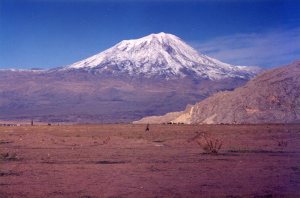 One of the most evocative of Pir Sultan’s lyrics; especially when sung to the beautiful melody with which it is associated.
  PİR SULTAN ABDAL and me