 The earliest appearance of this deyiş in print is in Bektaşilik ve edebiyatı by Besim Atalay (1882-1965) published in 1924. Gölpınarlı and Boratav (1943) also include the text indicating the sources as Atalay and cönk in the possession of Gölpınarlı. One of the dilemmas for this translation is whether or not to translate the terms mürşid and rehber. While these terms have quite specific connotation in Alevi ritual culture they are to some sufficient degree translatable. I have have therefore translated them, capitalising the terms ‘Teacher’ – not a fully adequate term; perhaps ‘Master’ may be better? – and ‘Guide’ to indicate that the terms have specific rather generic meaning. As Mehmet Fuat (Pir Sultan Abdal, 1999 ed.) notes in respect to the third line of the second verse – which is somewhat awkward to translate – the reference is to smoking out bees from the hive in order to secure the honey. Fuat also gives guidance in respect to the last line of the lyric which refers to the practice of the novice dervish being brought before the Mürşid during the confirmation ceremony to enter the tarikat and the Mürşid takes the dervish’s right hand in his right hand while the dervish holds the skirt (etek) of the Mürşid with his left hand.
This deyiş has obvious connections to one of the oldest attributable lyrics to the person of Pir Sultan Serseri girme meydana in its theme and imagery.
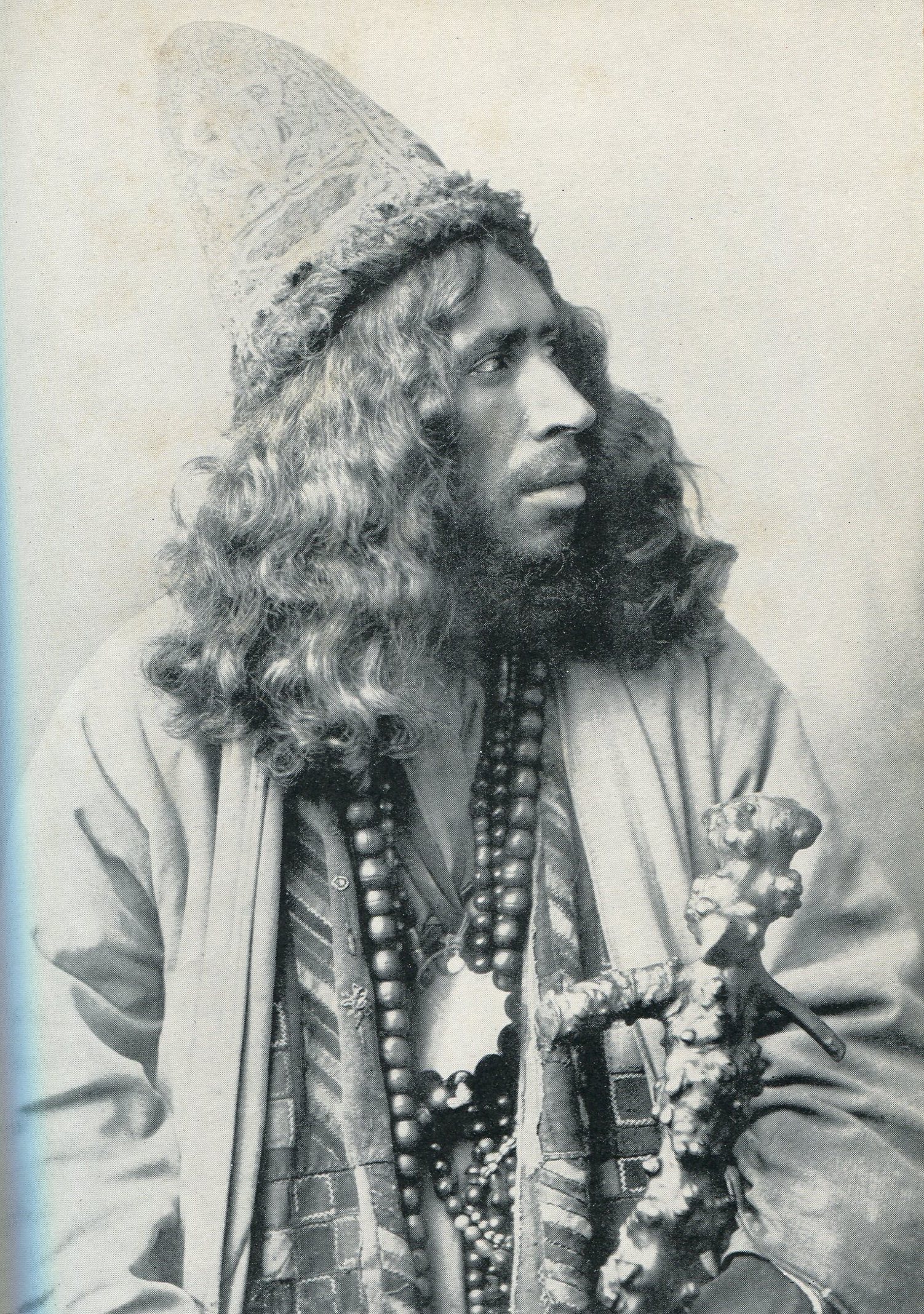
The curious photograph of the ‘dervish’ is from Alma Wittlin’s book Abdul Hamid: the shadow of God (English translation published by John Lane in 1940).
Pir Sultan Abdal ‘Ben dervişim diye göğsün açarsın’
Translation: Paul Koerbin
You stick out your chest saying ‘I am a dervish’
Do you have the tongue to invoke God?
Look to yourself, what do you want from strangers?
Do you have the strength to reach the state of ecstasy?
Like a fish one day they will ensnare you in a net
They will question you about your Teacher and Guide
Lighting incense, sending you scattering, they will seek
‘I am a bee’ you say – do you have honey?
Do those without affliction complain?
Does a shrewd dervish turn from his vow?
Do all creatures of the air light on a rose branch?
‘I am a nightingale’ you say – do you have a rose?
I am Pir Sultan, your affliction is not laid bare
Those without affliction don’t confront suffering
The ways are not passed over without the Teacher and Guide
Do you have your hand on the Teacher’s cloak?
———————————————————————————————–
Original text from Gölpınarlı and Boratav (1943)
Ben dervişim diye göğsün açarsın
Hakkı zikretmeğe dilin var mıdır
Sen kendi görsene ilde n’ararsın
Hâli hâl etmeğe hâlin var mıdır
Bir gün balık gibi ağa sararlar
Mürşidinden rehberinden sorarlar
Tütsü yakıp köşe köşe ararlar
Ben arıyım dersin balın var mıdır
Dertli olmıyanlar derde yanar mı
Tahkik derviş ikrarından döner mi
Her bir uçan gül dalına konar mı
Ben bülbülüm dersin gülün var mıdır
Pir Sultan’ım senin derdin deşilmez
Derdi olmıyanlar derde duş olmaz
Mürşitsiz rehbersiz yollar açılmaz
Mürşit eteğinde elin var mıdır
 This deyiş appears in the all of the earliest collections of Pir Sultan Abdal lyrics, including Besim Atalay’s 1924 publication Bektaşilik ve Edebiyatı (originally in Ottoman Turkish but translated into modern Turkish by Vedat Atila and published by Ant Yayınları in Istanbul in 1991). It also appears in Sadettin Nüzhet Ergun’s 1929 work on Pir Sultan Abdal and in the 1943 publication by Gölpınarlı and Boratav. Comparing these editions is interesting since there are minor variants in the texts – the minor nature of the variants is of itself interesting and perhaps gives a glimpse of how a traditional lyric may be adopted into the Pir Sultan canon. The lyric is not overtly on the central themes associated with Pir Sultan such as the kızılbaş devotion to the Imam Ali (but see below) or subjects associated with his life story; rather it seems closer to Sufi themes and the lyrics of Yunus Emre. The text I have translated is based on that presented in Gölpınarlı and Boratav’s 1943 edition. This seems to be something of composite text, though Gölpınarlı’s method of presenting the texts, while stating sources does not make clear how variants are used. The authors cite the sources as Atalay, Ergun and an undefined number of cönk and mecmua in Gölpınarlı’s possession. The most interesting of the minor variations of text is found in the version presented by Atalay who gives the last line of each stanza as ‘Ali deyu inilerim’ (‘I moan crying Ali’) thus revealing somewhat more overtly the Alevi theme in the lyric. The one line that is different in the three versions cited is the third line of the second stanza which in Gölpınarlı reads ‘Oldum ayn-i cem bülbülü’, in Ergun reads ‘Olmuşam Şah’ın bülbülü’ and in Atalay reads ‘Oldum muhabbet bülbülü’. While the signficance of the line is hardly altered, the approaches ranging from the specific mention of the ritual ceremony (ayn-i cem), to the hoped for Shah and to the general idea of love and unity (muhabbet) is instructive.
 PİR SULTAN ABDAL and me