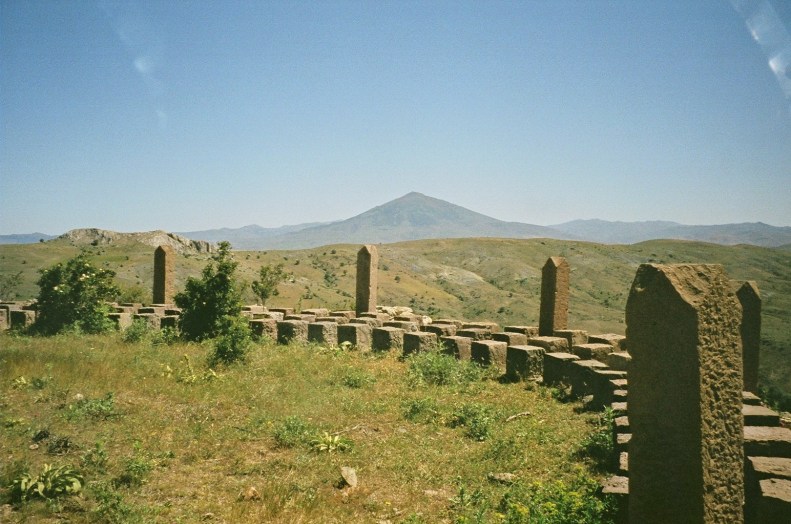
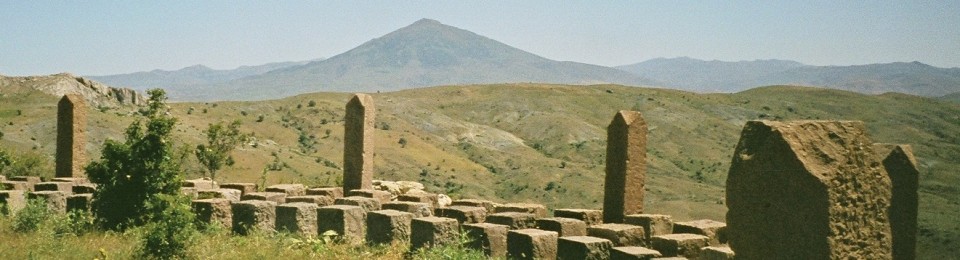
Kırklar meydanı at Banaz with view towards Yıldız Dağı (Photograph: P. Koerbin, 2002)
This is my translation of one of the few Pir Sultan deyiş that survive from a near contemporary source. The oldest source for Pir Sultan’s poems is the Menâkıb ül-Esrâr Behçet’ül Ahrâr the büyük buyruk or İmam Cafer buyruğu assumed to date from the time of Shah Tahmasp (and possibly the work of Kul Himmet) although the surving manuscripts are early 17th century CE. The Menâkıb includes a small number of nefes (deyiş) although different manuscripts include different poems. Also included are poems by Şah Hatayî (Shah Ismail of Iran) along with Pir Sultan, clearly linking Pir Sultan to the Safavid Kızılbaş (Qizilbash) cause.
This particular lyric is from a manuscript of the Menâkıb that belonged to the the great Turkish literary and sufi historian Abdülbâkî Gölpınarlı and is included in what is still the most useful book on Pir Sultan, published originally in 1943 by Gölpınarlı with the great folklorist Pertev Naili Boratav (with an expanded edition published in 1991). Unfortunately, as has also been lamented by Fuat Bozkurt in his edition of the İmam Cafer-i Sadık Buyruğu, we do not have access to the manuscript that was in Gölpınarlı’s possession, so the details cannot be confirmed or expanded nor the manuscript dated. Gölpınarlı identifies three nefes in his manuscript as being by Pir Sultan. In the editon of the Menâkıb published by Ahmet Taşğın there are only two nefes from Pir Sultan, and they are different to the three given by Gölpınarlı. The manuscript used by Taşğın and produced in (fairly rough) facsimile in his 2003 edition dates from around 1612 or 1613. Anyway this lyric, Serseri girme meydana, gives a good sense of the feisty and robust lyric along with a pithy turn of phrase that seems to be authentic Pir Sultan. The language, as is often the case with this material, is both simple in essence and difficult and elusive in parts. It uses quite a bit of older Turkish and terms associated with the mystical pursuit. I have incorporated what I felt I reasonably could into the English translation, except for meydan (meanıng open space, but specifically the space where the ritual ceremonies are conducted) and aşık, meaning one who wishes to enter the tarikat (mystic order) way.
Pir Sultan Abdal: Serseri Girme Meydana
Translation: Paul Koerbin
Vagrant, don’t enter the meydan
They require conditions from the aşık
Don’t come the high and mighty with deceit
They want affirmation for the outward show
Awake from this somnolent stupor
They require proof of the inner person
From the conversation of every aşık
They require the way with declaration
Those who reach truth play a sure bet
There is no trick attached to this way
Here there are no baubles peddled
They require the ruby and the pearl
They go through parts splitting hairs
They grasp the one way and they go
The don’t count much for mere talk
The condition they require is within
Pir Sultan Abdal what do you do?
You say you have done the hard yards
You are a bee working over the flower
Tomorrow they will require honey from you
—————————————————————————————–
Original text from Gölpınarlı and Boratav, Pir Sultan Abdal (1943)
Serseri girme meydana
Aşıktan ahval isterler
Kallâşlık ile urma dem
Tasdik ehli kal isterler
Uyan bu gaflet hâbından
İsbat isterler bâtından
Her aşıka sohbetinden
İkrar ile yol isterler
Erenler oynar utulmaz
Bu yola hile katılmaz
Bunda harmühre satılmaz
Ya gevher ya la’l isterler
Kılı kırk pâre ederler
Birin yol tutup giderler
Dile n’ itibar ederler
Hâl içinde hâl isterler
Pir Sultan Abdal n’eylersin
Müşkil halledip söylersin
Arısın çiçek yaylarsın
Yarın senden bal isterler
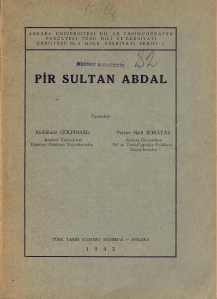 This book, simply titled Pir Sultan Abdal, was the second major work on Pir Sultan. It was published in 1943, 14 years after Ergun’s monograph, by the Türk Tarih Kurumu Basımevi in Ankara. The book was written and prepared by Abdülbâkî Gölpınarlı and Pertev Naili Boratav and is a major advance on Ergun’s book. Firstly it brings the literary historian (Gölpınarlı) and folklorist (Boratav) together. Most interesting is the work of Boratav who travelled in the Sivas region in 1939, including to Banaz, to undertake field work to collect songs and legends. Much that is in this book remains the foundation for our understanding of Pir Sultan. It includes around 136 song texts, but has a commentary of considerable substance. It also includes an index, glossary (lûgatçe) and some indication of the source of the text. A number of the texts come from Ergun, but there are also the texts collected by the great Sivas aşık Ali İzzet Özkan (1902-1981) mostly from the Şarkışla area from other aşık-s including Aşık Sabri and Aşık Veysel among others. The book is 198 pages in length and is bound in similar plain, soft cardboard to that of the earlier book by Ergun. As with the Ergun book, the printing is excellent. An expanded edition of the book was published nearly half a century later in 1991.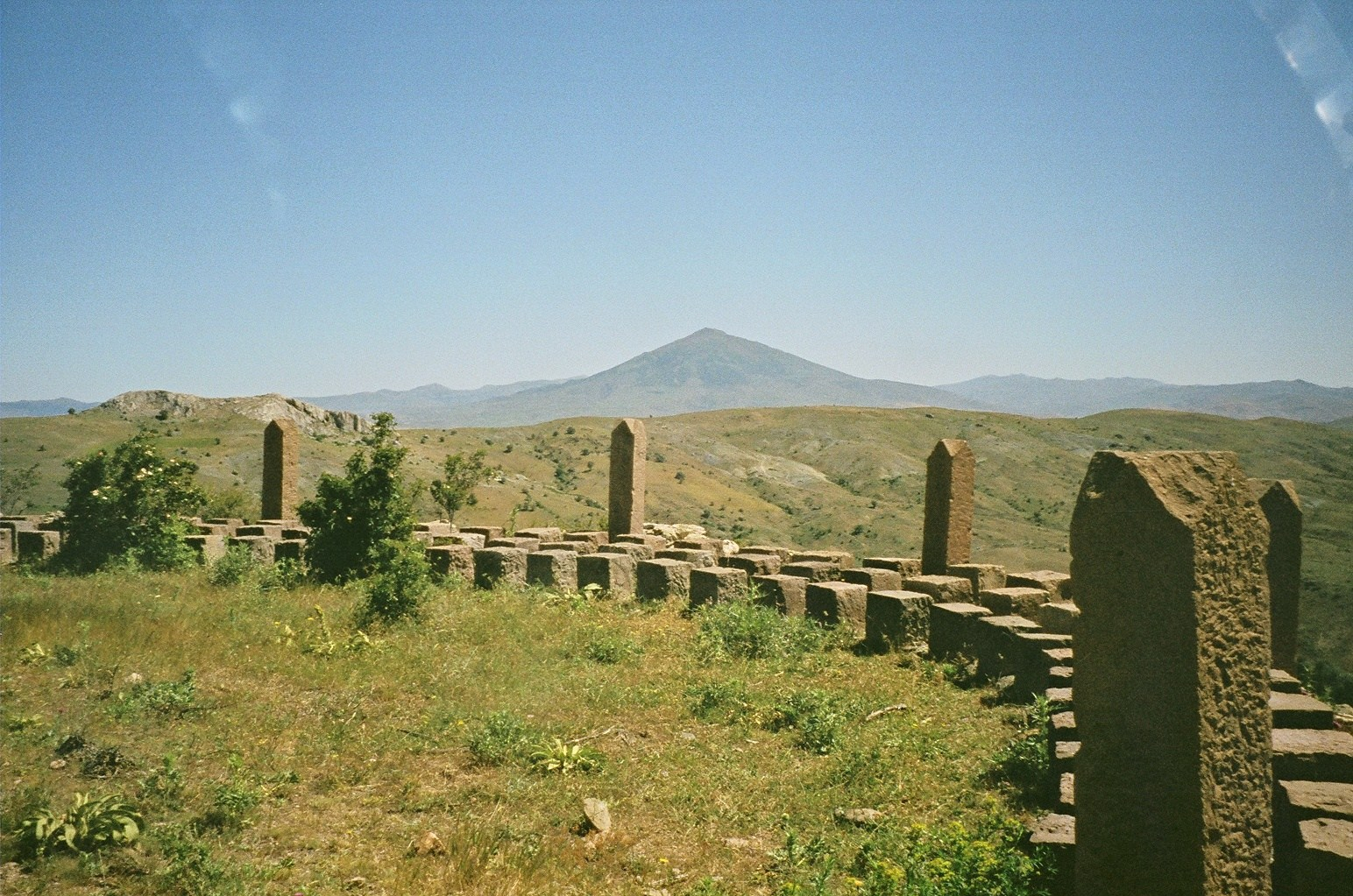
 PİR SULTAN ABDAL and me