• About Pir Sultan Abdal
  • About the ‘me’ in this blog
  • Index of translations on this blog
  • More translations available in my PhD thesis
  • Regarding the translations on this blog

PİR SULTAN ABDAL and me

~ A personal reflection on the great Alevi poet's lyric works and influence – mostly through translation

PİR SULTAN ABDAL and me

Tag Archives: Feyzullah Çınar

Pir Sultan Abdal ‘Gam elinden benim zülfü siyahım’

12 Thursday Dec 2024

Posted by koerbin in Translations

≈ Leave a comment

Tags

Ahmet İhvani, Aşık Daimi, Feyzullah Çınar, Gölpınarlı, Gevheri, Pertev Naili Boratav, Ruhi Su

Exif_JPEG_420

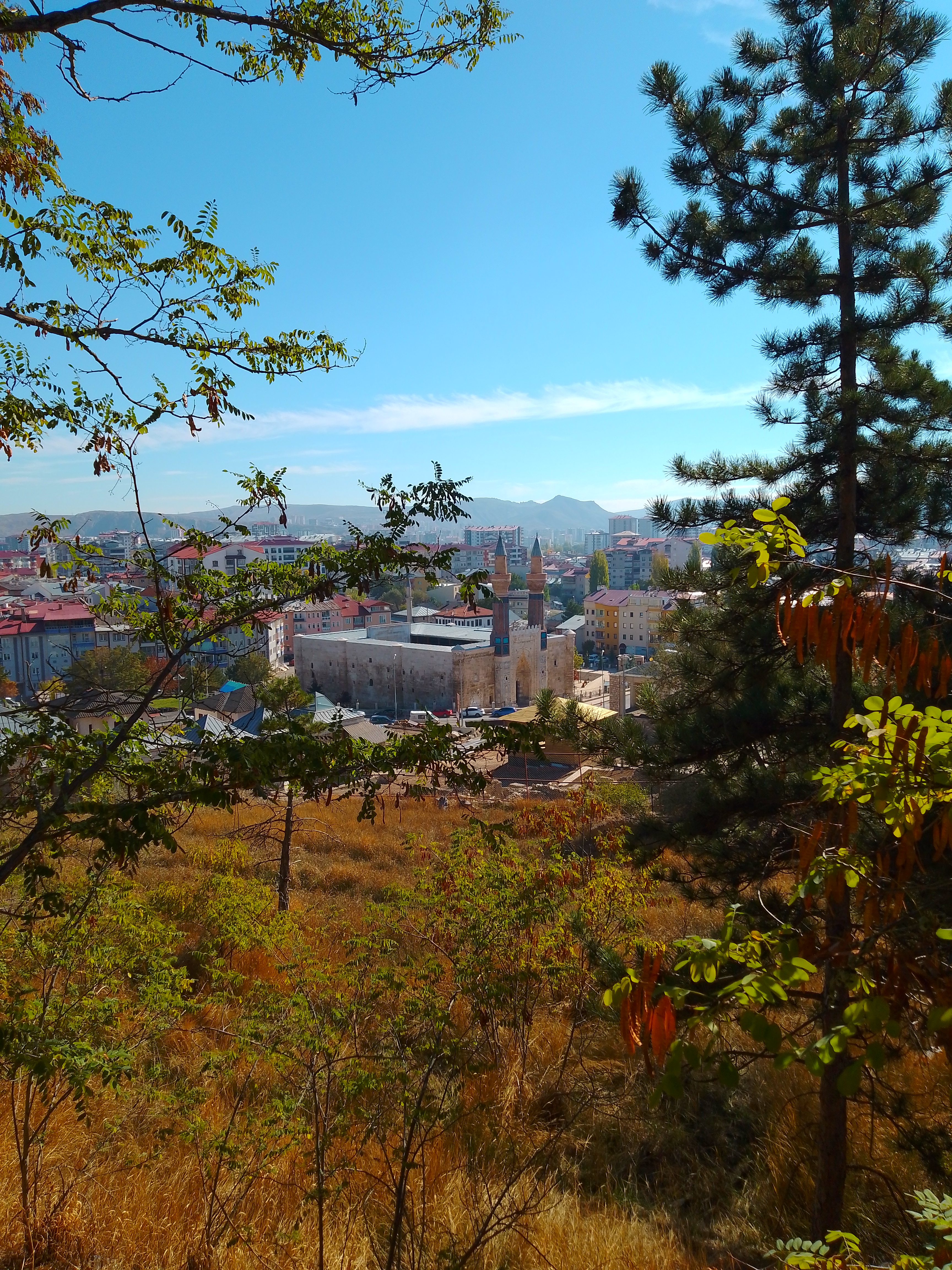
Gök Medrese from Sivas Kalesi (October 2024)

This text first appears in the Sadettin Nüzhet [Ergun] 1929 publication of Pir Sultan Abdal texts. This is the main text I have followed for the translation although I have also referred to the 1943 publication by Gölpınarlı and Boratav which reprints Ergun’s text with some minor, mostly orthographical, changes. In fact, this text persists with very few variants. Most notable is the use of ‘teşevvüştür‘ for ‘neşterlidir‘ in the 4th verse. I have also seen a version of this verse that replaces ‘gün gelir geçer …’ in the second line with ‘gürler gelir geçer …’. The idea of gürlemek, to thunder or make a loud noise, together with the original sense of passing days has influenced my translation towards the idea of ‘croaking’ – for better or worse. The word ‘can’, simple, manifold and profound, always presents a challenge and frustration as it is impossible to convey the full depth of meaning – while also, for the same reasons, it gives the translator considerable interpretive scope. The song is a great cris de coeur emphasised by the repetition of the vocative gel – come! – at the end of each verse. As Gölpınarlı and Boratav note, this rhyme recalls a similar use by Gevheri (died early 18th century), for example in the lyric (originally published by Köprülü in 1929) beginning: ‘Ne nihan edersin benden yüzünü / Hasretinle hâlim yaman oldu gel / Hak aşkına olsun göster yüzünü / Görmedim cemâlın zaman oldu gel‘ (see M. Fuad Köprulü, Saz Şairleri I-IV. Akçağ, 2004. p192-193). 

The song has been recorded by some of the great Alevi musicians including Feyzullah Çınar and Aşık Daimi as well as ‘urban’ interpreters such as Ruhi Su and Rahmi Saltuk. Recorded versions of the song closely follow the original text although usually with the omission of the 4th verse (as in the case of Feyzullah Çınar and Ruhi Su) or both the 3rd and 4th verses (as in the case of Aşık Daimi and Ahmet İhvani). Interestingly (for me at least) Aşık Daimi reverses the form of the mahlas from “Pir Sultan Abdal’ım” to “Abdal Pir Sultan’ım”. The form of the mahlas is something I have written about at length elsewhere. A notable version available on YouTube is that by the Canadian based Alevi musician Ahmet İhvani in a masterful performance incorporating the ‘Deli Derviş’ bağlama instrumental work as a prelude to the song. 

Pir Sultan Abdal: Gam elinden zülfü siyahım

Translation: Paul Koerbin


Grief from your hand, my divine beauty,

Struck like an arrowhead wounding my heart – Come!

Don’t make me weep for your great wound

Today love was split from the soul – Come!

My native home became a fortress of sorrow

My cry unheard my prayer unheeded

My woe not one, not five, nor ten

But come upon as knots upon knots – Come!

Shall I thus be bound to longing?

Did Leyla endure for Mecnun?

The world is transitory – come, don’t begrudge me

My burden of chattels let for pay – Come!

Whatever my pained heart suffers it bears no scar

Then one croaks and life is never fulfilled

Old wounds are opened and are never healed

The verdant place has turned to black – Come!

I am Pir Sultan Abdal – in a week in a month

Days come and go and nothing is gained

The heart longs for God – my soul in futile pursuit

My black earth cast in heaps upon me – Come!

————————————————————————————————————

Original text from Sadettin Nüzhet [Ergun], XVII inci asır Sazşairlerinden Pir Sultan Abdal Bütün Şiirleri (1929)


Gam elinden benim zülfü siyahım

Peykan değdi sînem yaralandı gel

Suna başın içün ağlatma bizi

Bu gün sevdâ candan aralandı gel

Gamdan hisar oldu mekânım yurdum

İşitmez âvazım dinlemez virdim

Bir değil beş değil on değil derdim

Düğümler baş urdu sıralandı gel

Hasretine vâsıl olam mı böyle

Mecnun’a da bâkî kalır mı Leylâ

Ölümlü Dünya’dır gel helâl eyle

Yüklendi barhanem kiralandı gel

Ne çekerse dertli sinem dağolmaz

Günler gelir geçer ömür çokolmaz

Neşterlidir yaralarım onulmaz

Kökerdi çevresi karalandı gel

Pir Sultan Abdal’ım haftada ayda

Günler gelir geçer bulunmaz fayda

Gönül Hak arzular canım hayhayda

Toprağım üstüme karalandı gel

Pir Sultan Abdal ‘Şu kanlı zalimin ettiği işler’

07 Monday Jun 2010

Posted by koerbin in Translations

≈ 1 Comment

Tags

Ali Baba, Ali Haydar Avcı, Annemarie Schimmel, Aşık Ali İzzet, Feyzullah Çınar, Gölpınarlı, Hızır Paşa, Mansur al-Hallaj, Pertev Naili Boratav, İbrahim Aslanoğlu

Pir Sultan statue at Çilehane hill at HacıbektaşA song dealing with the demise of Pir Sultan as he proceeds to his execution while Hızır Paşa – the bloody tyrant referreed to – orders the people to cast stones at him. Legend has it that Pir Sultan’s friend, Ali Baba, tossed a rose; a dissembling act that wounds Pir Sultan the deepest. This of course, as Gölpınarlı and Boratav (1943) the first to publish the text note, revisits the story associated with the martyrdom of Mansur al-Hallaj in 922 when his friend Shibli threw a rose when the people began to stone Hallaj. As Annemarie Schimmel describes it (Mystical Dimensions of Islam, 1975), when Shibli did this Hallaj sighed since those who threw stones did not know what they were doing, but Shibli did. And this has much the same theme in the Pir Sultan context – it is the betrayal that wounds.

Aslanoğlu  (1984) rejects this as a Pir Sultan text and claims it as a composite of verses from Aşık Hüseyin and Tarsuslu Sıkdı. I have not been able to locate the full text of Aşık Hüseyin although Avcı gives a mahlas verse from Aşık Hüseyin (probably 18th century) from a mecmua provided by Adil Ali Atalay that reads: ‘Hüseyin’im eyder can göğe ağmaz / Hakk’tan emr’olmazsa ırahmet yağmaz / Şu illerin sözü hiç bana değmez  / İlle dostun sözü yareler beni‘ (Ali Haydar Avcı Osmanlı gızlı tarihinden Pir Sultan Abdal, 2006 p. 342-343).  Tarsuslu Sıdkı Aslanoğlu refers to Aşık Sıdkı (Pervane) and a text is found in the major collection of Sıdkı’s lyrics compiled by his grandson Muhsin Gül (1984) that bears some similarity. Indeed a number of Sıdkı’s lyrics do bear the language of some of the most renowned lyrics attributed to Pir Sultan including Gelin canlar bir olalım and Kul olayım kalem tutan eller. The source of the text published in Gölpınarlı and Boratav is Aşık Ali İzzet who was forthcoming in his openness about attributing texts as he felt appropriate (see again Ali Haydar Avcı’s monumental work Osmanlı gızlı tarihinden Pir Sultan Abdal (2006 p. 236-351) for a consideration of Ali İzzet’s influence in respect to these lyrics). So Aslanoğlu’s assertion may have merit – but only so far, since it remains without question an important and fixed text of the Pir Sultan of tradition. It is sung to a fine tune, and perhaps the finest recording is that by Feyzullah Çınar made in Paris for Radio France in 1971 under the sponsorship of the late Irene Melikoff.

Pir Sultan Abdal: ‘Şu kanlı zalimin ettiği işler’

Translation: Paul Koerbin

Those blood tainted tyrant’s deeds

Make me moan like a lonely nightingale

Stones rain down like a torrent upon me

But it is the friend’s mere pinch that wounds me

Friend and foe are revealed in my dire straits

My troubles that once were ten are now fifty

The order for my death is fixed to my neck

So let them strike me down or let them hang me

I am Pir Sultan Abdal my soul does not flee

If not decreed by God mercy does not rain down

The stones of those strangers will never touch me

But it’s the rose of that friend that wounds me 

————————————————————————————————————-

Şu kanlı zalimin ettiği işler

Garip bülbül gibi zareler beni

Yağmur gibi yağar başıma taşlar

Dostun bir fiskesi yaralar beni

Dar günümde dost düşmanım bell’oldu

On derdim var ise şimdi ell’oldu

Ecel fermanı boynuma takıldı

Gerek asa gerek vuralar beni


Pir Sultan Abdal’ım can göğe ağmaz

Hak’tan emr olmazsa irahmet yağmaz

Şu illerin taşı hiç bana değmez

İlle dostun gülü yaralar beni 


Sefil Selimi ‘İnsana muhabbet duyalı (bana yer kalmaz)’

11 Tuesday May 2010

Posted by koerbin in Translations

≈ Leave a comment

Tags

Arif Sağ, Feyzullah Çınar, Mahmut Erdal, Sefil Selimi, Translation, Şarkışla

This deyiş is one of my favourites since first hearing it on Arif Sağ’s 1983 masterwork, İnsan Olmaya Geldim, where he performs it with an accompaniment of restrained intimacy and intricacy on the bağlama. It was only recently that I learned that the musical arrangement is in fact by Feyzullah Çınar and heard his recording on the album Aşkın Çilesi. Hearing the way Sağ develops Çınar’s arrangement, particularly in the instrumental bridges between verses,  into an intricate bağlama ornamentation only heightens my admiration for Sağ’s interpretive mastery. It is interesting to note the different emphasis given the lyric by the titles the performers give the song: Sağ (and Sabahat Akkiraz who also recorded the song in 1984) title it ‘İnsana muhabbet duyalı’ (Since feeling love for humanity) while Çınar titles it on his recording ‘Bana yer kalmaz‘ (There is no place for me).

Sefil Selimi, whose real name was Ahmet Günbulut (1932-2003), was born in Şarkışla a place renowned for great aşıks, both Aşık Veysel and Aşık Ali İzzet both coming from this area. Selimi was not from an Alevi family but many of his lyrics show a great interest and empathy with Alevi culture and belief and his work has received reciprocal respect from Alevis. Mahmut Erdal in his book Yine Dertli Dertli İniliyorsun mentions being given a manuscript of Selimi’s by İhsan Öztürk in which, some time later when he looked at the poems, he recognised the remarkable talent and picks out this lyric as an example.

The text given here for my translation of all five verses is taken from Uğur Kaya’s book Şiirleri ve türküleriyle Aşık Sefil Selimî (Sivas, 2001). The recorded versions use only the 1st, 2nd and 5th verses although in this wonderful live recording of Sağ and Akkiraz performing the song together (which looks to be around the mid-1980s) Sağ includes the 4th verse. There are some variations in the versions which are mostly minor and don’t affect the meaning. The main differences affect the 2nd line of the 3rd verse which also occurs as ‘Ne bir hatır sorar, göz yaşım siler in the versin‘ in Erdal (and also in Bekir Karadeniz’s book Elâ Gözlüm); and the 2nd line of the 4th verse which Karadeniz gives as: Kapıya bacaya konmaz dediler.

Sefil Selimi ‘İnsana muhabbet duyalı’

Translation: Paul Koerbin

I have no friends nor any to help me

Since I dressed in the cloak of bravery

Were the world entirely empty there is no place for me

Since I felt love for humankind

My belief is monarch, my conceit is captive

I loved the Sacred Lineage, they said I’m at fault

Some speak cowardly, some bravely

Since I pastured the sheep with the wolf

Those striking my back smile at my face

They scarcely share the butchered morsels

Everyone whets their knife on my neck

Since I presented myself to the open

‘These are Kızılbaş, unwashed’, they say

‘Their sacrifice is forbidden, inedible’, they say

‘They don’t halt at a mosque, great or small’, they say

Since I set out to follow the Shah Imam Hüseyin

Often some seek written proof in me

Not knowing the condition, ask of my forbears

Friends, some decide on my death

Since I called myself Sefil Selimi

——————————————————————————————————–

Original text from Uğur Kaya Şiirleri ve türküleriyle Aşık Sefil Selimî (Sivas, 2001)

Kimse bana yaren olmaz, yar olmaz

Mertlik hırkasını giydim giyeli

Dünya bomboş olsa, bana yer kalmaz

İnsana muhabbet duydum duyalı

İmanım hükümdar, benliğim esir

Ehl-i Beyt’i sevdim, dediler kusur

Kimisi korkak der, kimisi cesur

Kurt ile koyunu yaydım yayalı

Ardımdan vuranlar, yüzüme güler

Kestiği az gibi parçalar böler

Herkes kılıcını boynumda biler

Başımı meydana koydum koyalı

‘Bu Kızılbaş olmuş, yunmaz’ diyorlar

‘Kestiği haramdır, yenmez’ diyorlar

‘Camiye mescide konmaz’ diyorlar

İmam Şah Hüseyn’e uydum uyalı

Çoğu, bende kağıt hüccet arıyor

Hâl bilmeyen, dip dedemi soruyor

Dostlar, ölümüme karar veriyor

‘Sefil Selimî’yem’ dedim diyeli

Blog at WordPress.com.

  • Subscribe Subscribed
    • PİR SULTAN ABDAL and me
    • Already have a WordPress.com account? Log in now.
    • PİR SULTAN ABDAL and me
    • Subscribe Subscribed
    • Sign up
    • Log in
    • Report this content
    • View site in Reader
    • Manage subscriptions
    • Collapse this bar
 

Loading Comments...