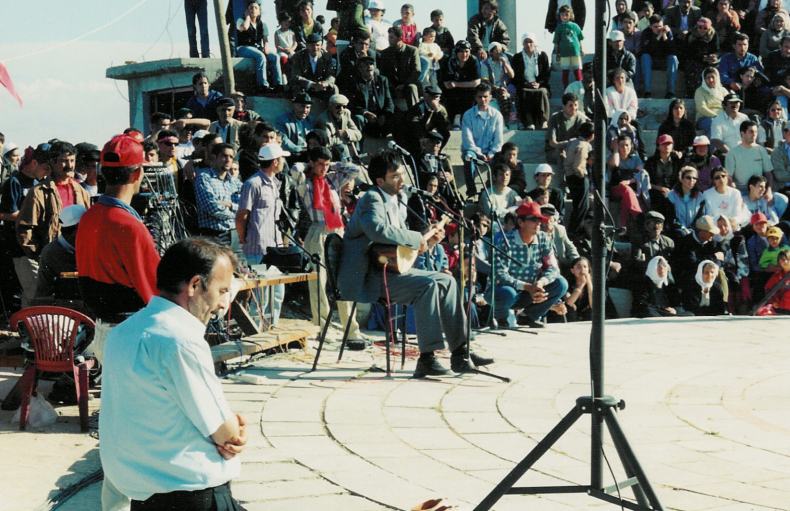
 Have been analysing a performance by Tolga Sağ that I recorded at the 2002 Pir Sultan Abdal Festival in Banaz. The festival that year took place over the weekend of the 22nd and 23rd June. Sağ did two performances, the first on the Saturday was an hour long performance and the second on the Sunday was a half hour performance. I am studying the first, longer performance most specifically. The work so far has been trying to identify all the songs performed. The set consisted of the following deyiş and türkü.
1. Dünya arsızındır fırsat pirsizin. This deyiş is from Davut Sulari whose daughter, Edibe was killed in the Madımak Hotel during the 1993 Pir Sultan Abdal Festival in Sivas.
2. Yarim için ölüyorum. A türkü associated with Nesimi Çimen who was also killed in Sivas in 1993.
3. Medet ya Muhammet medet ya Ali. A deyiş from Pir Sultan, with the mahlas form of Abdal Pir Sultan’ım. This song was included on the first Muhabbet recording (1984) sung by Tolga’s fatehr Arif Sağ.
4. Rehberim Ali’nin devri yürüye. Another Pir Sultan piece with the mahlas form Abdal Pir Sultan’ım. The words are somewhat altered from the published versions of this deyiş, which usually goes under the first line Hazreti Ali’nin devri yürüye. The wording changes emphasise the rebellious qualities of the deyiş.
5. Türbesin üstünü nakş eylediler. Another deyiş from Pir Sultan; sung on the 3rd Muhabbet recording by Arif Sağ.
6. Medet Allah medet (duaz-ı imam). Famous duaz of Aşık Muhammet and associated with Dertli Divani and the Urfa (Kısas) cem.
7. Short açış then Sağ sings the first verse of an uzun hava from Sivas beginning with the line Bu nasıl işidi bu nasıl hışım. Interestingly Sağ performed this same piece at the same festival five years later in 2007. 09_bunasil_uh
8. Oğul (Gömdüm oğul seni toprağa gömdüm). Written by Mustafa Atıcı. Tolga Sağ sings this on the first Türküler Sevdamız recording.
9. Dilo (Yüce dağbaşında). Written by Mehmet Koç and the opening song on Sağ’s first solo recording Yol.
10. Semah based on Muhlis Akarsu’s Açığım yok kapalım yok dünyada. Muhlis Akarsu was another to die in the Madımak Hotel in Sivas in 1993.
11. Urfa semahı. Two semah from Dertli Divani, Başım açık yalın ayak yürüttün (Aşık Sıtkı baba) and Kerbela çölünden sakin mi geldi (Dedemoğlu).
12. Gurbeti ben mi yarattım. Deyiş from Muhlis Akarsu.
13. Mevlam gül diyerek iki göz vermiş. Deyiş from Aşık Mahzuni Şerif who had died only a month before the 2002 Pir Sultan Abdal Festival.
14. A deyiş from the Diyarbakırlı poet Aşık İhsani, renowned in the 1960s as a leftist poet and who appears as the zakir in the 1973 Remzi Jöntürk film staring Fikret Hakan, Pir Sultan Abdal. The song is Ben ölüyom sen ölmüyon. It appears on the second of Yavuz Top’s three Deyişler albums with the music credited to Top. Strangely, Sağ’s performance includes the mahlas Ruhsati rather than İhsani; not sure if this is deliberate or just a mistake. Ruhsati was the famous 19th aşık from Deliktaş near Kangal. 16_ruhsati
15. Eşeği saldım çayıra. Deyiş from Kazak Abdal, a 17th century aşık from the Balkans (Romania).
16. Bacacılar yüksek yapar also known as Karam. Sağ moves into halay mode now with song from the playing of the influential musician from Ürgüp, Refik Başaran (1907-1947) who made a number of recordings in the 1930s and 1940s.
17. Kostak yeri. Tolga Sağ’s ‘hit song’ from his album Yol. It is a türkü from Niğde – probably the most renowned folksong from that area. Sağ’s arrangement on his album introduces some brassy jazz inflections.
18. Mor koyun. Another türkü – and by this stage of the performance people had moved from to dancing the halay rather than semah – which Sağ recorded on the first Türküler Sevdamız recording.
19. Sağ ends with a potpori of halaylar in 6/8 rhythm beginning with Göleli gelin from Kars-Ardahan (and included on his recording Yol) followed by the Ağrı halay Şu dağlar karlı dağlar. 21_Budaglara
 PİR SULTAN ABDAL and me